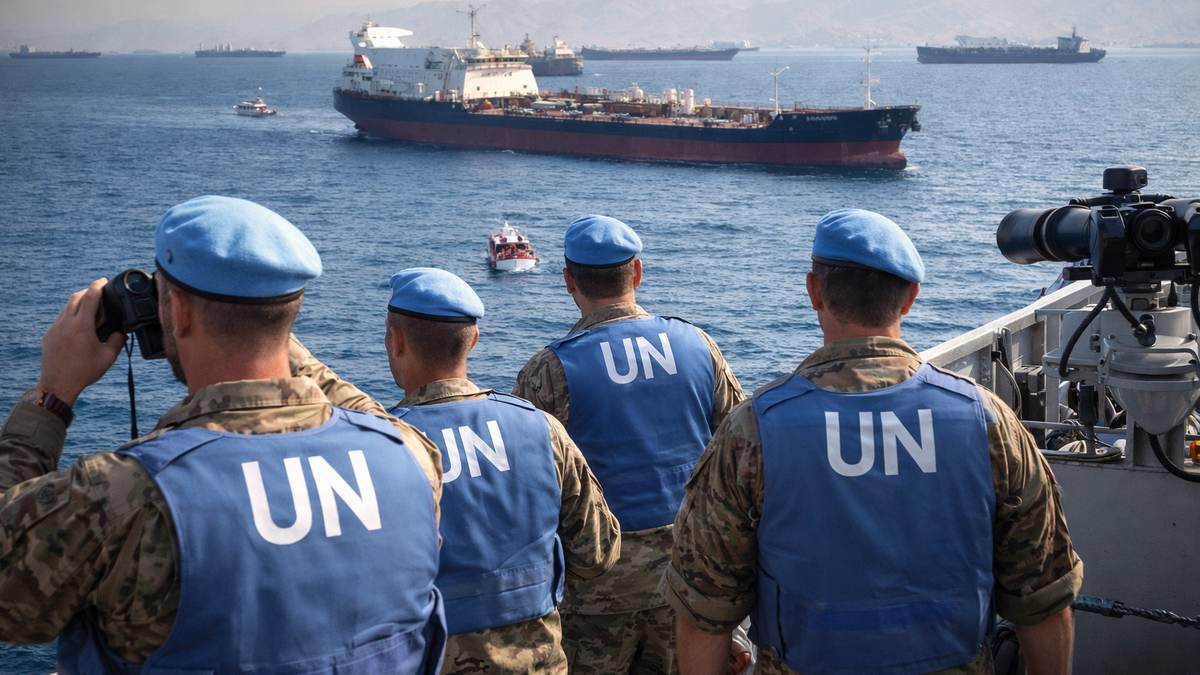
 Global supply chains face mounting strain as escalating conflict between the US, Israel and Iran threatens continued closure of the Strait of Hormuz, a narrow waterway that handles a significant share of the world’s oil, gas and fertilizer exports. Growing risks have renewed urgent debate over alternative routes for energy and raw materials, particularly phosphates and petroleum products underpining both fuel markets and global agriculture.
UN Secretary-General Antonio Guterres warned March 25 any closure of the strait would “stifle the flow of oil, gas and fertilizers globally,” highlighting the Gulf region’s central role in supplying nitrogen fertilizer inputs critical to food production. According to UN statements, disruptions could coincide with the global planting season, raising the risk of food shortages and famine in vulnerable regions.
The economic impact is already visible. Markets have shown volatility, humanitarian operations face constraints, and supply chains for key commodities remain exposed to geopolitical shocks concentrated in a single maritime corridor.
Fertilizers and Fuel at the Center of Disruption
The stakes extend beyond energy markets. Phosphate and nitrogen-based fertilizers, many of which rely on Gulf exports or transit routes through Hormuz, are essential to agricultural output worldwide. Sustained disruption could reduce availability and drive up prices, compounding food insecurity.
UN spokesperson Stephane Dujarric said the organization launched a task force to facilitate fertilizer trade and mitigate supply chain disruptions. The initiative includes coordination with international bodies such as the International Maritime Organization and the International Chamber of Commerce, underscoring the scale of the threat to global logistics systems.
At the same time, oil markets remain highly sensitive to developments in the strait. Even partial disruptions could constrain supply, increase transportation costs and force rerouting adding time and expense to already fragile supply chains.
Syria’s Geographic Role Gains Attention
Against this backdrop, policymakers are revisiting long-discussed alternatives to maritime chokepoints. Among them is Syria, whose geographic position offers a potential land bridge linking Gulf energy producers with European and Mediterranean markets.
At a recent energy forum in Washington, US Special Envoy Tom Barrack said Syria could serve as “an alternative to the Strait of Hormuz in the future through the construction of pipelines.” He noted earlier Syrian infrastructure plans envisioned the country as a junction connecting the Arabian Gulf, Caspian Sea, Mediterranean and Black Sea.
This concept hinges on Syria’s access to the Mediterranean and its proximity to major production zones in Iraq and the Gulf. Pipelines routed through Syrian territory could bypass vulnerable maritime routes, offering a more stable corridor for both oil and potentially fertilizer-related inputs.
Syrian President Ahmad al-Sharaa has similarly emphasized the country’s historic role as a trade crossroads. Speaking at a 2025 investment conference, he described Syria as a “gateway to the East” with the potential to reconnect supply chains between Asia, the Middle East and Europe.
Stability and Investment as Preconditions
The feasibility of such projects depends heavily on Syria’s internal stability and its reintegration into the global economy. US officials have pointed to recent developments, including the easing of sanctions and economic reforms, as signs of progress.
Barrack described Syria as “the most stable country in the region right now,” while noting ongoing challenges related to governance and integration of various factions. US officials also highlighted cooperation against extremist groups as a step toward broader normalization.
Economic reforms, including central bank restructuring and increased transparency, aim to attract foreign investment needed for large-scale infrastructure such as pipelines. However, significant political and security risks remain, and any long-term project would require sustained international backing.
Short- and Long-Term Pathways Forward
In the near term, efforts to stabilize maritime trade remain critical. The UN task force on Hormuz aims to ensure continued movement of fertilizers and essential goods, providing a temporary buffer against worst-case scenarios.
Over the longer term, diversification of supply routes appears increasingly necessary. Expanding pipeline networks through multiple corridors, including Syria, could reduce dependence on single chokepoints. Such strategies would not eliminate geopolitical risk but could distribute it more evenly across global systems.
The current crisis underscores a structural vulnerability in global supply chains. Concentration of critical resources in narrow transit routes leaves markets exposed to sudden disruption. As tensions persist, the push for alternative pathways, including those crossing Syria, is likely to intensify.
Whether these plans materialize will depend on political stability, international cooperation and sustained investment. For now, the Strait of Hormuz remains a focal point of global concern, and a reminder of how quickly regional conflict can ripple through energy markets and food systems worldwide.