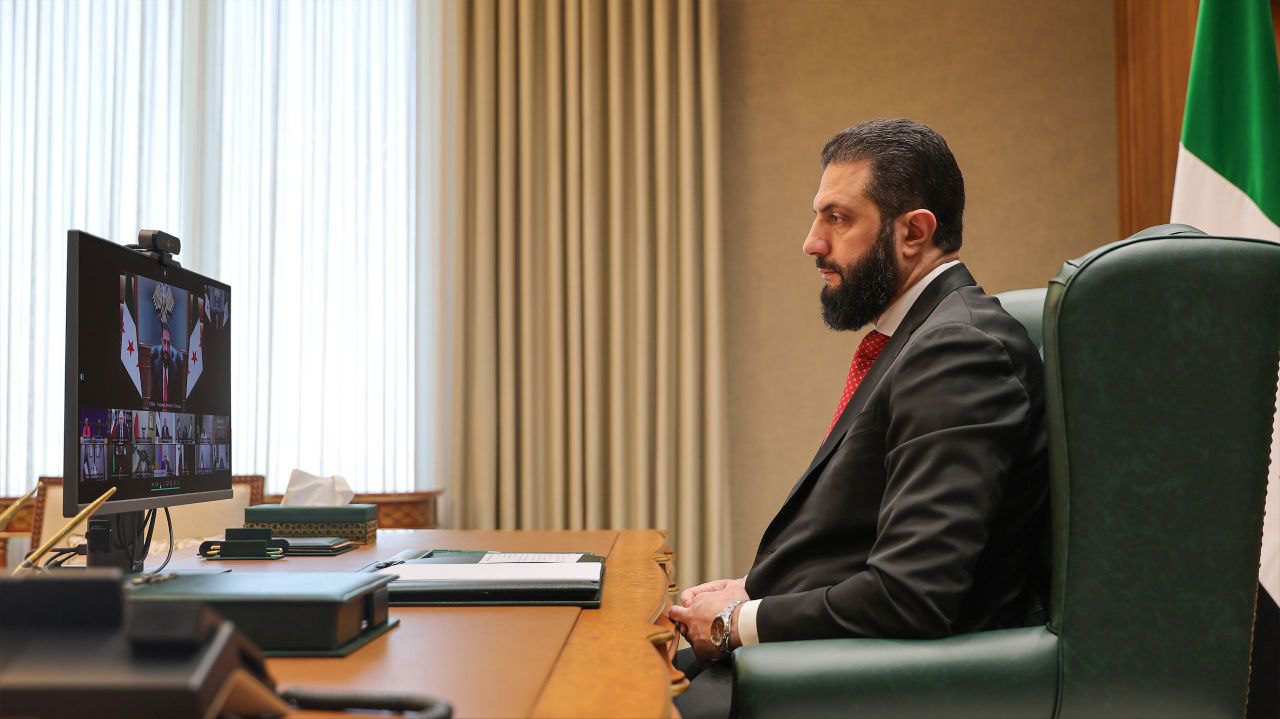
Syrian President Ahmad Sharaa joined regional and European leaders, March 9, in a video conference to address mounting tensions tied to the conflict involving Israel, the US and Iran. The meeting took place at the invitation of the European Council presidency and the European Commission and focused on the widening military escalation across the Middle East.
During the discussion, Sharaa warned that the situation could destabilize the broader region and global markets. He said the escalation represents “an existential threat to the entire region,” pointing to disruptions affecting vital energy routes.
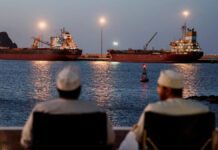
“The closure of the Strait of Hormuz and the strikes that targeted energy infrastructure in the Gulf threaten global economic stability,” Sharaa said during the meeting. The Strait of Hormuz serves as a critical shipping corridor for global oil supplies. Concerns about attacks on energy facilities and shipping lanes have raised fears of economic consequences beyond the region.
Syria Highlights Geographic Vulnerability
Sharaa emphasized that Syria faces particular risks because of its location. He described the country as situated “at the crossroads of three burning fronts,” warning that the ongoing escalation could directly affect Syrian territory.
According to SANA, the president said Damascus has coordinated with other regional governments to establish a unified position in response to the crisis. Syrian authorities also strengthened defense forces along the country’s borders as a precaution.
The measures aim to prevent spillover from the conflict and to block cross-border militant activity. Sharaa said the deployment seeks to stop armed organizations from exploiting Syrian territory amid the regional turmoil.
Damascus Condemns Iranian Attacks
Separately, Syrian officials issued statements condemning Iranian strikes targeting locations in several Arab countries. The Syrian Foreign Ministry said early Monday it “condemns the Iranian aggression that targeted a residential facility in the city of Al-Kharj” in Saudi Arabia, an attack that killed two civilians and injured others.
The ministry said it categorically rejects attacks against civilians and residential areas and called for adherence to international law and norms protecting noncombatants. Sharaa also criticized what he described as Iran’s continued interference in Arab affairs. He reiterated Syria’s position condemning “all forms of aggression against Arab sovereignty” and warned against actions that threaten Arab national security.
Arab Diplomatic Coordination Intensifies
Regional diplomacy has accelerated as governments seek a coordinated response to the latest attacks. Syrian Foreign Minister Asaad al-Shaibani participated Sunday in an extraordinary session of the League of Arab States Council at the ministerial level held by video conference. According to the Syrian Foreign Ministry, participants discussed “ways to confront the ongoing Iranian attacks on Arab sovereignty and to adopt a unified Arab position toward these violations.”
Arab League Assistant Secretary-General Hussam Zaki told AFP the meeting was convened at the request of several states, including Kuwait, Saudi Arabia, Qatar, Oman, Jordan and Egypt. Bahrain later joined the initiative, according to Saudi Arabia’s permanent representative to the Arab League, Ambassador Abdulaziz bin Abdullah al-Matar.
Meanwhile, Saturday, March 7, Iranian President Masoud Pezeshkian said Iran’s leadership council decided to halt attacks on neighboring countries unless Iran is targeted from their territory, according to the Iranian news agency Tasnim. Despite that statement, several Gulf countries reported intercepting drones and missiles in recent days, underscoring the volatility of the situation.