 Renewed Israeli airstrikes across southern Lebanon and parts of Beirut have triggered a fresh wave of displacement, pushing thousands of Syrian refugees back toward their homeland. The Israeli military issued what it described as an evacuation notice to residents of southern Lebanon, warning “the terrorist activities of Hezbollah are forcing the Israeli army to act against it with force.”
The notice urged civilians to head north of the Litani River and cautioned that “any movement southward may endanger your lives.” It added that any house used by Hezbollah for “military purposes” may be targeted.
Israeli raids have intensified in villages and towns in southern Lebanon and in Beirut’s southern suburbs. Earlier this week, an airstrike hit a hotel in Hazmieh, east of Beirut, marking a rare strike in a predominantly Christian area near the presidential palace and several embassies. According to official figures, 62 people were killed and 357 wounded between dawn Monday and dawn Wednesday.
Testimonies From the Border
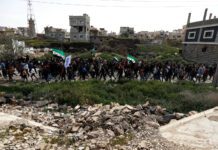
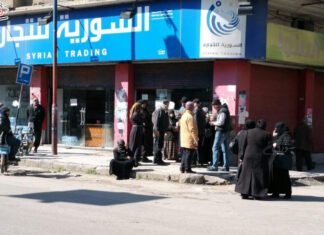
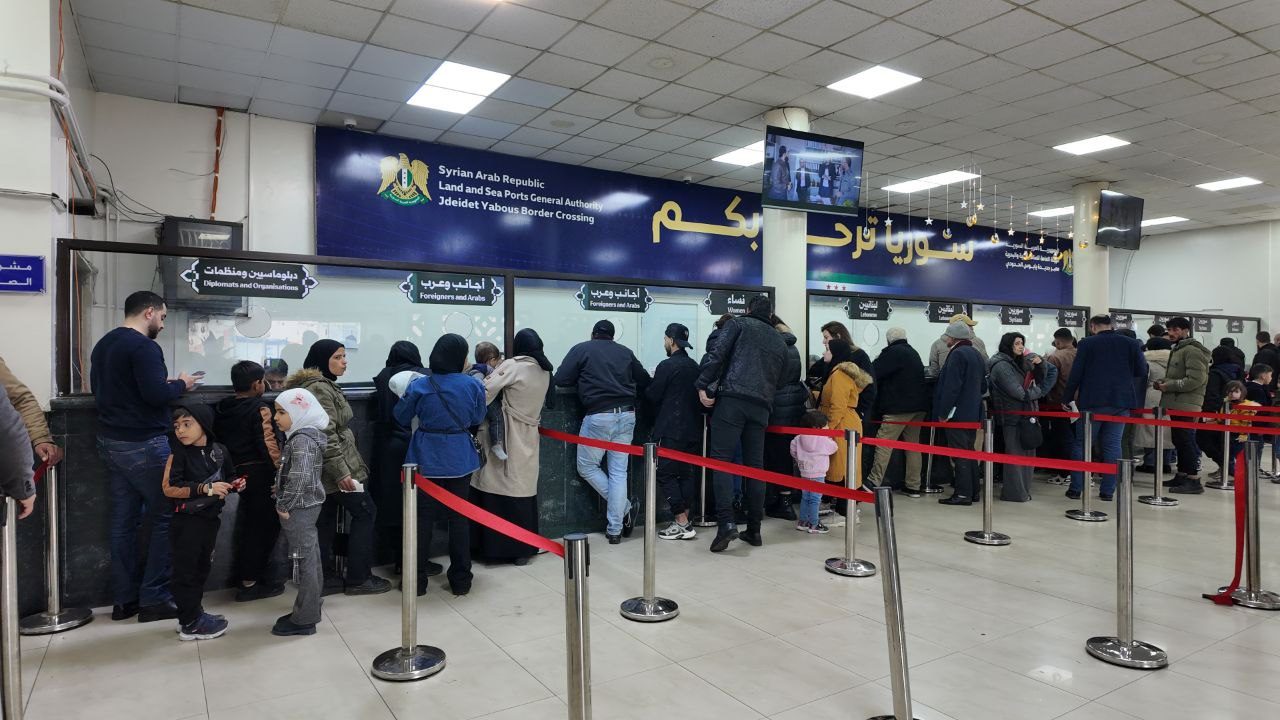
As bombardment widened, traffic surged at border crossings with Syria. Levant24 correspondents at the border reported severe congestion, with families arriving on foot and by car, many carrying few belongings.
Iman, a Syrian resident of Dahieh in Lebanon, told Levant24 that her neighborhood had become a target. “Dahieh used to be a very peaceful area, but now it’s become a target for Israeli bombings,” she said. “There are about three neighborhoods that have been evacuated due to bombings.”
Iman said her home lies roughly 500 to 600 meters from recent strikes. “If the bombing continues, those who don’t have shelters or a safe place to live will be forced to flee again,” she said, adding that both Lebanese and Syrian families are affected.
Abdullah al-Daham, originally from the Jabal Abdulaziz area of Hasakah, said he was returning to Syria after conditions in Lebanon deteriorated. “We were in Lebanon, but the situation there wasn’t encouraging, so we decided to return to our country,” he told Levant24. “In Lebanon, there’s no work, no peace, and no security.”
Another traveler, a taxi driver who regularly transports passengers to the border, described chaotic scenes. “There’s a lot of traffic and chaos,” he said. “I’ve been waiting at the border for hours, and honestly, it’s exhausting.”
Border Closures and Humanitarian Response
Tensions briefly shut down crossings. Mazen Alloush, director of public relations at Syria’s General Authority for Ports and Customs, said passenger traffic at the Jdeidet Yabous crossing was suspended after a warning of a possible Israeli strike near the Masnaa crossing on the Lebanese side. Traffic later resumed in both directions, according to Alloush.
At the new Jabouz checkpoint, officials said they had received about 17,000 Syrian travelers and over 1,700 Lebanese travelers over the last 48 hours. Syrian authorities deployed buses for those arriving on foot, opened additional waiting areas and set up a medical point to provide first aid.
Viviane Thame, communications associate at UNHCR’s Syria country office, told Levant24 the agency teams are present at the Jdeid al-Tiabous and Josiah crossings. “On 2 March, they told us that they witnessed Syrian families arriving at the in Josiah crossing with no belongings at all,” she said. Thame added that UNHCR has a contingency plan that includes winter kits, water and referrals for assistance in centers across Syria.
As cross-border exchanges intensify, Syrian refugees in Lebanon face renewed uncertainty. For many, the journey back across the frontier reflects a difficult calculation between insecurity in Lebanon and an uncertain future in a country still recovering from years of conflict.