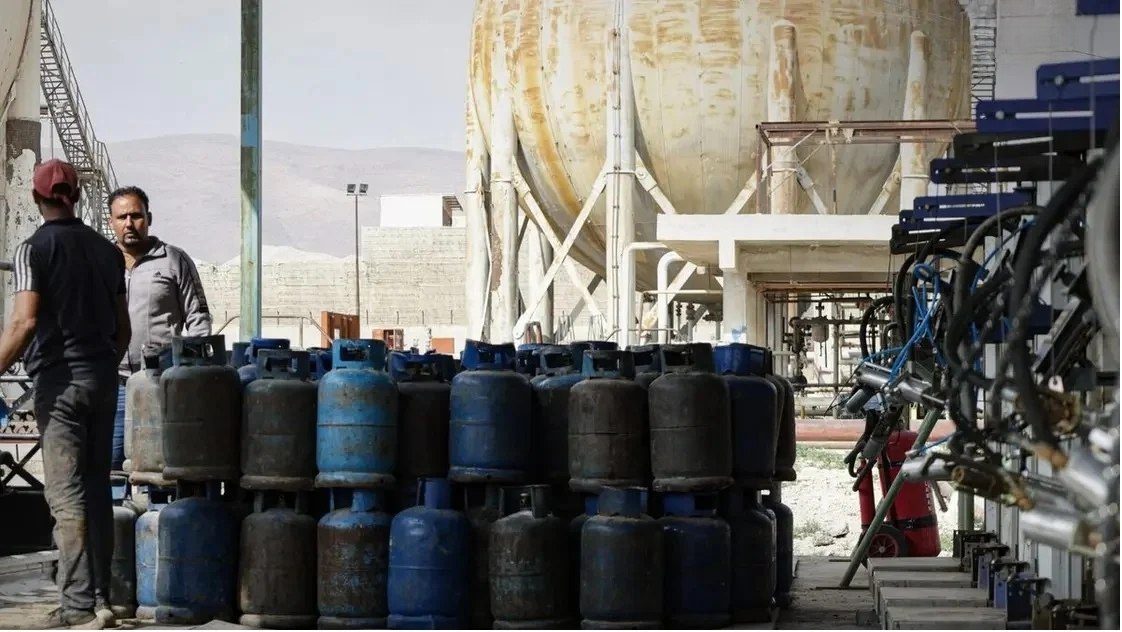
 Some regions of Syria are experiencing shortages of domestic cooking gas. Over the past few weeks intensifying difficulties have been faced by citizens, pushing cylinder prices to record levels on the black market. The crisis stems from several overlapping factors, most notably cross-border smuggling into Lebanon, as well as monopolization and speculative price manipulation within the local market.
According to Safwan Ahmad, director of institutional communication at the Syrian Petroleum Company (SPC), large-scale smuggling of gas cylinders from Syria into Lebanon has played a major role in worsening the shortage. Ahmad explained the sharp price disparity between the two countries is the primary driver of these operations, noting a gas cylinder can sell in Lebanon for roughly three times its price in Syria.
He added tightening border controls for two consecutive days led to a relative easing of the shortage and near stabilization in several rural areas. According to Ahmad, this outcome demonstrates the direct impact smuggling has on reducing supplies in the local market.
Monopolization Intensifies the Crisis
Another factor aggravating the situation is monopolization by some traders, according to Bilal Sattouf, ombudsman at SPC. Sattouf said certain distributors and traders have been stockpiling cylinders and later reselling them at inflated prices.
To counter these practices, the company has taken several measures, including raising production to over 200,000 cylinders per day. Authorities also begun escorting distribution vehicles from factories to sales points and tightening oversight of distribution centers to ensure that supplies reach consumers rather than intermediaries seeking to manipulate prices.
Structural Challenges in Production and Supply
Despite these measures, the gas sector faces deeper structural challenges. Local production currently covers only a small portion of demand, about 110 tons per day, while winter consumption can exceed 1,700 tons daily.
In the past, Syria relied heavily on maritime shipments delivered through the ports of Baniyas and Tartous. However, recent weather conditions have delayed the docking and unloading of shipments, forcing authorities to search for faster alternatives, including importing gas by land from Jordan.
Domestic production is concentrated in the Ebla and South Central Region gas plants and supported by the Jebsa and Shaer fields. Authorities also hope to rehabilitate the strategic Conoco Gas Plant, whose output has declined sharply.
Before 2011, the plant produced around 10,000 tons per day, but its capacity has fallen to about 2,000 tons as many of its units were damaged or went out of service during the years of conflict. With global fuel prices continuing to rise and gas imports requiring hard currency, resolving the domestic gas crisis will likely depend on comprehensive measures. These include stricter enforcement against smuggling and monopolization, alongside long-term efforts to rehabilitate infrastructure and expand local production capacity.