
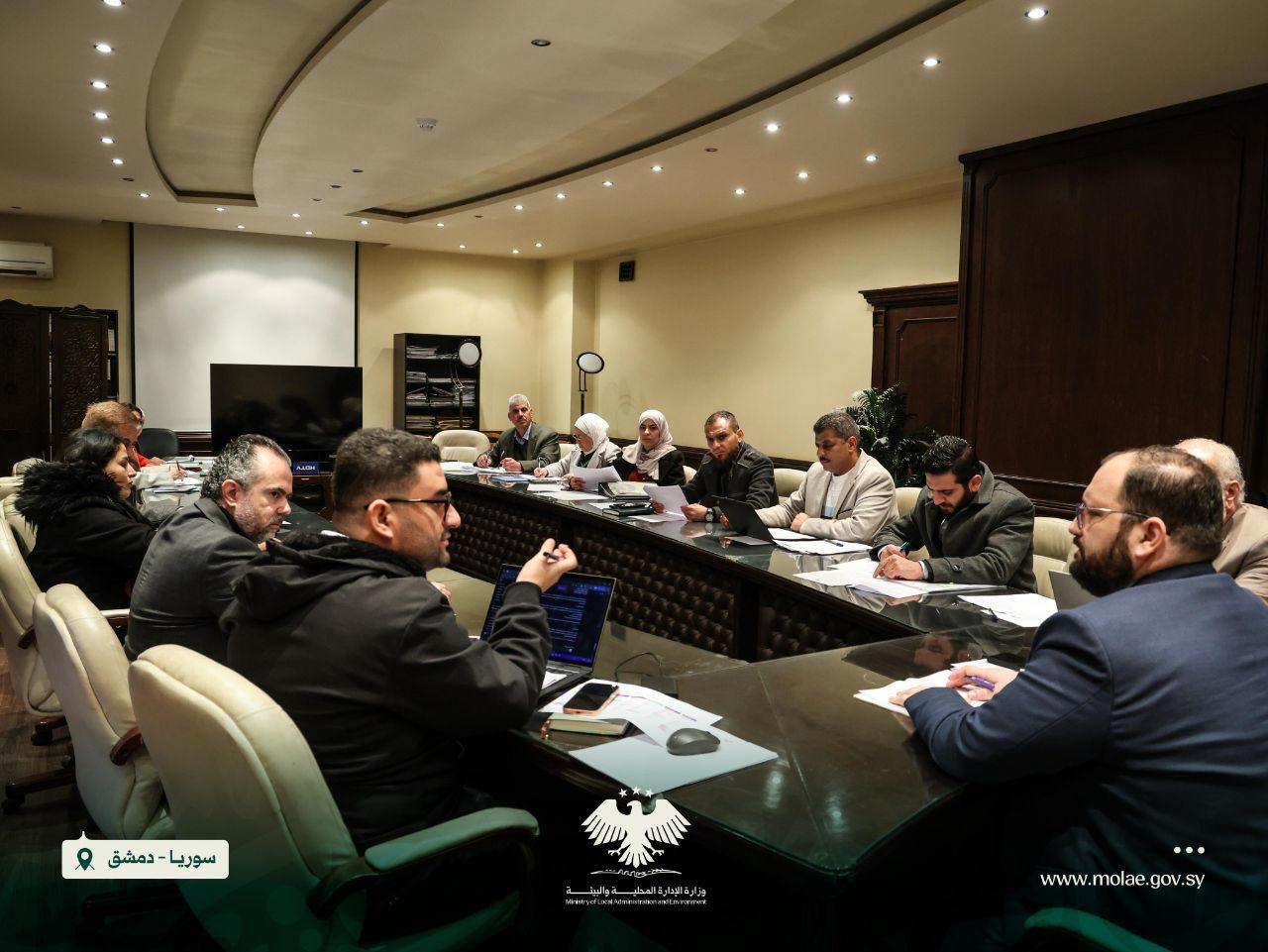
 Syria is moving to transform waste management into an economic opportunity, as the Ministry of Local Administration and Environment announced the formation of a specialized committee to amend Waste Law No. 49 of 2004. The initiative is designed to align national legislation with the principles of the circular economy, supporting both environmental sustainability and local economic development.
Toward an Integrated Waste Management Framework
According to official sources, the proposed amendments aim to establish a comprehensive legal framework for managing all types of waste, with particular attention to medical and electronic waste, categories that have historically received limited focus. A key component of the reform is the inclusion of the private sector as an active partner in waste management processes.
The updated law is expected to grant administrative units broader supervisory authority and more flexible legal tools. It will also introduce incentive mechanisms to promoting corporate social responsibility, while drawing on successful international models to enhance sustainability and improve the appearance of urban environments.
Waste as an Economic Resource
Experts view the reform as a significant step toward reclassifying waste from an environmental burden into a productive economic asset. This shift reflects a broader adoption of circular economy practices, where materials are reused and reintegrated into production cycles.
Electronic waste, including discarded computers and mobile phones, presents a particularly valuable opportunity. Recycling such materials allows for the recovery of precious metals and reusable components, reducing dependence on imported raw materials and creating added value within the domestic economy.
Innovation, Jobs, and Sustainability
Academics involved in the discussions emphasized that success will depend on stronger coordination between municipalities, universities, and industrial sectors. This collaboration is essential for developing advanced recycling technologies capable of processing complex waste streams such as plastics and chemical materials.
Beyond environmental benefits, the initiative is expected to stimulate job creation and foster new industries centered on recycling and resource recovery. By combining environmental protection with economic development, the reform supports the broader goal of building sustainable, modern cities while turning waste into a long-term investment opportunity.