A new UN report on the July 2025 violence in Syria’s Suwayda province sharpens international pressure for accountability while revealing notable alignment with the Syrian government’s own investigation into the bloodshed.
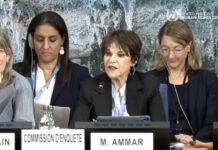
Released Friday by the UN Independent International Commission of Inquiry on Syria (IICIS), the 93-page report, follows a preliminary report released early this month, documenting what it describes as “brutal violence” that left over 1,700 people dead and displaced nearly 200,000 others during a six-day period in mid-July. Investigators said the violence may amount to war crimes and, pending further inquiry, could also constitute crimes against humanity.
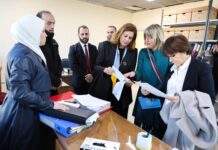
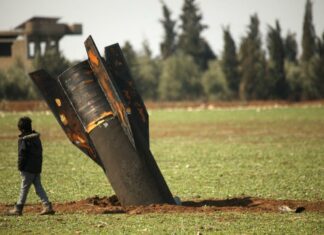
The commission based its findings on 409 firsthand testimonies from survivors and witnesses, as well as field visits conducted after Damascus granted investigators unprecedented access to the province. The report details executions, torture, sexual violence, arbitrary detention and widespread destruction of homes, businesses and places of worship, particularly in Druze-majority villages.
The UN concluded the violence unfolded in three waves: an initial assault on Druze civilians by government forces and allied tribal fighters, retaliatory attacks by Druze armed groups against Bedouin civilians, and a third, highly destructive round of attacks by mobilized tribal fighters that again targeted Druze communities.
Damascus Emphasizes Transparency and Cooperation
As it had done previously with an Amnesty International report, the Syrian government welcomed the report demonstrating what it called its “commitment to transparency and justice.” In a statement carried by SANA and echoed by the Foreign Ministry, officials said Damascus had dealt with the crisis “with the highest degree of responsibility and transparency.” The government also reiterated its pledge to hold all those involved in violations against civilians accountable, regardless of affiliation.
Officials pointed to steps already taken through the Ministry of Justice, including the creation of a national investigative committee and the detention of 23 military and security personnel now facing public trial. That response closely mirrors one of the central recommendations in the UN report: that accountability must extend beyond direct perpetrators to include command responsibility and institutional oversight.
National and International Reports Show Significant Overlap
Perhaps the most striking development is the degree of overlap between the UN findings and Syria’s independent national investigation. Ammar Izzuddin, spokesperson for the National Investigation Committee, said the international report “fundamentally” overlaps with the committee’s own findings.
He described the convergence as evidence of the “soundness of national and international investigation methodologies,” saying it strengthens the credibility of documented facts. Both investigations arrived at similar casualty figures. The Syrian committee documented 1,760 deaths and 2,188 injuries from all sides, while the UN placed the death toll at over 1,707.
More importantly, both reports agree on the core facts: the scale of civilian suffering, the presence of grave human rights violations committed by multiple actors, and the urgent need for legal accountability without exception. Izzuddin said both inquiries also aligned on the principle of non-impunity, urging executive authorities to build on the findings and move cases through national legal channels under fair and transparent trial standards.
A Point of Nuance Over Systematic Abuse
Still, one area of divergence remains significant. While the UN commission raised concerns that parts of the violence may have formed part of a widespread and systematic attack against civilians, potentially meeting the threshold for crimes against humanity, Syria’s national committee stopped short of that characterization.
Judge Hatem al-Naasan, who led the national inquiry, said the violations appeared to be “individual and not systematic,” based on survivor testimony and reviewed evidence. That distinction may prove crucial in future legal proceedings, particularly if international bodies or Syrian courts seek to establish command-level liability. Even so, the broad factual agreement between the two reports gives added weight to demands for prosecutions and reconciliation measures.
Pressure Builds for Justice and Return
Eight months after the violence, much of Suwayda remains fractured. Tens of thousands of displaced Druze and nearly the entire local Bedouin population have yet to return home, according to the UN report. The convergence of the two investigations, one international and one Syrian-led, now places the focus squarely on whether findings translate into prosecutions, returns for displaced families and a credible path toward restoring trust in one of Syria’s most deeply scarred provinces.