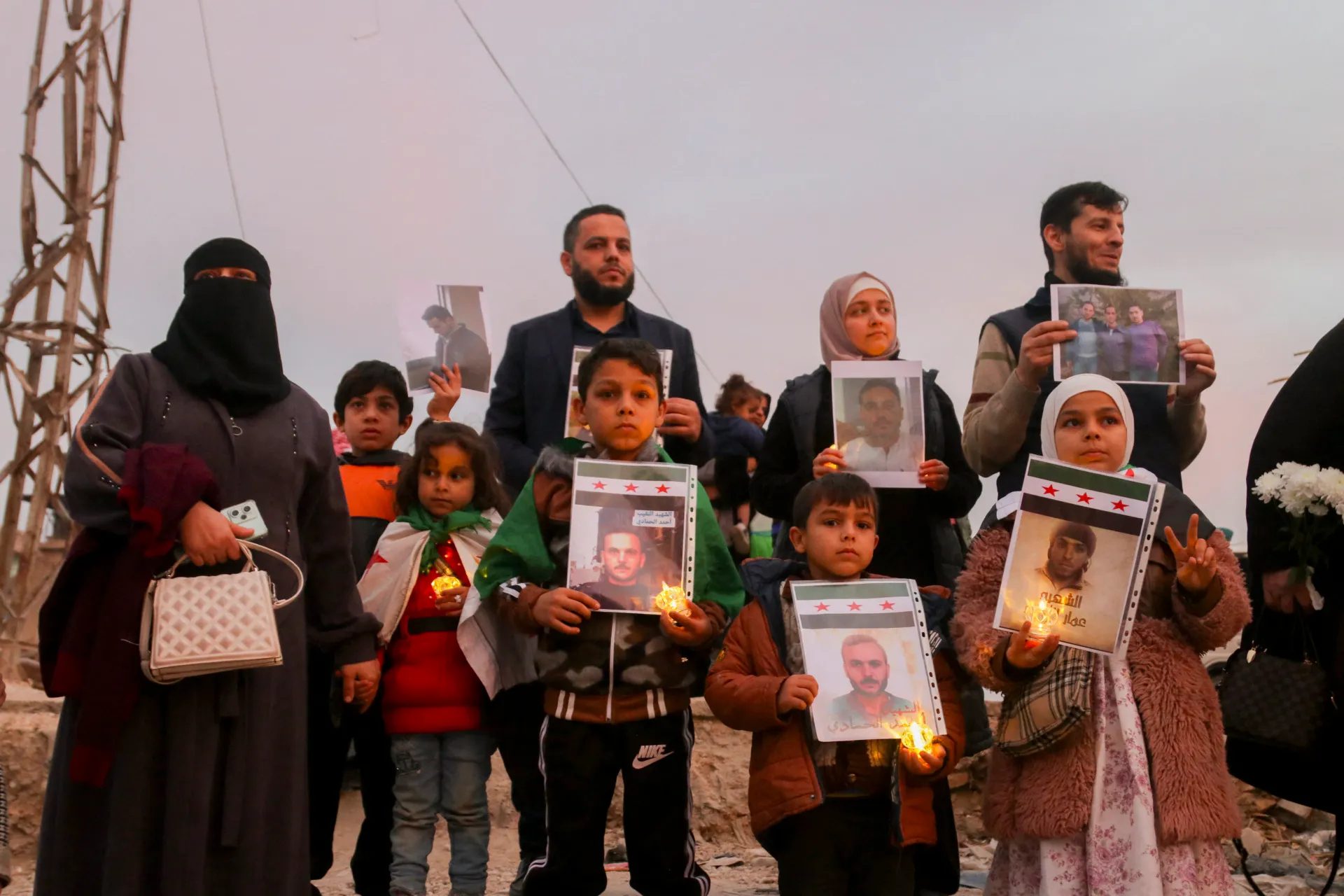
 Syria’s planned National Victims’ Registry is emerging as a central pillar of the country’s transitional justice process, led by the National Transitional Justice Commission (NTJC). The registry aims to systematically document violations, support reparations programs and contribute to accountability and truth-seeking efforts.
Officials view the initiative as a foundation for restoring rights and formally recognizing victims at a national level. By consolidating data into a unified system, the registry is expected to strengthen institutional credibility and provide a structured framework for addressing past abuses.
Work on the registry has accelerated in recent weeks. The Commission’s Reparations Committee held a coordination meeting with its technical team, alongside specialists from the Guardians of Truth, to outline implementation steps.
Participants focused on building a comprehensive and secure database that can serve multiple transitional justice pathways. The registry will be developed in phases, ensuring accuracy, confidentiality and data protection, reflecting the sensitivity of the information involved.
Victim Participation Shapes Design Process
A key feature of the initiative is the emphasis on victim participation. The NTJC is implementing a participatory approach, engaging victims through workshops, field meetings and advisory roles linked to its work. This approach aims to ensure that those directly affected by violations help shape the mechanisms intended to address their grievances.
The Commission is also working to establish dedicated centers to maintain communication with victims and connect them to reparations and other justice processes. Officials say these channels will play an important role in building trust and ensuring that policies reflect the needs and expectations of victims across different regions.
Civil Society Coordination Expands Efforts
Cooperation with civil society organizations remains a central component of the registry’s development. Fadel Abdulghani, head of the Syrian Network for Human Rights (SNHR), highlighted ongoing coordination with the Commission following a meeting in Damascus on Dec. 2, 2025.
The meeting, the first of its kind between the two sides, addressed challenges facing transitional justice implementation in Syria. Both parties stressed the importance of maintaining a nationally driven process centered on victims while ensuring collaboration between official institutions and independent organizations.
Abdulghani told Levant24 SNHR holds an extensive database documenting tens of thousands of cases, including arrests and enforced disappearances, and expressed readiness to support the Commission’s work. Plans for further cooperation include joint workshops and regular coordination meetings.
Safeguards Aim to Protect Sensitive Data
The registry’s success will depend heavily on safeguards designed to prevent misuse of sensitive information. Abdulghani outlined key protections spanning legal, institutional and technical measures. He said the legal framework should prohibit sharing data with security agencies or judicial bodies without explicit consent from victims or their families, drawing on standards used by the International, Impartial and Independent Mechanism (IIIM). The principle of limited purpose would restrict data use to compensation, redress and truth-seeking.
Institutionally, he called for an independent oversight body with auditing authority, including representatives from victims’ groups and technical experts. Technically, he emphasized separating identity data from records of violations to prevent unauthorized access or misuse.
Comparative experiences, including those in South Africa, Morocco and Chile, have demonstrated how gaps in data protection can expose victims and witnesses to risk, underscoring the importance of robust safeguards.
International Models Offer Guidance
The Commission is also drawing on international experiences to shape the registry’s design. Abdulghani pointed to Colombia as a particularly relevant model, given similarities in the scale and complexity of violations.
Colombia’s system classifies victims based on the type of violation and links each category to specific forms of compensation. Applying a similar framework in Syria could provide clearer pathways for reparations by aligning victim categories with the nature of harm suffered.
He noted that Colombia’s registry took over a decade to reach operational maturity, highlighting the long-term nature of such efforts. While the timeline may be extended, officials stress that building a credible and secure system remains essential for achieving sustainable justice outcomes.
As development continues, the registry is expected to serve as a cornerstone of Syria’s broader transitional justice framework, linking documentation, accountability and reparations in a unified national process.