 A strong rainy season in Aleppo brought both challenges and opportunities for the agricultural sector, with heavy rainfall and floods impacting farmland while simultaneously boosting expectations for a productive harvest. According to Firas Saeed, rainfall levels recorded this year exceed those of the same period last year, signaling the potential for a more favorable agricultural season despite localized damage caused by floods and torrents.
Crop Implementation Rates Show Solid Progress
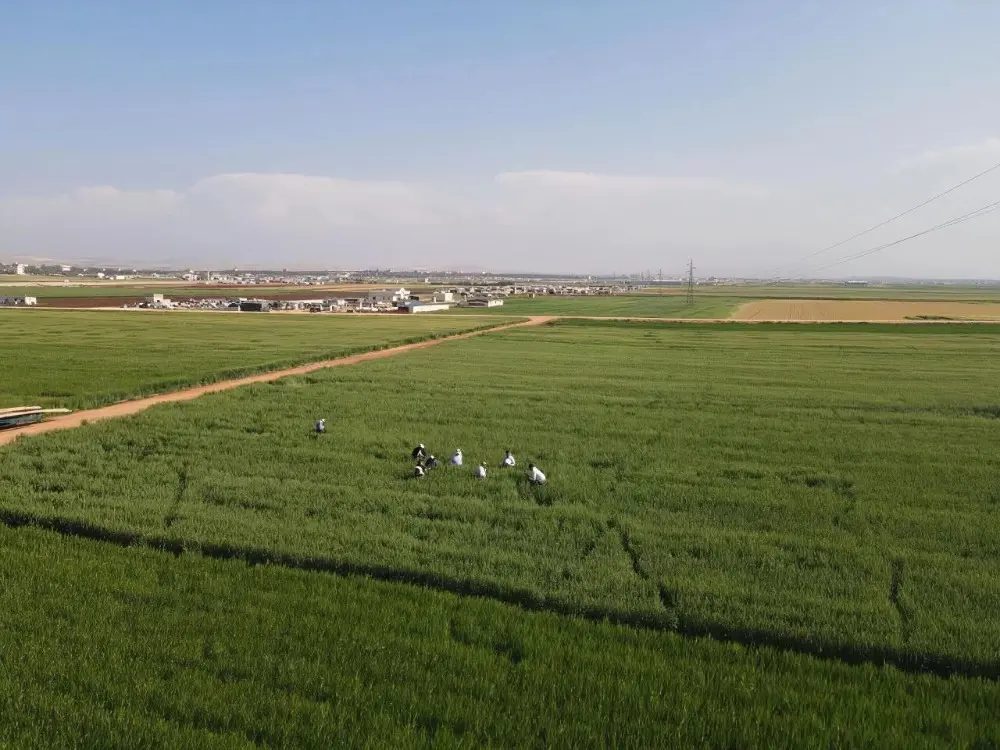
Saeed reported that irrigated wheat cultivation has reached 80,000 hectares, representing 64% of the planned 125,000 hectares. Rain-fed wheat has performed more strongly, covering 150,000 hectares, or 85% of its 175,000-hectare target.
Barley cultivation has also advanced steadily. Rain-fed barley reached 310,000 hectares, 93% of the planned area, while irrigated barley achieved full implementation, with all 6,966 hectares planted. These figures reflect a clear improvement in execution rates, particularly for rain-fed crops, which have benefited directly from the abundant rainfall.
Recovery Despite Flood Damage
While floods caused damage in parts of the governorate, especially in western rural areas, the overall impact of the rainfall has been positive. Crops and fruit trees are reported to be in generally good condition, encouraging farmers to expand cultivation, particularly in rain-fed lands.
At the same time, the return of farmers to eastern rural areas, many of which depend on government irrigation systems, has contributed to increased agricultural activity. Farmers have resumed work on their land and submitted applications for agricultural licenses in an effort to recover lost seasons.
Support mechanisms have also played a role. Through the Qard al-Hasan initiative, the Directorate of Agriculture has provided essential inputs such as seeds and fertilizers to participating farmers via local extension units.
Improved Conditions After a Difficult Season
This year’s progress follows a particularly difficult previous season marked by drought, high production costs, and market instability. Current improvements, supported by better rainfall, reopening of markets, and smoother transportation between governorates, are helping to stabilize the agricultural environment.
These developments are expected to ease product distribution, improve market access, and strengthen the ability of authorities to deliver services to farmers, setting the stage for a more resilient agricultural cycle in the coming period.