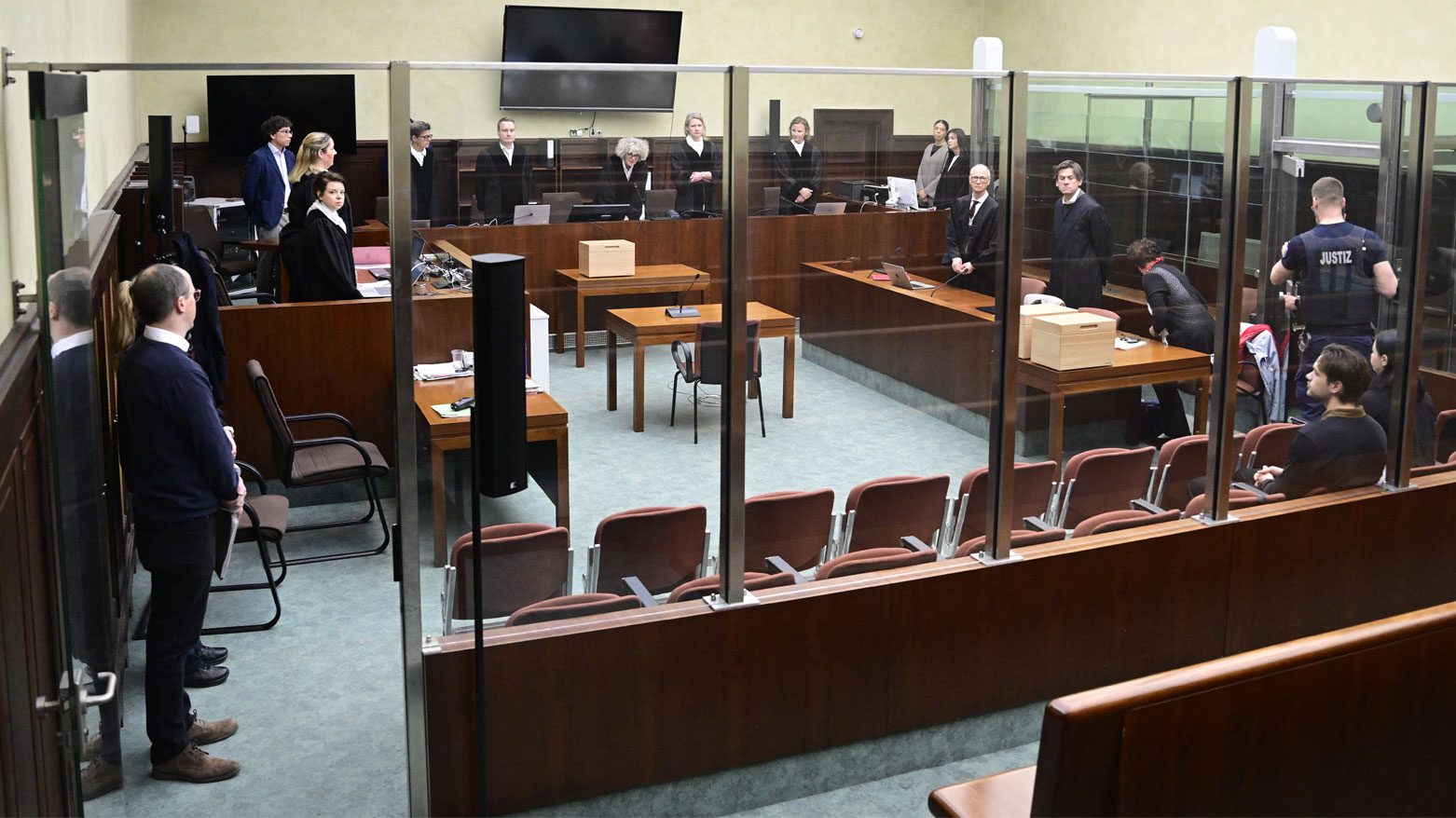
 A Syrian man identified by German authorities as Anwar S. went on trial in Berlin March 27, facing accusations of murder and crimes against humanity tied to the brutal suppression of anti-Assad protests during Syria’s 2011 protests. Prosecutors allege the 41-year-old led a pro-Assad “Shabiha” militia in Aleppo that targeted demonstrators, beat detainees and delivered some of them to Assad regime security services, where they later endured torture and inhumane prison conditions.
According to prosecutor Antonia Ernst, the case includes eight counts of crimes against humanity under Germany’s Code of Crimes against International Law. The indictment accuses Anwar S. and members of his militia of repeatedly attacking civilians after Friday prayers between April and November 2011, using batons, metal pipes and electric shocks to disperse protests.
The most serious allegation involves the death of a protester outside a mosque in Aleppo’s Said al-Dawla district. Prosecutors say the victim was beaten so severely with stun guns and batons that he suffered cardiac arrest and died shortly afterward. They argue the killing was intended to silence political opposition, elevating the severity of the murder charge under German law.
Arrest Followed Years of Investigation
German authorities arrested Anwar S. in Berlin in late September 2025 in a joint operation involving Berlin police and the federal prosecutor’s office in Karlsruhe. The arrest came after years of investigation into allegations that he helped enforce Bashar Assad’s crackdown on dissent during the earliest phase of Syria’s revolution.
Human rights activist Anwar al-Bunni, who attended the opening hearing, welcomed the proceedings. “I am happy that the trial starts now,” he said, adding that after years of investigative work, he hopes a verdict will come soon. The trial is expected to continue through mid-July.
Germany’s Universal Jurisdiction in Focus
The case marks another major test of Germany’s use of universal jurisdiction, a legal principle allowing domestic courts to prosecute grave international crimes regardless of where they occurred. Germany has pursued several Syria-related war crimes cases in recent years, like that of Syrian physician Alaa Musa and former Syrian intelligence officer Anwar Raslan, both of whom received life sentences for crimes including torture and murder.
For survivors and rights advocates, the Berlin trial represents another step in pushing for accountability after over a decade of war, mass detention and extrajudicial killings in Syria. Rather than framing the proceedings as symbolic alone, the court’s task now turns to evidence, witness testimony and whether prosecutors can prove the alleged campaign of violence beyond a reasonable doubt.