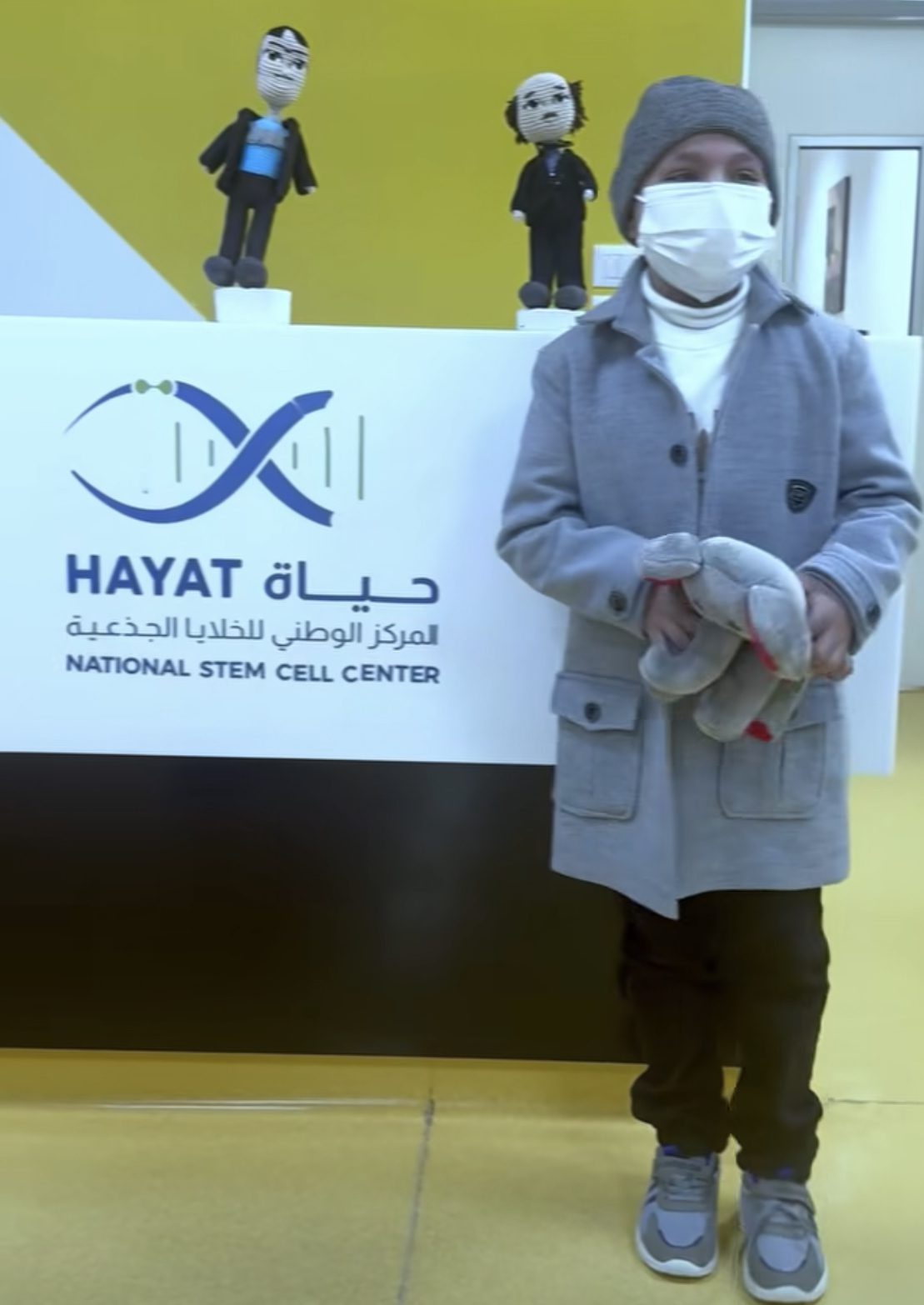
 The National Stem Cell Center Hayat at the General Authority of the University Children’s Hospital in Damascus documented a rare stem cell transplant case involving two siblings who both had Acute Myeloid Leukemia linked to a hereditary genetic mutation.
According to Dr. Majid Khadir, director of the Hayat Center, the medical team successfully completed two separate stem cell transplants for the brother and sister using cells donated by their unaffected sibling, who was a full HLA match for both children.
Khadir said the case is believed to be the first documented example in the region, and possibly one of the few reported worldwide, in which the same genetically healthy family donor provided stem cells for two siblings with familial leukemia.
Genetic Testing Confirmed Hereditary Link
Doctors initially suspected a hereditary cause after identifying multiple leukemia cases within the same family. Working with Syria’s Atomic Energy Authority, the team confirmed both affected children carried a Germline CEBPA mutation, a known inherited genetic factor associated with familial acute myeloid leukemia.
Testing also showed that their healthy brother did not carry the mutation and was a 100% tissue match, making him an eligible donor for both procedures. The first transplant was performed on the older sibling after high-dose chemotherapy. Khadir said the transplant achieved successful engraftment and the patient has shown no signs of relapse.
Roughly 15 months later, the second transplant was carried out for the sister after she reached complete remission. He said she remains in good health with stable laboratory results. The case has since been documented in the Pediatric Hematology Oncology Journal because of the unusual combination of inherited leukemia and a single healthy sibling donor matched to both patients.
How the Procedure Works
Khadir said stem cell transplantation is not a surgical operation but a complex medical process that begins with intensive chemotherapy to suppress the patient’s bone marrow. Doctors then collect stem cells from the donor using a specialized machine before infusing them into the patient through a central catheter.
Patients remain in highly sterile isolation for three to four weeks while the transplanted cells begin producing healthy blood cells. Before discharge, physicians conduct tests to confirm successful engraftment and bone marrow recovery. Follow-up monitoring continues near the center after discharge, with regular evaluations lasting at least five years.
Center Expands Specialized Care
Since opening in late 2021, the Hayat Center has performed about 71 transplants for conditions including blood cancers, major thalassemia, aplastic anemia and selected immune deficiency disorders. Khadir said about 75% of the procedures have been allogeneic, using donor cells, while the remainder were autologous transplants using the patient’s own cells. He said the center continues to rely on specialized medical, nursing, laboratory and technical teams as it expands advanced treatment options for children with cancer and inherited blood disorders in Syria.