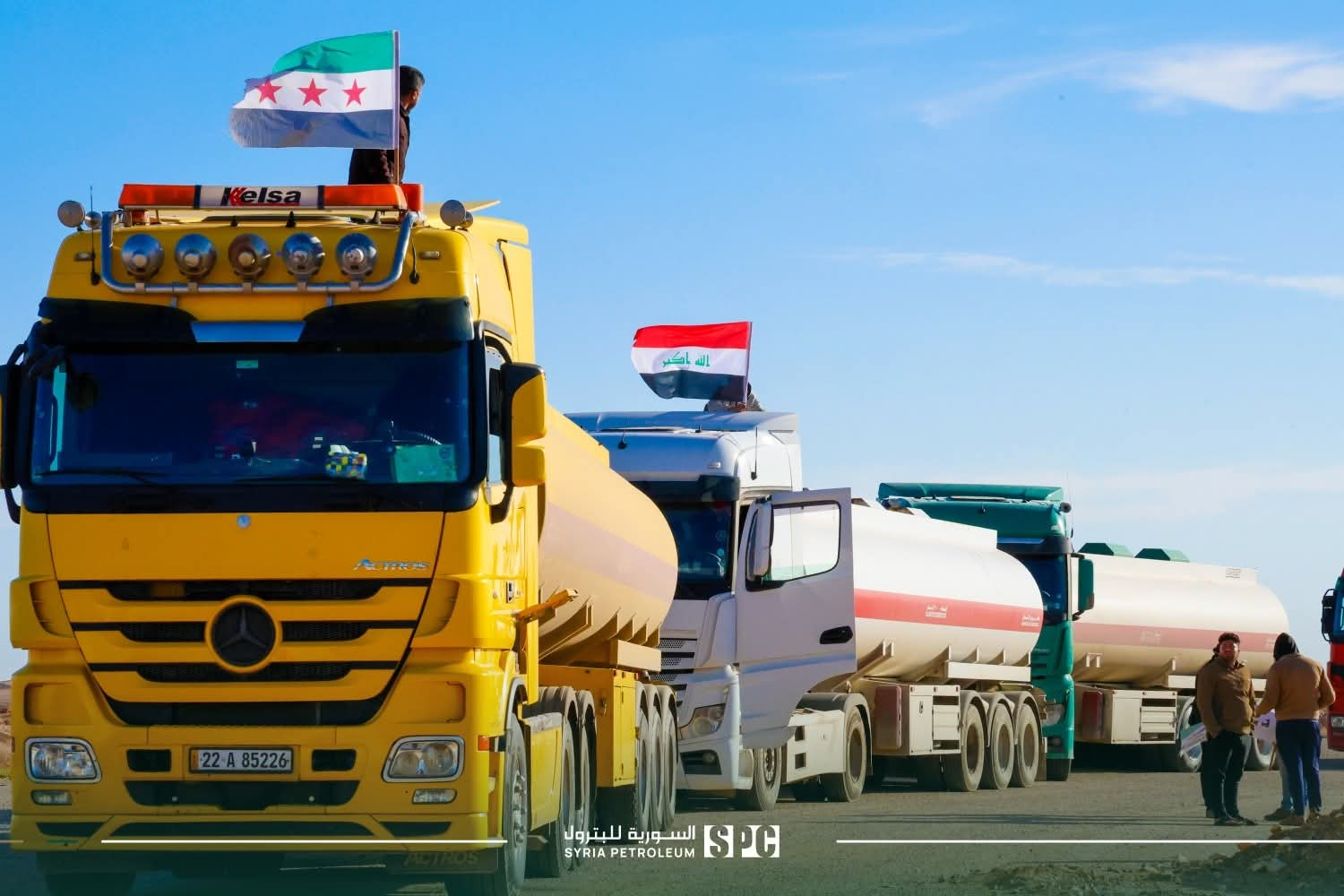
 Syria moved to reassert its position as a regional energy transit hub with the arrival of the first Iraqi fuel oil convoy through the Tanf-Walid border crossing, destined for the Banias refinery on the Mediterranean coast. The shipment, which entered from Iraq, is being prepared for export to international markets through Syrian ports.
Officials described the operation as the start of a new phase in regional energy transit, highlighting Syria’s geographic role as a land bridge linking Gulf supplies to Mediterranean routes. The convoy’s arrival comes as regional supply chains face mounting pressure from geopolitical disruptions, increasing the strategic value of overland alternatives.
Technical Teams Begin Refinery Transfers
The Syrian Petroleum Company (SPC) said technical teams begun unloading the fuel oil into storage tanks before moving it to the Banias oil terminal for loading onto export vessels. Officials said the process demonstrates the operational readiness of Syria’s energy infrastructure and the capacity of its personnel to manage large-scale transit flows efficiently.
The company said it aims to expand this strategic role in ways supporting national interests while contributing to regional market stability. The operation also reflects renewed use of land corridors tied to Syria’s port network, a key component of its broader economic recovery strategy.
Transit Revenues Carry Economic Weight
Safwan Ahmad, director of institutional communications at SPC, said the first convoy includes 299 tankers. He said the movement of such high volume directly supports the national economy by reviving transit traffic and generating significant state revenues.
According to Ahmad, the success of the coordination effort also signals the effectiveness of current Syrian energy logistics management. Officials say the convoy could serve as the foundation for a larger expansion phase, potentially enabling the export of additional petroleum products from land crossings through Syrian ports to global markets.
Regional Tensions Elevate Syria’s Strategic Value
The development comes as conflict involving Israel, the US and Iran continues to disrupt maritime trade routes, particularly around the Strait of Hormuz. Against that backdrop, Syrian officials increasingly present the country as a strategic alternative for maintaining stable oil and gas supplies to Arab and European markets.
During remarks in Berlin, President Ahmad al-Sharaa described Syria as a secure corridor for supply chains and energy transit because of its position between East and West. He said any disruption in the Red Sea or Hormuz increases the importance of Syria’s Mediterranean access points as faster and more secure alternatives for energy shipments.
Border Reopening Supports Broader Cooperation
The transit milestone follows the March 31 reopening of the Tanf-Walid crossing, announced by Mazen Alloush of the ports authority as part of expanding economic cooperation between Syria and Iraq. By linking Iraqi fuel flows to Mediterranean export terminals, the route strengthens Syria’s emerging role in regional logistics and energy security. Officials say the success of the first convoy could pave the way for a sustained corridor supporting trade diversification and positions Syria more firmly within regional supply networks.