Fresh turmoil in Suwayda has intensified public anger toward the de facto institutions aligned with Druze cleric Hikmat al-Hijri, after an armed group linked to the National Guard stormed the governorate’s Education Directorate on Monday April 6, prompting strikes, resignations and renewed calls against his parallel administration.
Armed Raid on Education Directorate Triggers Wider Backlash
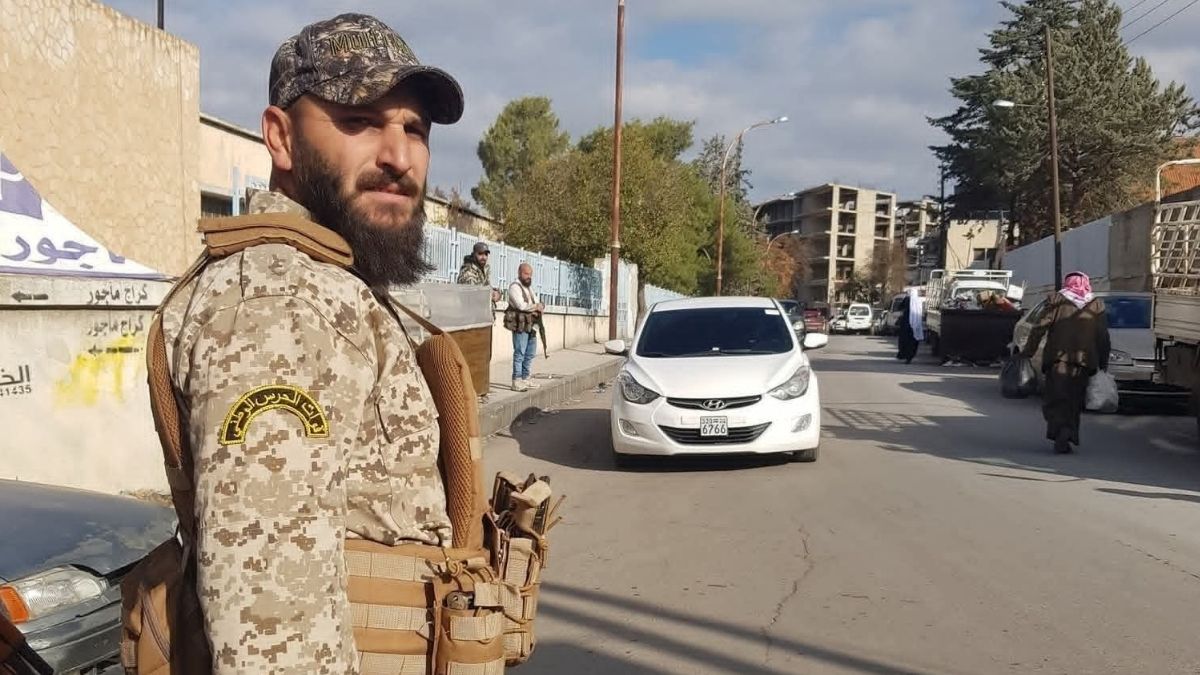
The raid, carried out by gunmen identified by local outlets as members of the National Guard’s security office, targeted the directorate amid a dispute over the replacement of former education chief Laila Jahjah with newly appointed director Safwan Balan. Witness accounts cited by Suwayda 24 and local outlets said armed men changed office locks and fired shots into the air to intimidate employees and force them from the building.
The fallout spread quickly across the province’s already strained education sector. The teachers’ association in the Salkhad region condemned what it called a direct threat to teachers and administrative staff and announced an open-ended strike beginning Tuesday April 7. The group said the use of weapons inside a civilian educational institution crossed a “red line,” demanding an urgent investigation and guarantees for staff safety.
By Tuesday, administrative employees, assistant directors and department heads across the Education Directorate had also suspended work, while some schools staged sit-ins and class suspensions. The Second High School for Outstanding Students said it would halt classes from April 8 until further notice, warning of consequences for secondary certificate recognition and students’ academic futures.
Dissolution Follows Public Pressure on Hijri’s Institutions
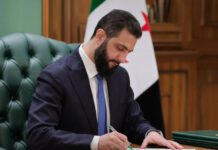
The crisis reached a political turning point on April 7, when Hijri announced the dissolution of the “Supreme Legal Committee,” the civilian governing body he created last year after an Israeli intervention and withdrawal of Syrian government forces from Suwayda.
In a statement issued through the spiritual leadership’s media channels, Hijri said Judge Shadi Fayez Murshid would instead form a new “Administration Council in Jabal Bashan,” which he said would rely on expertise rather than quota-based appointments.
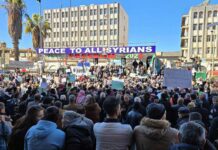
The move came only a day after the armed raid and just two days after public protesters gathered in Karama Square last Sunday, April 5, demanding the resignation of the Supreme Legal Committee over worsening economic and service conditions.
Events have heightened the sense among many residents that the committee’s dissolution was less a planned reform than a response to mounting pressure. Recent demonstrations specifically targeted both the committee and Hijri’s broader rule structure, reflecting increasingly unfavorable public sentiment toward the institutions built around his authority, including the National Guard.
Civilian Frustration Extends Beyond Security Incidents
While the raid served as the catalyst, anger in Suwayda has been building for months over deteriorating living conditions, service failures and the expansion of militia-backed institutions into civilian governance. The Supreme Legal Committee was formed in August 2025, creating a parallel authority structure loyal to separatists and Israeli-backed Druze cleric Hikmat al-Hijri. Critics inside the province increasingly viewed that expansion, along with the National Guard’s enforcement role, as a substitute administration lacking public legitimacy and accountability.
Concerns have only deepened as armed actors linked to the same system moved directly against schools and civil servants. Druze notable Sheikh Laith al-Balous described the attack on the Education Directorate as part of a campaign to weaken state institutions and undermine stability, warning those behind the intimidation of staff bore full responsibility.
Education Sector Emblematic of Broader Crisis
The education crisis is indicative of wider dissatisfaction with Hijri’s governance. Teachers and civil employees stressed their work is civilian and should remain insulated from factional struggles, yet the raid demonstrates how political and militia disputes reach into public services.
Students are increasingly paying the price. The province has already faced teacher shortages, inconsistent salary payments and uncertainty surrounding delayed secondary examinations since the July 2025 clashes that reshaped control of Suwayda.
Dismantling the Committee alone is unlikely to calm public anger. For many residents, the central grievance is no longer one committee, but the system of rule by armed institutions and unelected councils associated with Hijri and his allies.
The latest unrest suggests that, far from restoring confidence, the transition to a new “administrative council” may instead reinforce public skepticism toward another rebranded institution emerging from the same power structure.