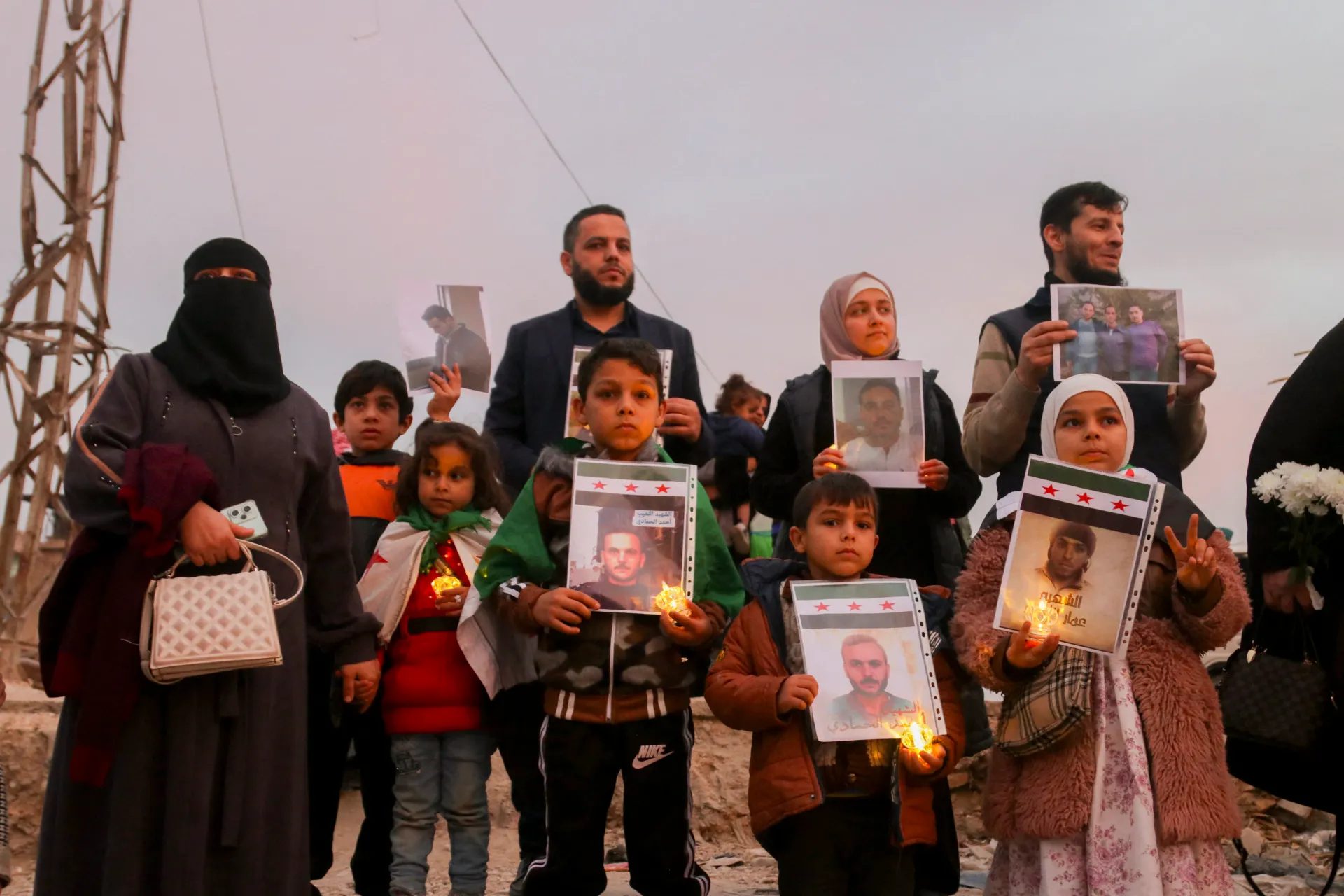
 Syrian authorities and independent investigators are making incremental progress in one of the country’s most painful postwar files: uncovering the fate of thousands of missing people, including children separated from detained and forcibly disappeared parents. A specialized committee tracking children transferred from security branches to state care homes said it documented 314 such cases, according to the Ministry of Social Affairs and Labor.
Of those, officials say 194 children have been identified and reunited with their families. Social Affairs Minister Hind Qabawat said the committee is also reviewing 612 cases involving children attached to other families under Syrian law, while investigators work to confirm that none were unlawfully separated during the years of conflict. The current review covers files from 2011 through 2015, with work continuing on later years.
Investigators say the effort faces major obstacles, including altered identities, damaged records and inconsistent documentation practices inherited from Assad-era institutions. In January, the committee said preliminary findings pointed to systematic attempts under the Assad regime to erase the identities of children born to detainees or the forcibly disappeared.
The committee, launched in July 2025, includes representatives from multiple ministries, civil society groups and families of victims. Officials say families now participate directly in support teams, hotlines and case follow-up meetings.
National Commission Still Building Capacity
The broader missing persons file remains far larger and more complex. Established by decree on May 17, 2025, the National Commission for Missing Persons (NCMP) is still building its permanent staff and operational framework nearly a year later.
According to Justice Info, the commission continues to rely heavily on an advisory council made up of former detainees, human rights advocates, forensic and legal specialists, mental health professionals and documentation experts.
Shadi Haroun, a coordinator at the International Center for Transitional Justice in Damascus, described Syria’s missing persons crisis as “the most complex missing persons issue in modern history,” citing overlapping chains of command, multiple armed actors and mass graves created by different forces in the same areas.
The commission’s mandate, however, remains unclear. While its founding decree guarantees independence, it does not precisely define whether it covers only disappearances before the fall of the Assad government in late 2024 or all unresolved disappearances across Syria.
The ambiguity complicates coordination with ministries, local communities and international organizations, even as the commission signs cooperation agreements with bodies including the International Committee of the Red Cross, the International Commission on Missing Persons (ICMP) and Syrian documentation groups.
Families Seek Answers Amid Delays
Relatives of the missing continue to attend meetings, submit testimony and search for reliable reporting channels, but logistical and communication problems slow engagement. Justice Info reports some contact numbers published by the commission are incorrect or changed between public notices, frustrating families already navigating years of uncertainty.
Aya, whose brother disappeared in Deir Ezzor after being abducted by ISIS, told the outlet her family initially reached the wrong number and later was told reports could not be taken through that channel. Despite the setbacks, she said her family would keep trying because “we have no other choice.”
Officials are considering a formal family advisory council and a digital reporting platform to make the process more accessible, though economic hardship and transportation costs continue to prevent many families from attending in-person meetings.
Mass Graves Add Forensic Challenge
Beyond documentation, the search for answers increasingly turns to mass grave sites scattered across Syria. Residents in areas such as Tadamon in southern Damascus say human remains continue to surface during reconstruction work. Multiple residents told Justice Info bones and skulls have been found beneath destroyed buildings, parks and former militia positions.
Investigators and transitional justice experts say exhuming such sites requires forensic specialists, chain-of-custody procedures and international technical support that Syria still lacks. For now, Harun said, the immediate priority is mapping and preserving suspected grave locations before evidence is lost to redevelopment or neglect.
The National Commission has begun exchanging maps with international organizations that previously documented grave sites, while also collecting local testimony in northern and northeastern Syria. Even with those steps, families are pressing for faster action. In Tadamon, one father who says he lost two sons 13 years ago during clashes in the neighborhood told Justice Info he wants both their remains and accountability.
Syria continues to struggle to not only determine who disappeared, but to establish where they are, how they died and whether a still-fragile justice process can deliver credible answers, justice and accountability for the families and loved ones of the thousands of victims.