 Syria recorded a notable improvement in the 2026 Institute for Economics and Peace Global Terrorism Index (GTI), moving from third place last year to sixth this year after a sharp decline in both attacks and fatalities. The latest report gave Syria a score of 7.545, down from 8.006 in 2025.
The annual index measures the impact of terrorism across 163 countries using a five-year weighted methodology based on incidents, deaths, injuries and hostage cases. The report, produced by the Institute for Economics and Peace, draws on data from the Global Terrorism Database and Terrorism Tracker.
According to the 2026 findings, Syria recorded 243 terrorist incidents in 2025, resulting in 156 deaths and 220 injuries. That marks a 44% drop from the 430 incidents reported in 2024, while fatalities fell 79% from 744.
ISIS Activity Declines but Remains Dominant
The report attributes much of the improvement to reduced activity by the Islamic State group (ISIS). ISIS carried out 36% fewer attacks in Syria than the previous year causing 83% fewer deaths. Despite the overall decline, ISIS remained the country’s primary terrorist threat.
The group was linked to 98% of all terrorist incidents in Syria during 2025 and accounted for 83% of total fatalities. The eastern governorates remained the most affected areas, particularly Deir Ezzor and Homs, where cross-border terrain and long-standing instability continue to create operational space for militant activity.
Officials Cite Security Gains and Territorial Control
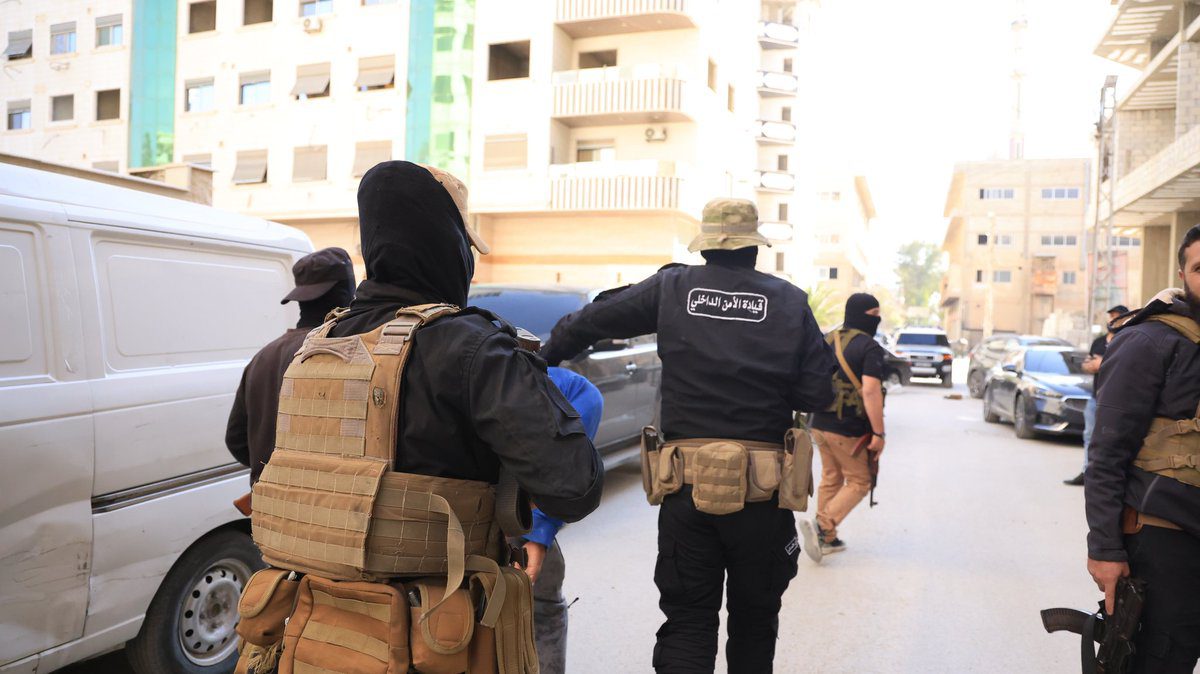
Abdulrahman al-Hajj, an academic specializing in Syrian studies, said the improved ranking reflects measurable progress in counterterrorism operations, particularly against ISIS cells. He pointed to stronger coordination between the Interior Ministry and intelligence services, alongside technical and organizational reforms, as key drivers behind the decline in attacks.
He also cited the restoration of state control in Raqqa, Hasakah and Deir Ezzor as an important factor in limiting militant mobility and dismantling support networks. Additional progress in managing detainee files and camps, particularly Hawl camp, has also contributed to improved security conditions, he said.
Coalition Cooperation Adds International Dimension
A third factor cited by al-Hajj was Syria’s growing cooperation with the international anti-ISIS coalition. The GTI report itself notes expanded coordination between Syrian and US authorities since the fall of the Assad regime, describing joint counterterrorism efforts as a stabilizing factor. That international coordination, combined with domestic security gains, has strengthened the perception of a more stable operating environment.
The decline in terrorist activity also carries economic implications. Lower attack volumes and reduced casualties can help improve investor confidence, particularly in sectors tied to transport, reconstruction and energy transit. With Syria increasingly positioning itself as an overland corridor for Gulf and Iraqi energy flows, improved security metrics could bolster its case as a safer regional transit route.
While the report cautions that terrorism remains a significant threat, Syria’s movement down the index suggests a measurable shift toward greater stability, even as long-term political and economic challenges persist.