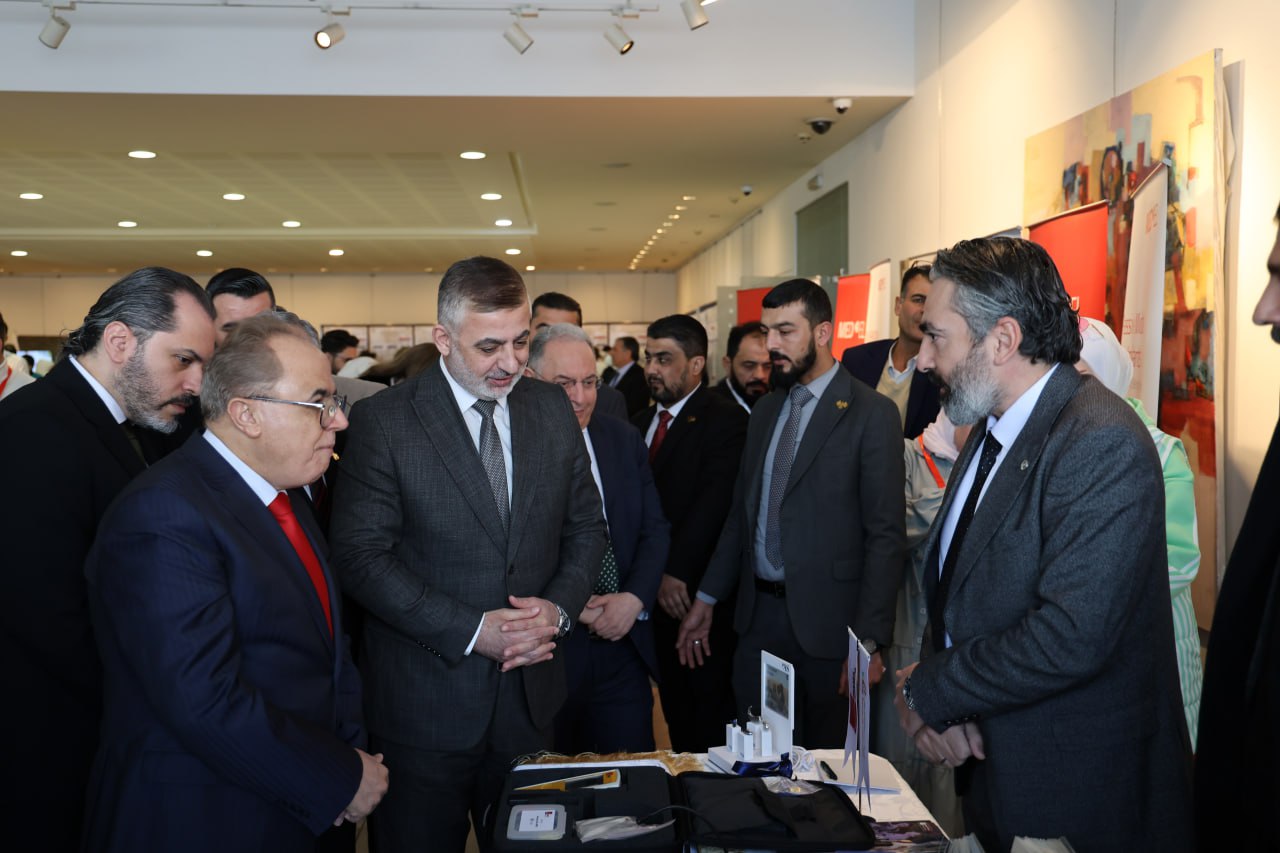
 Under the auspices of the General Secretariat of the Presidency, the National Conference on Disability titled “Empowerment, Inclusion, and Integration” was launched at the National Center for Visual Arts in Damascus. Organized by the Ministry of Higher Education and Scientific Research, the conference brought together representatives from government institutions, universities, civil society organizations, and international bodies, reflecting broad engagement with disability-related issues at the national level.
Comprehensive Policies and Empowerment via Inclusivity
In the opening session, the conference emphasized the need to address disability within a framework of rights and national responsibility, rather than charity or sympathy. The governmental approach focuses on developing comprehensive disability policies, strengthening institutional coordination, and building specialized professional capacities to improve rehabilitation, education, care, and employment services for persons with disabilities in the context of the “New Syria.”
The Ministry of Higher Education and Scientific Research highlighted its efforts to promote inclusive higher education by improving accessibility across university campuses, adapting curricula and teaching tools, training academic and administrative staff, and supporting applied research aimed at developing assistive technologies. The conference underscored that inclusive culture begins with education, is reinforced through media, and becomes sustainable through everyday practice.
Specialized Programs and Supportive Strategies
Damascus University presented plans to introduce specialized postgraduate programs in cooperation with international and medical partners, including master’s degrees in clinical neuropsychological therapy, psychotherapy, and autism studies. These initiatives are accompanied by ongoing efforts to rehabilitate university infrastructure to ensure accessibility and accommodate the needs of students with disabilities.
The Ministry of Social Affairs and Labor outlined its national strategy to ensure that persons with disabilities are fully included across all social protection, employment, and civic participation programs. The ministry reaffirmed its commitment to adopting the conference’s recommendations and translating them into actionable public policies.
International organizations reaffirmed their support for disability inclusion in Syria, emphasizing protection, equitable access to services, and meaningful participation for persons with disabilities, particularly women and girls. The focus included gender-sensitive programming and the integration of disability considerations across planning, implementation, and evaluation stages.
Overcoming Challenges and Hope for the Future
Over two days, the conference hosted dialogue workshops addressing psychosocial care, developmental disorders, rehabilitation programs, assistive technologies, and inclusive education. Practical examples of inclusion were also presented, highlighting vocational training initiatives and community-based success stories.
The conference comes at a critical moment, as persons with disabilities in Syria continue to face challenges related to accessibility, transportation, education, employment, and social perceptions. By bringing together national and international stakeholders, the event aims to lay the groundwork for a comprehensive national plan that transforms the principles of empowerment, inclusion, and integration into measurable and lasting outcomes.