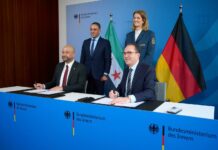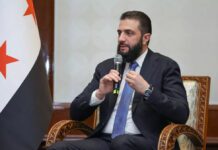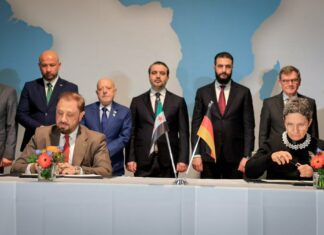
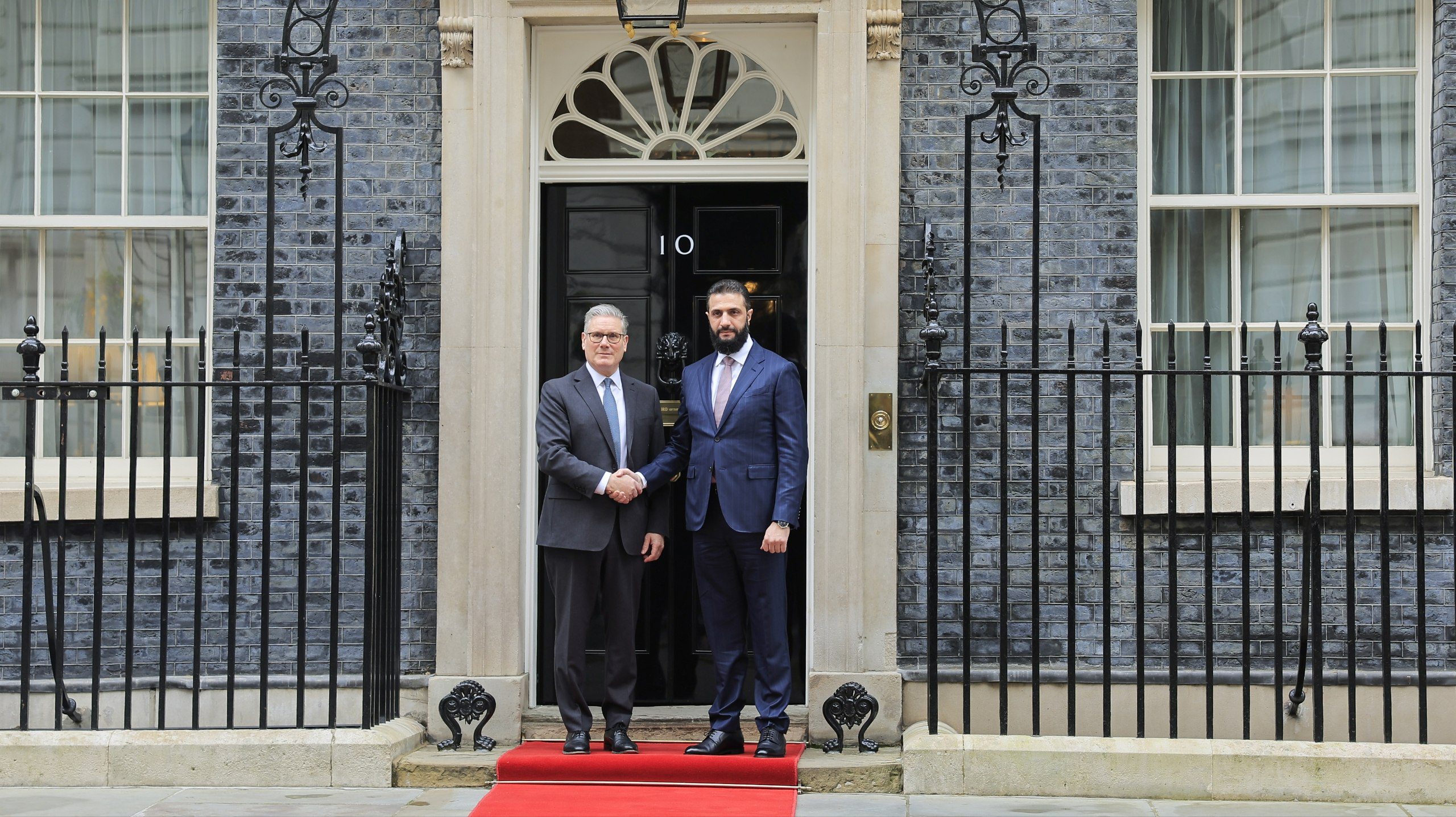
 President Ahmad al-Sharaa arrived in London for a landmark official visit, the first by a Syrian leader to Britain in over two decades, signaling a significant shift in relations between Damascus and London. Sharaa’s motorcade arrived at 10 Downing Street, where he was welcomed by Prime Minister Keir Starmer alongside senior British officials. He was joined by Foreign Minister Asaad Shaibani and Economy Minister Nidal al-Shaar.
Outside official venues, members of the Syrian community gathered near Parliament and Chatham House to welcome the president, reflecting the human dimension of the visit and the role of the diaspora in rebuilding ties. British Special Envoy to Syria Ann Snow described the trip as a “historic day” for UK-Syria relations, noting it was the first such visit since 2002 and reaffirming Britain’s commitment to partnership with Syria’s new government.
Downing Street Talks Cover Regional Stability
Talks at Downing Street focused on expanding bilateral cooperation in development, investment and broader regional diplomacy. Both sides described the current moment as pivotal for British-Syrian relations and agreed on the need to deepen practical engagement. Discussions also addressed heightened tensions in the Middle East, likely an allusion to the Israel-US-Iran war, with both leaders emphasizing the importance of avoiding further escalation.
A key economic and strategic issue involved the Strait of Hormuz, where both sides discussed the need for a practical framework to restore freedom of navigation and reduce the global economic fallout from disruption. The talks highlighted how economic security and regional stability are increasingly intertwined in the new phase of UK-Syria engagement.
Counterterrorism and Migration Dominate Security Agenda
Security cooperation featured prominently in the visit. Starmer welcomed recent Syrian measures against ISIS and praised the progress in intelligence coordination between the two countries, describing counterterrorism as a shared strategic priority.
Migration also remained high on the British agenda. The prime minister said London hopes to make further progress on voluntary and safe return pathways, border security and efforts to dismantle human smuggling networks operating across the region.
As part of the security track, Sharaa met Home Secretary Shabana Mahmud in the presence of Shaibani and intelligence chief Hussein al-Salama. The meeting focused on strengthening coordination and exchanging expertise to address common security challenges.
Reconstruction and Investment Opportunities Expand
Economic reconstruction formed another central pillar of the visit. Both sides agreed that infrastructure rehabilitation is essential to Syria’s economic transformation, with opportunities identified for British companies in construction, energy, agriculture and telecommunications.
British participation in these sectors could provide technical expertise and investment capital at a critical stage of Syria’s rebuilding efforts. The economic agenda reflects a broader attempt to translate diplomatic normalization into practical development gains.
Parliament and Chatham House Extend Diplomatic Reach
After Downing Street, Sharaa’s delegation traveled to Parliament for meetings with Attorney General Richard Hermer and Middle East Minister Hamish Falconer. The president is also participating in a policy forum hosted by Chatham House, where he is meeting with international affairs experts and researchers during his first visit to Britain.
The visit concluded with both sides agreeing to maintain continuous communication to follow up on implementation and expand consultation on shared priorities. More broadly, the London meetings mark a major diplomatic step in rebuilding relations between Damascus and the UK, opening new pathways for cooperation in security, reconstruction and regional stability.