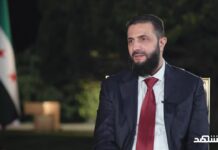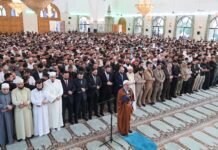
One year after the overthrow of Bashar al-Assad, Syria is attempting to rebuild a state shattered by nearly 14 years of war. The transitional government led by President Ahmad al-Sharaa has worked to reestablish basic order while navigating intense political, economic, and regional pressures. The Economist wrote that the transition “went better than many expected,” noting Sharaa’s “remarkable ability to maneuver diplomatically” despite the long road ahead.
The fall of Assad on December 8, 2024, followed a rapid 11 day offensive. His departure disproved the regime’s early slogan, “Assad or chaos,” which had warned supporters that the country would collapse if he were forced from office. According to The Economist, the ensuing war resulted instead from Assad’s refusal to step aside and the violent repression of peaceful protesters.
Balancing Reform and Public Trust
Sharaa, who once had ties to Al Qaeda (AQ), assumed office under intense scrutiny. Yet the country did not fall into the predicted disorder. No religious restrictions were imposed on society, and the president avoided any push to enforce Islamic law. The magazine said this reflected “the pragmatism of the new president.”
Still, the internal challenges remain severe. Under Assad the GDP dropped over 70% since the 2011 revolution and millions are still in need of housing, work, and reliable services. Critics remain divided over the new government’s economic policies that lean towards a liberal ‘free market’ model and a decentralized system that some claim “avoids rebuilding state institutions,” while instead forming parallel bodies. The Economist cited the recent creation of a new customs authority as an example that diverted revenue away from the Ministry of Finance.
Foreign Policy Resets the Regional Frame
Diplomatically, Syria moved farther from the Russia Iran axis and closer to the West, culminating in Sharaa meeting US President Donald Trump at the White House last month. Washington lifted temporary sanctions and is working to ease others. Gulf states have shown interest in investment as Syria’s newly formed anti-narcotics division continues to dismantle the Assad-era drug trade that emerged and thrived under Assad.
Relations with Israel remain tense. While Syria attempted to open “a new chapter,” Tel Aviv responded with what the Economist called “unwise hostility.” Local tensions in Suwayda, where Druze factions received overt support from Israel, have added to the strain and raised concerns about a broader confrontation.
A Pivotal Year Ahead
Syria’s next test arrives in January with the convening of the new parliament. Its performance will reveal whether the country is building genuine oversight or replicating the rubber stamp legislatures of the past. Syria’s transitional government has kept the state intact and avoided a return to war. The Economist noted that while Sharaa, “succeeded during his first year in preventing collapse,” the harder task lies ahead: building institutions strong enough to support a new political order.