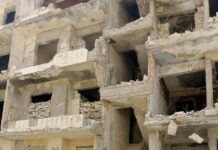
Developments in Aleppo this week underscored the fragility of the March 10 and April 1 agreements between the Syrian government and the Syrian Democratic Forces (SDF), as new violence struck civilian areas. Four civilians were injured when drones launched by the SDF crashed into neighborhoods in Aleppo, according to SANA. Syrian security authorities said the drones targeted residential areas and public facilities, describing the attacks as a new phase of escalation.
Aleppo Health Directorate reported SDF attacks on residential neighborhoods from Tuesday to Saturday at 5 p.m. killed 23 civilians, including four women and a child, while 104 civilians, mostly women and children, were injured with many in critical condition.
In a statement carried by SANA, the Syrian security command said the SDF used over 10 Iranian-made suicide drones against the city, resulting in injuries and property damage. The command said Syrian army units responded by striking drone launch sites and destroying heavy vehicles at SDF positions, calling the action an initial and proportionate response.
Later the same day, a drone struck the Aleppo Governorate building as a press conference was concluding, causing material damage but no injuries. The Aleppo Media Directorate condemned the incident, saying the attack aimed to intimidate officials and silence the media.
Water Cutoff From Deir Hafer Intensifies Pressure
Beyond aerial attacks, Syrian authorities accused the SDF of targeting vital civilian infrastructure in eastern Aleppo countryside. SDF-affiliated forces halted operations at the Babiri water pumping station in the Deir Hafer area, cutting off Aleppo’s primary water supply.
The Syrian Ministry of Energy said water pumping stopped under direct orders from SDF personnel controlling the facility. In a statement, the ministry said Babiri is the main source of drinking water for Aleppo city and its surrounding areas, warning that the disruption directly harms civilians and essential services, Aleppo Gov. Azzam al-Gharib condemned what he described as the forced suspension of operations, calling the act a grave violation of international law and a crime against humanity.
Syrian authorities also issued a security warning to residents of Deir Hafer and nearby areas, urging caution amid reports that Iranian-made drones were launched from the same area toward Aleppo neighborhoods and government buildings.
Government Moves to Restore Order
Syrian authorities said security operations in the Sheikh Maqsoud and Ashrafieh neighborhoods focused on restoring public order after repeated violations of security arrangements. The Foreign Ministry said the government carried out a limited law enforcement operation following armed attacks launched from within the neighborhoods on January 7 and January 8 that caused civilian casualties.
Gharib said during a press conference that life has begun returning to Ashrafieh and Bani Zaid and will gradually resume in Sheikh Maqsoud. He said authorities formed a central response committee to manage the return of residents and assist over 155,000 displaced people. “We have no intention of revenge against anyone, and those who committed crimes will be held accountable according to the law,” Gharib said.
The Interior Ministry reported dismantling booby-trapped devices planted in civilian homes and vehicles in Sheikh Maqsoud, while engineering teams continued clearing explosive remnants.
Civilian Impact and Conflicting Claims
Residents described days of fear and shortages during the clashes. Civilians told local outlets they struggled to obtain food and medicine and feared leaving their homes amid shelling and drone activity. Deputy Gov. Ali Hanoura said authorities evacuated families to shelters equipped with heating, food and medical care, stressing that no one was forced to leave.
While Syrian military officials announced a halt to operations after SDF fighters surrendered at Yassin Hospital, the SDF denied a ceasefire and accused government forces of continuing shelling, claims rejected by state officials.
International Responses and US Position
US Special Envoy to Syria Tom Barrack warned that the violence in Aleppo contradicts the March agreement to integrate the SDF into state institutions. After meetings in Damascus, Barrack called for restraint and renewed dialogue, saying the US supports Syria’s unity and a single national army. He said Washington lifted sanctions to give Syria a chance to advance its political transition.
At the same time, protesters affiliated with the SDF gathered outside a US-led coalition base in Hasakah, expressing anger over what they described as American abandonment, highlighting growing tensions around the unfolding events in Aleppo.