Fresh fighting around Aleppo has exposed the fragility of recent understandings between Damascus and the Syrian Democratic Forces (SDF), even as Syrian authorities stress what they describe as a restrained approach aimed at limiting casualties.
Since early this week, the Syrian Army Operations Authority declared wide areas of the eastern Aleppo countryside, including Deir Hafer, Maskana and Babiri, closed military zones. The announcements, carried by the state news agency SANA, included published maps, advance warnings and repeated calls for civilians to stay away from SDF deployment sites and for armed groups to withdraw east of the Euphrates River.
Military officials said the measures followed intelligence reports of SDF mobilization alongside fighters linked to the Kurdistan Workers’ Party (PKK) and remnants of the Assad regime. The army said it detected these groups near Deir Hafer and Maskana and sent reinforcements to its own positions as a deterrent. SANA reported that Syrian forces repelled SDF infiltration attempts this week in the northern Raqqa countryside and thwarted efforts to mine bridges east of Aleppo.
Clashes After Aleppo Neighborhood Battles
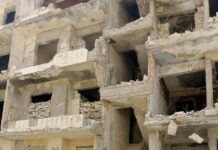
The escalation follows clashes last week in Aleppo’s Sheikh Maqsoud and Ashrafieh neighborhoods, where the Syrian army regained full control after what it described as a limited security operation. According to SANA, militants were allowed to leave for northeastern Syria under supervision, and the operation ended Saturday. The Aleppo Health Directorate said SDF attacks on residential areas during that period killed 24 civilians and wounded 129.
Damascus has framed its actions as defensive and calibrated. Officials say they announced targets and timelines in advance to allow civilians and even fighters to leave. They have also linked the closed zones to drone attacks on Aleppo, claiming Iranian-made suicide drones were launched from SDF-held territory east of the city.
Accusations of Civilian Harm
The SDF rejects that characterization and accuses government forces of shelling populated areas. At the same time, Syrian state media and local networks have reported repeated SDF attacks on civilian infrastructure. Al-Ikhbariyah TV said SDF units blew up three bridges near Deir Hafer, isolating the city and preventing residents from leaving.
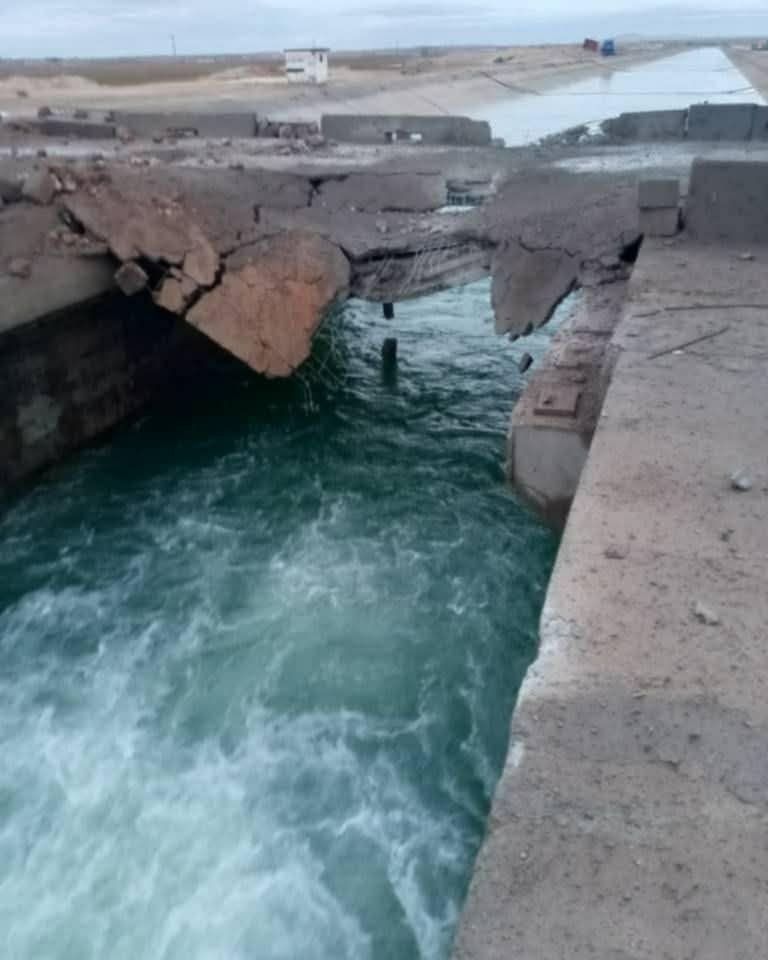
The Syrian Ministry of Energy said SDF fighters pressured staff at the Babiri water station and halted pumping to Aleppo, threatening about 8,000 hectares of farmland and thousands of civilians before supplies were restored. The ministry warned of risks to water and food security and called on international organizations to respond. Local outlet Khabour Network reported that an SDF sniper killed a civilian attempting to leave Deir Hafer on a motorcycle, an account not independently verified.
Political Stakes and External Reactions
The fighting has raised doubts about the March 10 agreement to integrate SDF military and civilian institutions into the Syrian state. PKK-linked media argued the clashes undermine a ceasefire declared by the group earlier this year. Turkey took the opposite view. President Erdogan said the expulsion of SDF forces from Aleppo created an opening to implement the agreement, according to remarks reported by Turkish daily Hürriyet.
The US urged restraint. US Central Command chief Gen. Brad Cooper said Washington was “closely monitoring developments in Aleppo” and called on all parties to “prioritize the protection of civilians and critical infrastructure” and return to negotiations. For now, with curfews imposed in SDF-held Raqqa and reinforcements moving on both sides, eastern Aleppo remains a flashpoint where military moves are colliding with unresolved political talks.