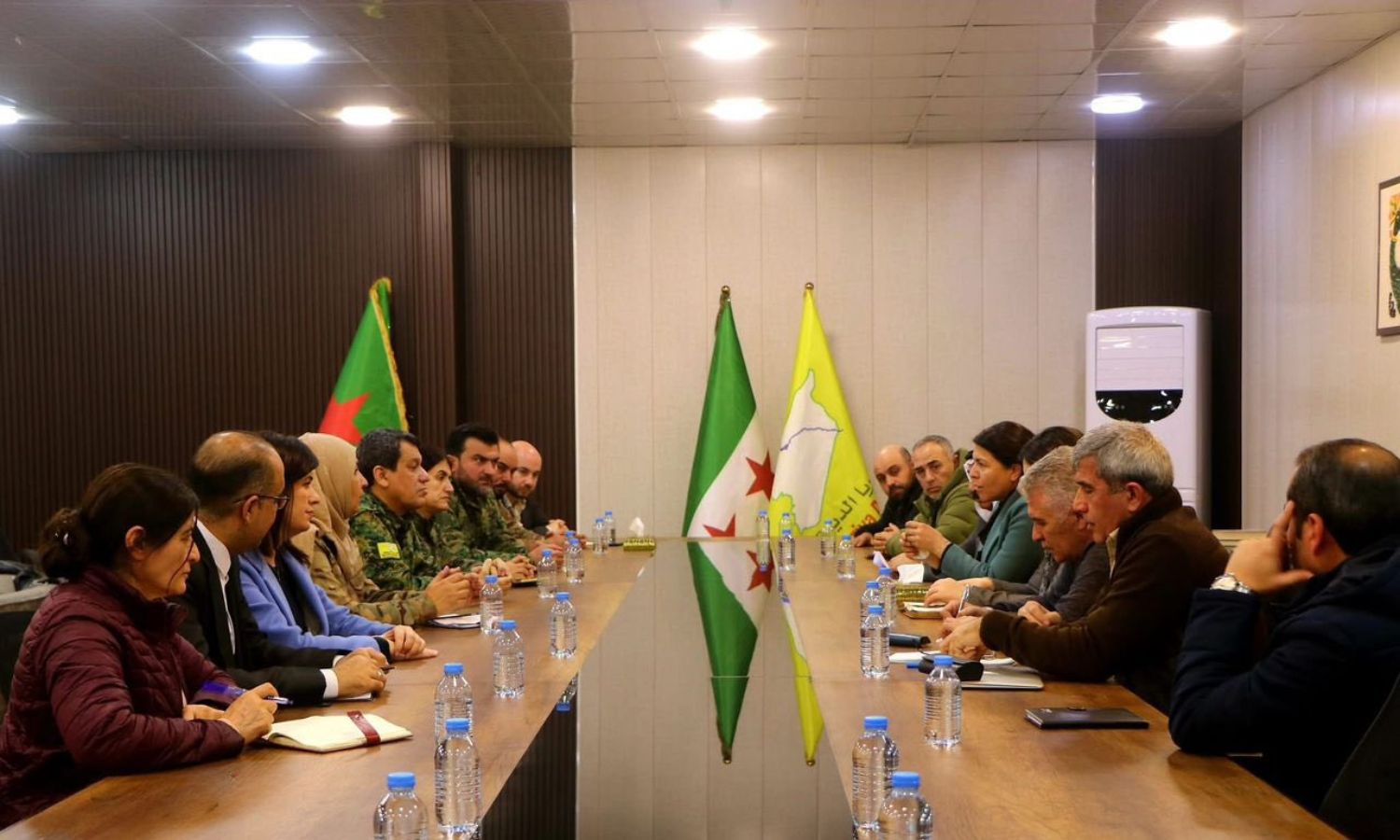
The Syrian government and the Syrian Democratic Forces (SDF) announced a final and comprehensive agreement Friday aimed at ending weeks of escalating clashes in northeastern Syria. The deal centers on a comprehensive ceasefire and a phased integration of SDF military and administrative structures into Syrian state institutions, according to near-identical statements released simultaneously by the Syrian Information Ministry and the SDF media center.
Both sides said the agreement seeks to unify Syrian territory, enforce the law and advance nationwide reconstruction. A Syrian government source told local outlets integration would occur on “an individual basis” within newly formed brigades, with Damascus assuming control of all civilian institutions, border crossings and ports so that no part of the country remains outside state authority.
Under the terms, forces from both sides will withdraw from contact points. Interior Ministry security units will enter the centers of Hasakah and Qamishli temporarily to bolster stability and oversee the integration of local security forces. Militarily, the agreement establishes a new division composed of three SDF brigades, along with a separate Ain al-Arab (Kobani) brigade incorporated into a division affiliated with Aleppo Governorate.
The deal also calls for integrating the Autonomous Administration of North and East Syria (AANES) institutions into state bodies, regularizing civil servants, settling civil and educational rights for Syria’s Kurdish population and guaranteeing the return of displaced residents.
Local Reactions and Diverging Interpretations
While Kurdish political circles broadly welcomed the ceasefire, SDF leaders framed the agreement as preserving significant local autonomy. Ilham Ahmad, head of the AANES Executive Council, told Ronahi TV that the ceasefire would “cut off the path to new wars” but stressed the need for vigilance, citing past failures to fully implement agreements. She said France and the US were prepared to act as guarantors.
SDF commander Mazloum Abdi said practical steps would begin Monday Feb. 2 and emphasized that Asayish internal security forces would continue policing Kurdish-majority cities, with Damascus security forces playing a limited, temporary role tied to integration. Abdi also said SDF brigades would remain stationed outside city centers and that self-administration employees would keep their posts while being absorbed into state ministries.
By contrast, Syrian officials underscored that the agreement ultimately dissolves parallel governance. Obaida Ghadban, a researcher at the Foreign Ministry, said in a televised interview that integration would take place within the Ministry of Defense structure, reinforcing centralized authority.
Broad International Endorsement
The agreement drew swift international backing. US Special Envoy to Syria Tom Barrack called it a “profound and historic turning point” toward national reconciliation, saying it reflects Damascus’ commitment to inclusive governance in a post on X. French President Emmanuel Macron congratulated Sharaa and Abdi, pledging France’s support for full implementation and a permanent ceasefire.
Regional governments echoed that message. Saudi Arabia’s Foreign Ministry said the deal could advance peace and national unity, while Jordan described it as a key step toward stability and reconstruction. Turkish Foreign Minister Hakan Fidan said Ankara was studying the agreement carefully, reiterating Turkey’s opposition to any move that threatens Syria’s territorial integrity.
The EU urged both sides to implement the deal in good faith, stressing the importance of protecting civilians, securing detention camps and preventing an ISIS resurgence, according to EU spokesperson Anwar al-Anouni.
Risks and the Test Ahead
Despite the diplomatic momentum, analysts cautioned that the agreement’s durability hinges on compliance. Previous understandings between Damascus and the SDF collapsed amid mutual accusations of violations and renewed fighting. Salih Muslim, a former PYD co-chair, described the deal as a “starting point” and warned that earlier accords had gone unfulfilled.
Political researcher Wael Alwan told The New Arab that internal divisions within the SDF and its history of uneven adherence to commitments raise questions about long-term implementation. From Damascus’ perspective, control over borders and state institutions remains the core measure of success.
For now, front lines in Hasakah, Ras al-Ain and Kobani remain calm. Whether the ceasefire matures into lasting integration or falters under competing interpretations will determine if this agreement marks a genuine turning point or another fragile pause in Syria’s long conflict.