By: Dr. Silvia Carenzi
Dr. Silvia Carenzi is an Associate Research Fellow at ISPI’s Middle East and North Africa Center, where she studies conflict, political violence, religious movements, and contentious politics across the MENA/SWANA region, with a sustained specialization in Syria.
Her work is grounded in field research conducted in Syria, Turkey, and Jordan, and draws on years of close analysis of armed groups, political transitions, and the social legacies of war. She holds a PhD in Transnational Governance from the Scuola Normale Superiore and the Sant’Anna School of Advanced Studies.
In this article, Carenzi brings a deep understanding of regional and historical expertise to bear on the narratives shaping international perceptions of post-Assad Syria, examining how neo-Orientalist and Islamophobic framings continue to obscure the country’s political realities, social fractures, and urgent debates over justice, representation, and state reconstruction.
_______________________________
Following the Assad regime’s fall, long-standing neo-Orientalist tropes resurfaced, including in English-language commentary, often with Islamophobic undertones. Instead of unpacking multiple layers, legacies of colonialism and Baathist rule, trauma, and a torn social fabric, those narratives conflate Syria’s many challenges into the catch-all “jihadi” label. For all their popularity, these narratives obfuscate more than illuminate Syria’s most pressing political issues, from justice to expansion of political participation and the country’s broader vision for the future.
Long-standing Narratives: neo-Orientalism and ‘Terrorism’
These narratives are far from novel, rooted in colonial and neo-colonial discourses and practices. As scholar Ola Rifaai notes, Syria’s own history, spanning imperialism, colonialism, and authoritarian rule under the House of Assad, was marked by Orientalist and neo-Orientalist thinking in different guises, long before 2011. Still, a particular strand of neo-Orientalist discourse, intertwined with the “Global War on Terror” (GWOT) framing, crystallized after 2011.
Despite his anti-Western posturing, Assad weaponized mainstream GWOT motifs to delegitimize dissent, portraying his own rule as the ultimate bulwark against “terrorism” and “extremism.” Particularly after the rise of the so-called “Islamic State” organization (ISIS), this narrative took deeper root, with the international community displaying ambiguities, in words continuing to call for a political transition, but somehow also falling prey to a terrorism-driven understanding of revolution and war in Syria. Assad was often depicted as the necessary evil in the face of “jihadism.”
This “terrorism” framing is also evident in narratives emerging cyclically over the last year. As the Assad regime collapsed in early December 2024, several foreign media commentaries drew parallels between the forces overthrowing Assad and ISIS, agitating the specter of “jihadism in power.”
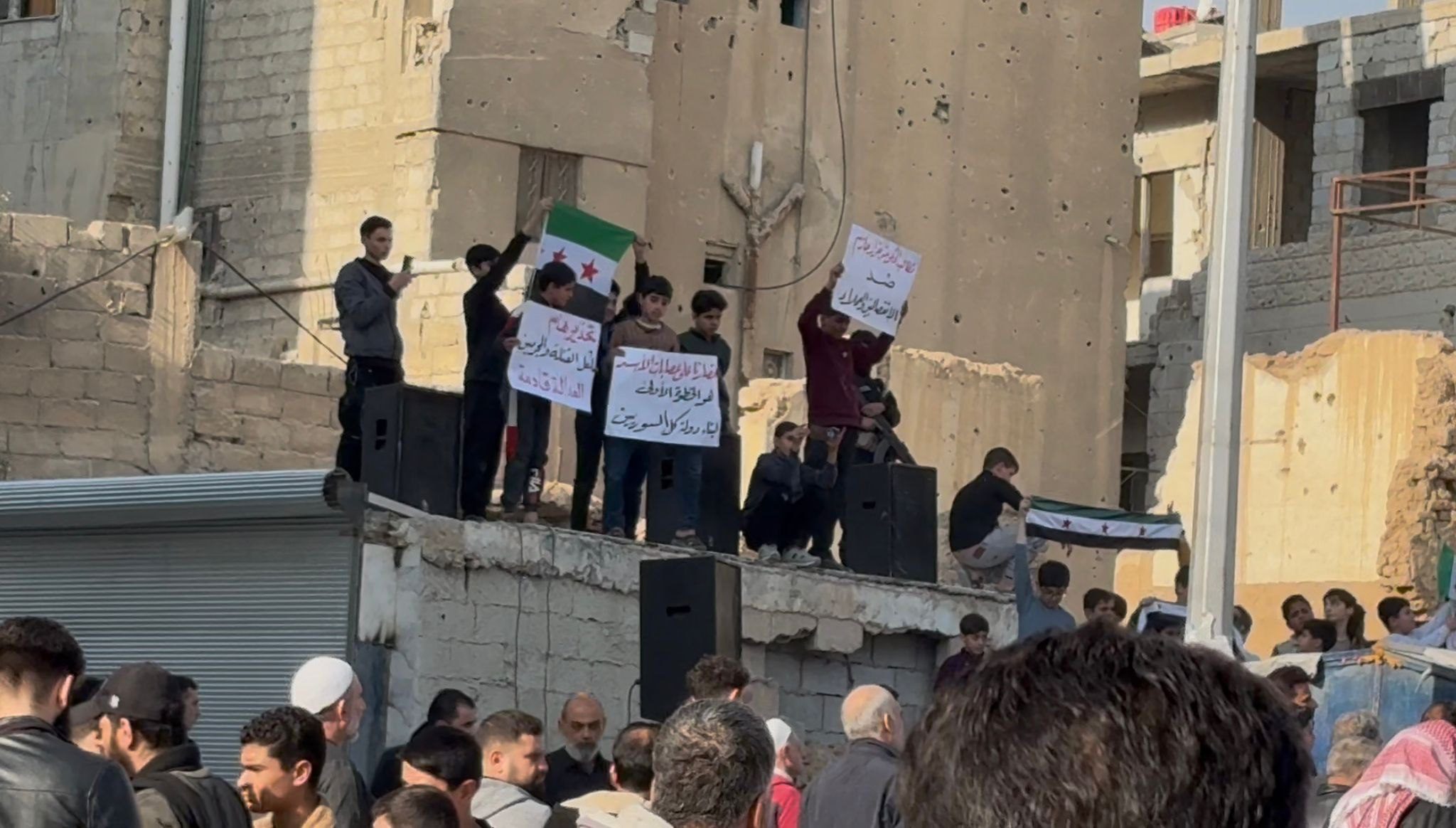
For instance, a Europe-based news program opened its coverage with photos of anti-Assad fighters in Aleppo with a headline hinting at ISIS’s comeback. Not long afterwards, as more states engaged politically with the new Syrian government and Syria was gradually reintegrated internationally, media narratives quickly readjusted.
However, since then, “terrorism”- and “extremism”-driven narratives have not disappeared but continued to loom in the background, ready to be periodically recycled. They often appeared alongside other neo-Orientalist motifs, like those downplaying Syrian agency and painting Assad’s fall as a mere plot engineered by external forces.
Persistent Islamophobic Motifs
Neo-Orientalist lenses typically “securitize” Islamically inspired forces, portraying them as security-first matters and inherent threats. They overlook or minimize the internal diversity across the spectrum of Islamically inspired movements in Syria and beyond.
Reflecting, for instance, distinct pathways of evolution, modes of action, and relations with local populations. Oversimplistic views end up lumping very different actors together. Yet, the recent history of these movements, including that of armed factions in Syria, attests to the opposite: a complex, textured history.
While media attention, until recently, revolved around ISIS, within the Islamic revolutionary milieu other armed factions were engaging in internal debates, contesting ISIS, and developing alternative approaches to armed combat and politics.
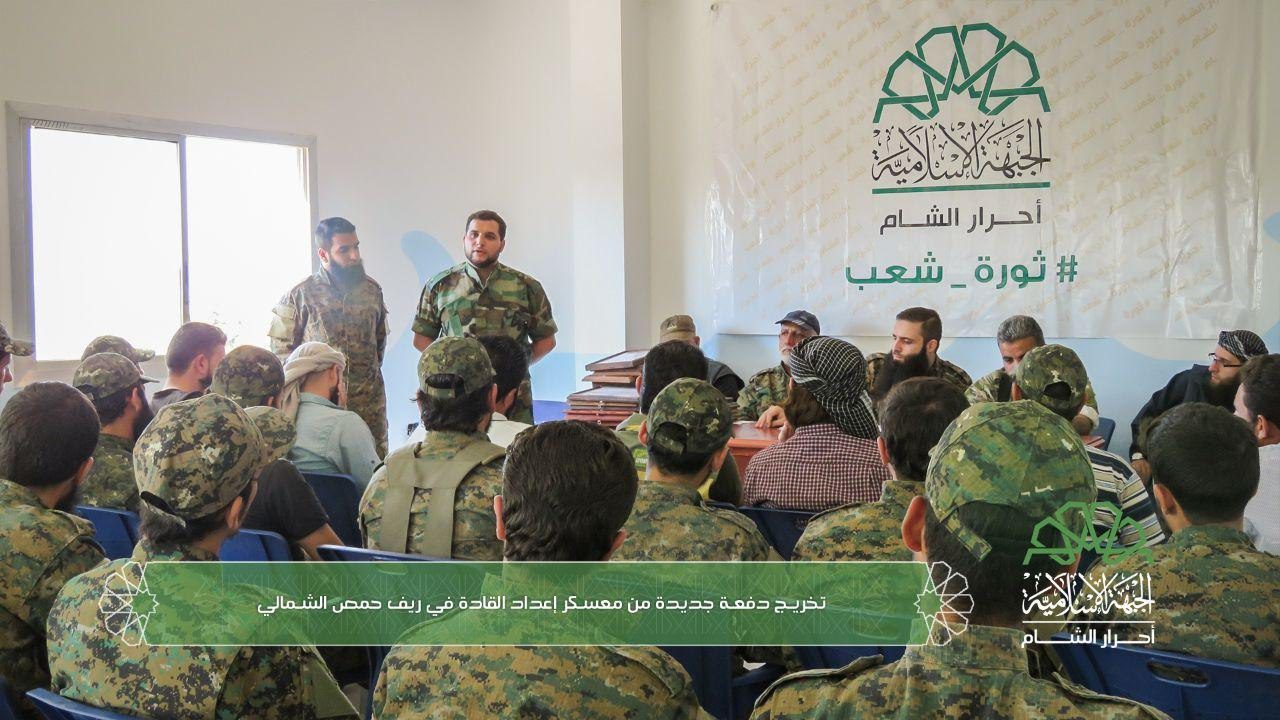
If the political evolution of Hayat Tahrir al-Sham (HTS) has been scrutinized in recent times, other cases such as that of Ahrar al-Sham and its ideological revisions in earlier years are equally worthy of attention. They exemplify the intellectual debates and gradual evolution experienced by multiple Islamically inspired armed factions, including discussions on the nature of a post-Assad state.
Despite such complexity, the narratives described here construct a boogeyman by drawing on the “savage jihadi” trope. This rarely remains limited to actors variously deemed as “hardline”. Rather, it easily leads to a broader “securitization of Islam” where public expressions of religiosity (particularly Sunni ones) are presented as inherently threatening.
Historically, in Syria, this dynamic is closely tied to the Assad regime’s manipulation and repression of religious expression, including control of the religious sphere, restricted to regime-sanctioned interpretations of Sunni Islam. It also echoes narratives, including in foreign commentary, that demonize visible forms of Islamic expression deemed outside the bounds of “acceptability”, where acceptability is often defined by palatability to the Western gaze.
Oversimplistic Views of Conflict and Socio-political Dynamics
In English-language commentary on post-Assad Syria, neo-Orientalist discourse often appears in discussions on conflict, communal frictions, and broader socio-political dynamics. Most recently, it resurfaced during clashes between the Syrian government and the Syrian Democratic Forces (SDF) last January. At a time when misinformation and disinformation were rampant, unverified inflammatory content circulated virally, in many cases, exploiting the local population’s traumas and playing on the “savage jihadi” stereotype.
For instance, English-language accounts circulated a video with manipulated audio, falsely claiming it showed government fighters trafficking Kurdish women. Besides altered pictures and videos, unrelated footage was reshared and falsely attributed to recent events. Moreover, genuine content was repeatedly misrepresented: for example, insignia and banners with Islamic symbols, or certain anashid (Arabic a cappella songs), were presented as evidence of ISIS affiliation.
Amid the noise, far more energy went into sensationalism, framing the conflict as “ISIS-like” forces attacking “civilized forces”, than into documenting violations on all sides. Yet, this flattened layers of context, including competing grievances and experiences of violence across Kurdish and Arab communities, from the historical marginalization of Kurdish communities and abuses committed against them, to coercive practices and abuses experienced by (especially) Arab communities under SDF rule.
In this way, complex socio-political dynamics are reduced to a caricature: upheaval is attributed to a presumed sectarian and “jihadi” proclivity of (Sunni) Muslim communities. Communal tensions and outbreaks of violence are depicted as uniquely “exotic”, as manifestations of some exceptionally pathological actor. This is what scholar Dag Tuastad calls “the ‘new barbarism’ thesis:” political violence is explained by “omit[ting] political and economic interests and contexts,” and presenting it “as a result of traits embedded in local cultures.”
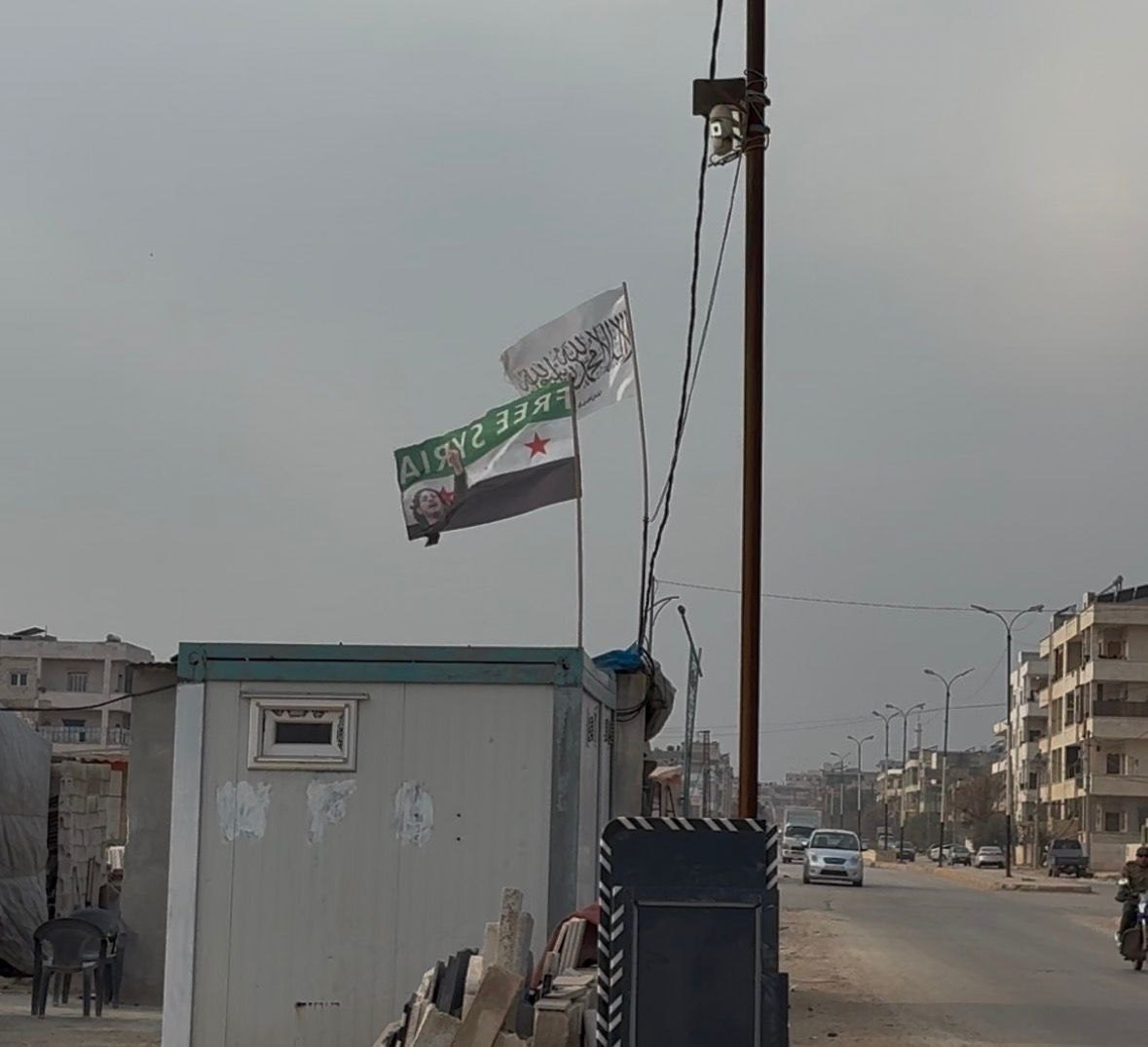
However, these interpretations distort how conflict works: political violence does not need to be “exceptional” for it to occur. As noted by expert Peter Harling, political transitions like Syria’s transition “inevitably put on display all sorts of disagreements,” and while “[s]ectarian and ethnic tensions tend to be particularly taboo, […] they are just a facet of far more complex identities.” Multiple other layers, related, for example, to center–periphery dynamics, socioeconomic stratification, role of tribal actors, diversity within the Sunni community, are equally relevant, but not always given the same attention.
Reducing turmoil to some “exceptional,” “monstrous” actor obscures a less dramatic reality: that conflict and violence may arise from the mundane, from decade-long grievances; personal vendettas; long-standing social rifts; turf wars cast in identity terms. Conflict and political violence do not emerge out of nowhere, they are shaped by the contexts, political cultures, and histories in which they unfold.
Recentering the Narrative
At a moment when locally grounded debates, even conflicting ones, should be put on center stage, neo-Orientalist narratives impose external projections onto local realities. They do little to illuminate Syria’s most compelling issues; if anything, they risk obscuring their deeper logic, polluting the debate, and further inflaming inter-communal divides.
Ultimately, they reinforce the perception that, in the Orientalist eye, humanity remains conditional on proximity to the Western gaze. Instead of worn-out tropes, the central question is how to permanently break with Assad’s intellectual and socio-political legacy, and enduring colonial legacies, while healing a society deeply wounded by collective and individual trauma.
Confronting Assad’s political legacy brings into focus questions of justice and dignity, meaningful political participation, institutional checks and balances, and rule of law, rather than a “religious” versus (supposedly) “secular” lens as such. This is hardly an adequate “diagnostic tool,” taking claims to secularism as markers of justice or freedom.
Far from the pretenses of “secularism,” the Assad regime was “a sectarianizing regime par excellence”. Over more than fifty years, the Assads unleashed systematic, extreme violence on anyone expressing dissent, with Sunni Muslims accounting for the overwhelming majority of those who were victimized. The way the Assad regime came to power, entrenched itself, and wielded violence manufactured mistrust and fractures along sectarian and communal lines, including within each community. These fault lines only deepened during the war.
Building a new social contract remains central, but interpreting current challenges through an essentialist lens only creates the pitfalls seen above. The conversation should center issues of justice, fundamental freedoms, participation, and representation grounded in local realities rather than external assumptions. A healthy and responsible debate requires observers to move away from camouflaged neo-Orientalist discourse.