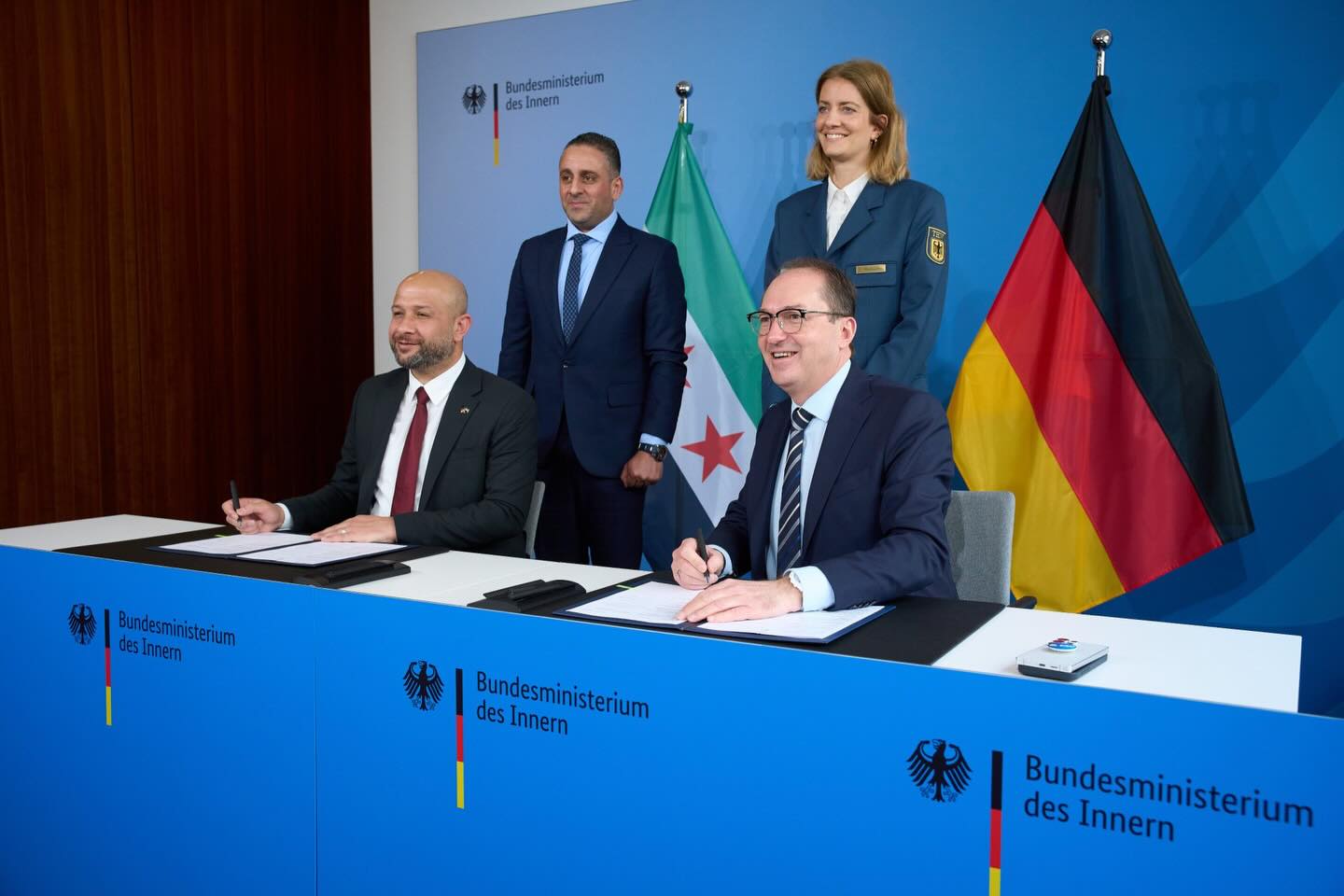
In an agreement aimed at strengthening Syria’s disaster response capacity, Emergency and Disaster Management Minister Raed al-Saleh and German Interior Minister Alexander Dobrindt signed a cooperation agreement in Berlin.
The accord focuses on improving coordination in disaster protection and enabling faster, more effective emergency responses. Under the agreement, Germany will support efforts to modernize Syria’s civil protection infrastructure. Officials say the initiative reflects efforts to transition from reactive crisis management to a more resilient and preventive system.
Technical Support Targets Infrastructure Gaps
A key component of the partnership involves assistance from Germany’s Federal Agency for Technical Relief (THW). The agency will help upgrade emergency equipment and rebuild command and control centers across Syria. This technical support aims to strengthen operational readiness and reduce response times during emergencies.
By reinforcing core infrastructure, both sides intend to improve coordination among response teams and ensure more efficient crisis management in future disasters. The project is funded by the German Federal Foreign Office and draws on THW’s experience in similar initiatives across the region.
Volunteer Training Forms Core of Capacity Building
The agreement also places strong emphasis on volunteer engagement, recognizing the role of community-based responders in emergency situations. Plans include establishing clearer regulatory frameworks organizing volunteer participation and expanding recruitment. Training programs will equip Syrian volunteers with practical skills in disaster response, with a focus on long-term institutional development.
Officials say this approach is designed to create a sustainable system extending beyond immediate needs, ensuring continuity and effectiveness over time. THW’s volunteer-based model, which relies on tens of thousands of trained personnel, serves as a reference point for these efforts.
Reconstruction Efforts Linked to Public Confidence
Beyond operational improvements, the partnership carries broader implications for reconstruction. Strengthening disaster resilience is expected to support rebuilding efforts by providing safer conditions for communities and infrastructure development.
Officials also view improved emergency response systems as a way to reinforce public trust in state institutions. A reliable civil protection framework can contribute to stability by ensuring authorities respond effectively to crises.
Regional Experience Shapes Implementation
THW brings experience from projects in countries such as Jordan, Tunisia and Iraq, offering tested approaches to disaster management in similar contexts. This background is expected to inform implementation in Syria, adapting established practices to local conditions.
Dobrindt emphasized Germany’s commitment to supporting Syria’s recovery through technical cooperation, noting that strong civil protection systems play a crucial role in long-term stability. The agreement, he said, represents a practical step toward building resilience and improving preparedness in the face of future challenges.