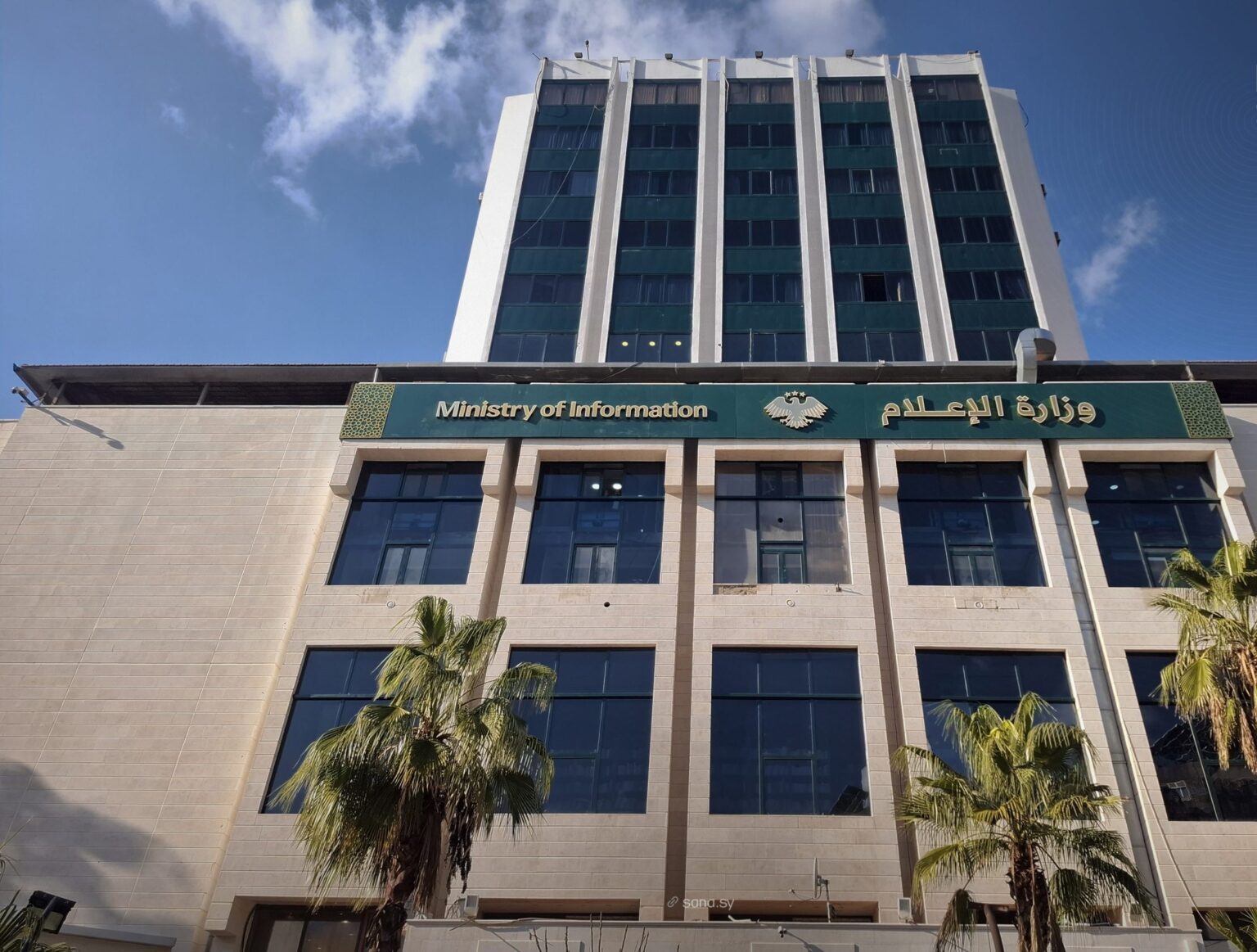
 Syria’s Counter Disinformation Unit (CDU), which operates under the Digital Media Directorate at the Information Ministry, said March 31, that a coordinated online campaign sought to transform a minor local dispute in Suqaylabiyah into a sectarian flashpoint.
According to the unit’s analytical report, the original incident involved a localized altercation between young men from the city and nearby villages. Security forces and the Ghab district administration contained the situation quickly, and officials said no injuries or fatalities were recorded. The report said the online reaction sharply diverged from the facts on the ground, with digital narratives recasting the dispute through sectarian and political framing.
Spike in Posts Linked to Foreign-Based Accounts
The CDU revealed content related to the incident surged within hours, with early activity traced to accounts outside Syria, particularly in Lebanon, before spreading to accounts in Iraq, Europe and the UAE.
According to the report, over 12,000 posts appeared on X within eight hours, alongside 5,846 Facebook posts over 10 hours. Many used inflammatory hashtags and repeated identical wording, which the unit said suggested a level of prior coordination.
The report added that accounts linked to the Syrian Democratic Forces (SDF), local armed factions and networks tied to remnants of the former Assad regime were among the most active in circulating misleading claims. Analysts said repeated formatting patterns and synchronized messaging pointed to organized amplification rather than spontaneous discussion.
False Claims Focused on Religious Tensions
Investigators said the campaign centered on several false allegations, including claims of casualties, attacks on churches and vandalism of religious symbols. The Hama Health Directorate told the unit that no injuries connected to the dispute had been registered, directly contradicting reports of deaths or wounded residents. Field sources also denied reports of attacks on churches or religious sites, including claims involving the statue of Saint Mary.
The unit said no verified footage supported those accusations. A review of widely shared videos also found no evidence backing allegations of corpse mutilation or burning. The report said much of the circulated media relied on images and videos removed from their original time and place, a tactic commonly used in previous misinformation campaigns.
Pattern Mirrors Earlier Misinformation Campaigns
The CDU said several accounts involved in the Suqaylabiyah campaign had also appeared in earlier online flare-ups in the coastal region, Suwayda and eastern Syria. Officials said this reflects a recurring digital pattern targeting areas known for ethnic and religious diversity.
In its conclusion, the unit reported local community awareness in Suqaylabiyah and across the Ghab Plain played the decisive role in preventing online incitement from spilling into real-world tensions. By quickly separating rumor from fact, residents and local officials helped preserve social cohesion and blunt efforts to inflame sectarian divisions.