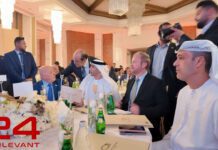
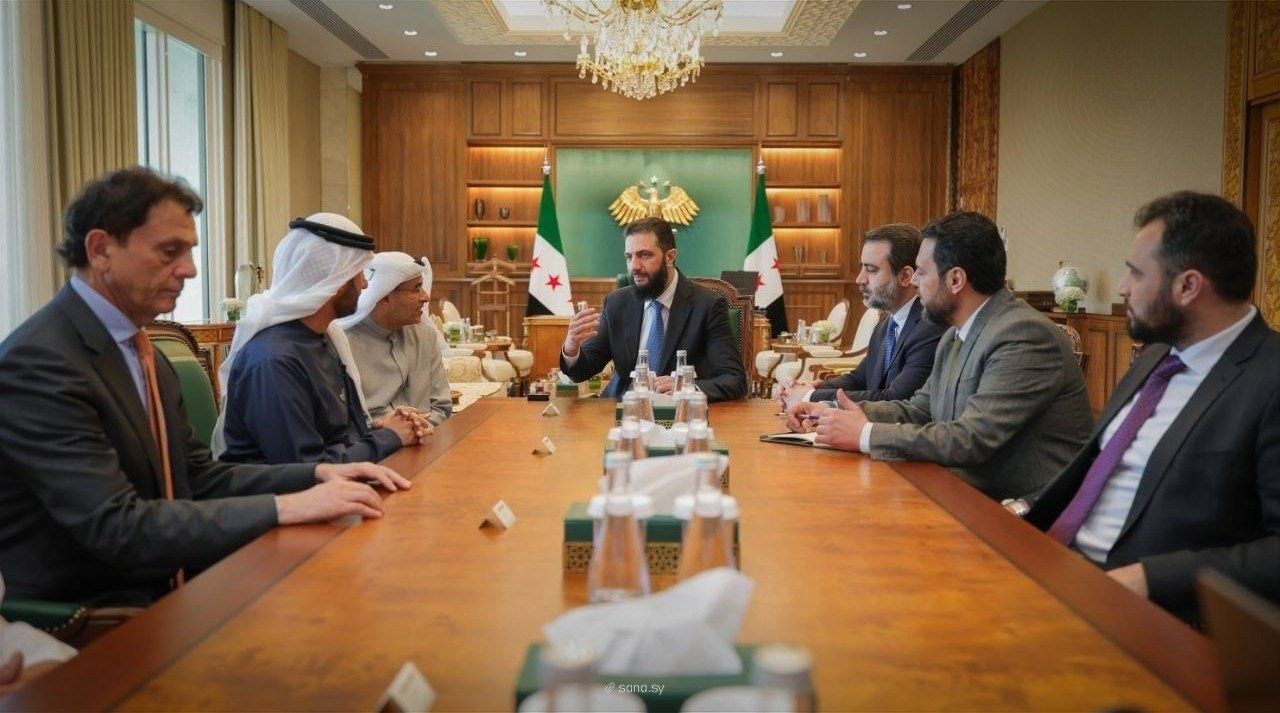
 Syrian President Ahmad al-Sharaa held meetings with an Emirati economic delegation in Damascus led by businessman Muhammad al-Abbar, founder of Eagle Hills, to discuss investment opportunities in Syria’s investment sector. The meeting, held at the People’s Palace in the presence of Foreign Minister Asaad al-Shibani, focused primarily on real estate development and large-scale urban projects.
According to documents reviewed by Al-Sharq and Bloomberg, Eagle Hills is preparing plans for two major developments in Damascus and Latakia with a combined estimated value exceeding $50 billion. If implemented, the projects would represent one of the largest Gulf-backed investment initiatives in Syria since the start of the conflict.
Plans for Large-Scale Urban Expansion
The first project would be built in the Dummar area of Damascus covering approximately 33 million square meters. Plans include around 73,000 housing units, 3,200 hotel rooms and nearly 7 million square meters of green space. The proposal also includes a road network extending roughly 320 kilometers.
The second project would be located in Latakia and span about 15 million square meters. According to the proposal, the coastal development would include over 29,000 housing units, 2,800 hotel rooms and 5.5 million square meters of gardens and landscaped areas. Combined, the two developments would provide over 102,000 housing units and nearly 6,000 hotel rooms, significantly reshaping parts of both the Syrian capital and the Mediterranean coast.
Economic Goals and Investment Projections
Eagle Hills claims the Damascus development might contribute over $63 billion to Syria’s gross domestic product over the next two decades. The company estimates the project could create over 100,000 jobs during construction and an additional 40,000 permanent positions after completion.
The proposal also forecasts up to $70 billion in foreign currency inflows and related revenues tied to sectors including aviation, shipping, tourism, education and health care. Meanwhile, the Latakia project is expected to generate an economic impact exceeding $18 billion over 10 years.
Company projections estimate 70,000 construction jobs and 25,000 permanent positions, while tourism-related revenues could surpass $550 million annually. The figures reflect efforts to position Syria as a regional investment destination following years of war and economic decline.
Regulatory and Financial Hurdles Ahead
Despite the scale of the announcements, the projects remain in the proposal and negotiation phase. Upcoming discussions are expected to focus on financing mechanisms, legal frameworks and regulatory approvals.
Abbar’s earlier company, Emaar, announced several projects in Syria in 2005, many of which stalled after 2011. Interest in returning to the Syrian market increased following the signing of an additional agreement linked to the “Eighth Gate” project near Damascus.
These developments come amid increasing Gulf competition over investment opportunities in Syria. Saudi companies signed contracts reportedly worth about 60 billion riyals in sectors including aviation, telecommunications, infrastructure, water and energy.
These agreements include projects tied to Aleppo International Airport and the launch of Flynas Syria. Whether the Emirati and Saudi plans move forward will largely depend on Syria’s ability to address financing and regulatory challenges in the coming years.