
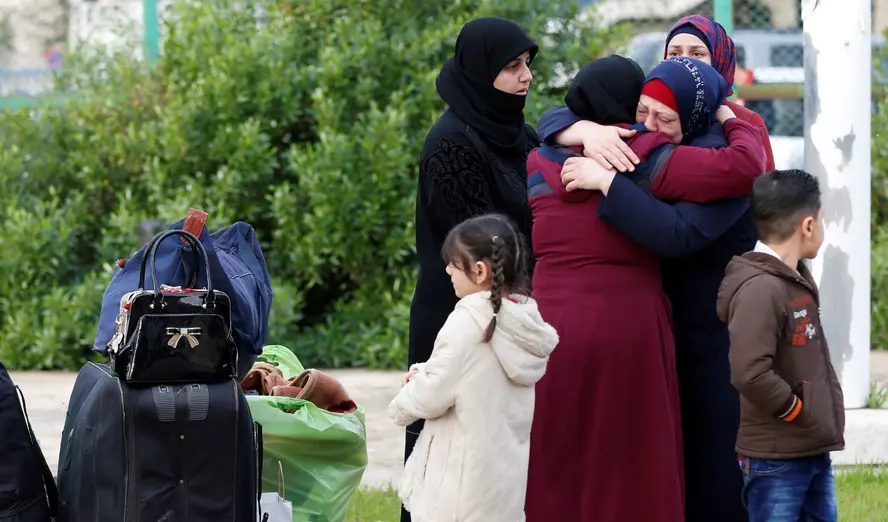
The return of Syrian refugees from neighboring countries continues to accelerate following the fall of the brutal regime of Bashar Assad in December 2024, marking a major shift in one of the world’s largest displacement crises.
Syrian officials and the UN say over 1.2 million Syrians voluntarily returned home over the past 17 months, driven by improving security conditions, expanded border facilities and growing hopes for long term stability.
Mazen Alloush, director of relations at Syria’s General Authority for Ports and Customs, told The New Arab approximately 1,211,000 Syrians returned from neighboring countries between December 2024 and April 2026. Over 715,000 of those returns came from Turkey, while about 120,000 people returned from Lebanon since the beginning of this year.
Alloush said Syrian authorities work to simplify border procedures and improve services for returnees, including transportation support, medical services and customs exemptions for personal belongings and furniture. “We continue to facilitate the movement of people across border crossings and simplify procedures,” Alloush said.
UN figures, released separately, estimate roughly 1.6 million Syrians returned since the collapse of the Assad regime, including over 634,000 from Turkey, 621,000 from Lebanon and 284,000 from Jordan.
Turkey and Jordan Adjust to Shifting Migration Trends
Turkey remains the country most affected by the changing migration patterns. The Turkish Interior Ministry announced this week over 660,000 Syrians returned from Turkey over the past 17 months, bringing the total number of voluntary returns since 2016 to more than 1.4 million.
Despite the increase, official Turkish figures show that approximately 2.28 million Syrians still remain in Turkey under temporary protection status. Turkish authorities described the returns as “voluntary and safe,” citing border monitoring data and cooperation with international organizations.
Jordan has reported significant refugee departures. Government spokesman Muhammad al-Momani said over 192,000 Syrian refugees registered with the UN refugee agency voluntarily returned from Jordan since the fall of Assad.
Momani said Jordan continues coordination with the UN High Commissioner for Refugees ensuring returns comply with international humanitarian standards. Jordan hosts an estimated 1.3 million Syrians, including both registered refugees and long term residents who entered before the outbreak of the Syrian conflict in 2011.
The growing number of departures may gradually ease economic and infrastructure pressures on neighboring countries which hosted millions of Syrians during 14 years of war. However, officials and analysts say the pace of returns remains tied to economic conditions and reconstruction efforts inside Syria.
Returnees Face Economic Challenges
Many Syrians returning home describe a mixture of optimism and hardship as they attempt to rebuild their lives. Fatima al-Ahmad, who returned to Homs after living in Turkey since 2013, told The New Arab restoring basic services remained one of her biggest challenges.
“Repairing the house and the interruption of electricity and internet services” created difficulties during her first months back, she said. Still, Ahmad added that conditions gradually improved over time. Others remain hesitant to return permanently despite political changes.
The ongoing returns reflect a changing regional landscape after Assad’s fall, but they also highlight the complex balance between political change, economic recovery and the personal realities facing millions of displaced Syrians.