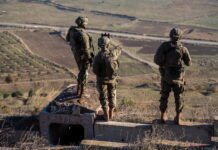

French historian and Middle East researcher Jean-Pierre Filiu argues that Israeli military and political intervention in southern Syria since the fall of Bashar al-Assad’s regime has created consequences that extend beyond traditional security concerns and now threaten broader regional stability. In an article in Le Monde, Filiu links policies pursued by Israeli Prime Minister Benjamin Netanyahu to growing instability in southern Syria and the resurgence of Captagon trafficking networks.
According to Filiu, a contradiction has emerged as Damascus and Amman combat organized crime working to strengthen stability while Israeli support for certain local factions in Suwayda weakens state authority, contributing to a security vacuum. He argues smuggling networks have exploited these conditions. Filiu contends this approach reflects a broader Israeli strategy aimed at keeping Syria weak and fragmented while preserving Israel’s regional advantages.
From Border Stability to Political Pressure
Filiu notes that despite longstanding political hostility, relations between Israel and Assad’s government were marked by a degree of security stability for decades. The Syrian government adhered to the 1974 ceasefire agreement in the Golan Heights, helping maintain relatively quiet borders. With some evidence indicating a level of cooperation throughout the Assad family’s rule.
Throughout the Syrian conflict, Israel concentrated its military operations on Iranian forces and affiliated groups, particularly Hezbollah, while generally avoiding direct attacks on Assad regime institutions. However, the fall of Assad in 2024 took Israel, and the world, by surprise, despite dealing a significant blow to Iran’s regional influence.
Filiu writes that Netanyahu’s government increased military operations and political pressure on the new Syrian leadership under President Ahmad al-Sharaa. He argues these measures sought to limit Damascus’ capabilities. Tel Aviv wants to prevent the government from reestablishing control over southern Syria as part of a wider strategy to prevent the establishment of a strong Syrian state.
Suwayda and the Return of Captagon Networks
According to Filiu, these developments leave Suwayda with a weakened state presence, creating conditions favorable to Captagon trafficking groups that have lost influence elsewhere in Syria. He argues that networks linked to the Assad regime have taken advantage of the security situation and the province’s proximity to the Jordanian border to revive and expand production and smuggling activities.
As Captagon operations have declined in many other parts of Syria, Filiu describes Suwayda as one of the most significant remaining centers for the trade. The profitability of Captagon sales in Gulf markets further encourages these activities, with traffickers benefiting from substantial margins between production costs and market prices.
Jordan Faces Rising Security Challenges
As smuggling activity increases, Jordan finds itself at the forefront of efforts to contain the threat. Filiu cites figures showing that Jordanian authorities intercepted dozens of shipments in 2025 and seized approximately 50 million Captagon pills, highlighting the scale of the challenge.
In response, Amman has conducted airstrikes against locations linked to smuggling networks in and around Suwayda province as part of efforts to secure its borders and prevent the flow of narcotics into Jordan and neighboring Gulf states.
Filiu concludes that southern Syria’s crisis has evolved beyond a political and military dispute into a regional struggle against drug trafficking. While Jordan and the Syrian government support efforts to restore stability, he argues that current Israeli policies encourage and maintain instability while creating conditions allowing criminal networks to survive and expand.