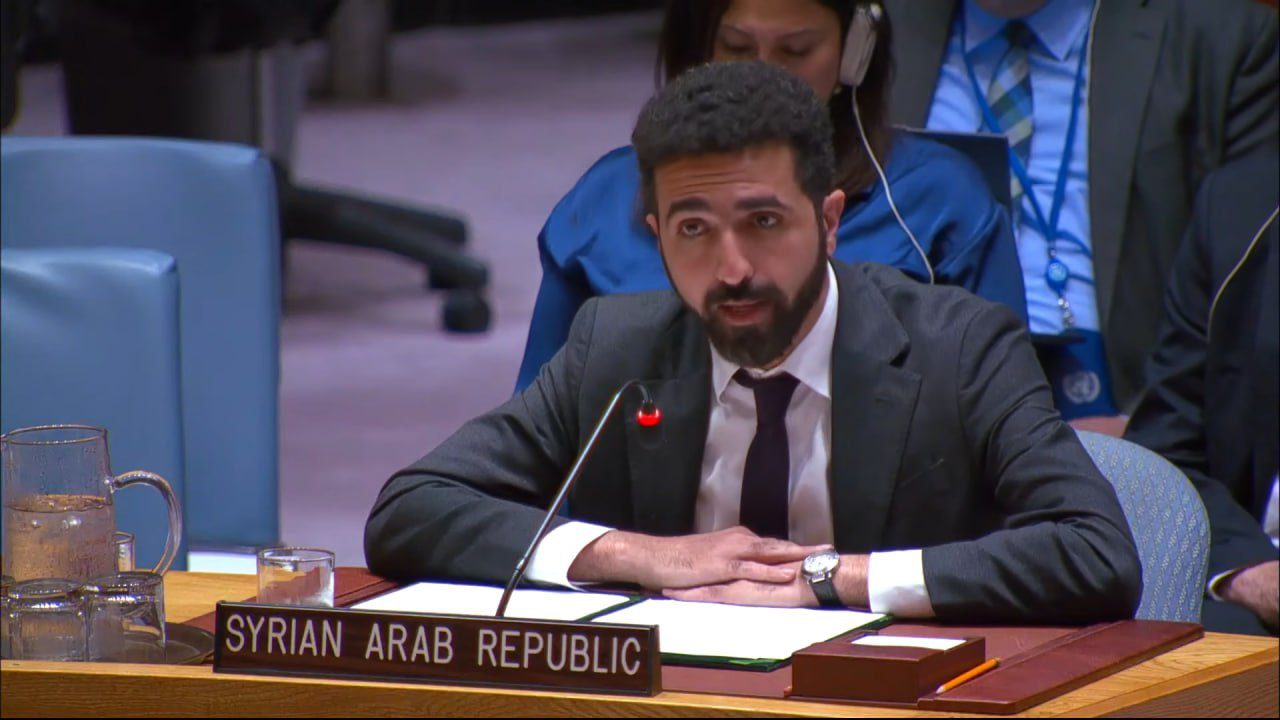
 Syria’s permanent representative to the United Nations, Ibrahim Olabi, outlined the country’s vision for regional stability and international cooperation during a UN Security Council open debate on June 10 titled, Advancing Political Solutions in the Middle East: Mediation and Dialogue for Lasting Peace.
In his remarks, Olabi said the new Syria has adopted what he described as a “balanced and moderate approach” rooted in dialogue and cooperation. He stated that Damascus seeks to build constructive relations with all countries while avoiding the divisive dynamics of regional blocs and rival alliances.
According to Olabi, this policy is intended to advance the interests of the Syrian people while supporting broader regional stability and prosperity. He also welcomed what he described as a positive response from the international community and members of the Security Council to Syria’s evolving role in the region.
From Conflict Arena to Regional Stakeholder
Olabi argued Syria has undergone a significant political transformation following over a decade of conflict. He said the country has shifted from being a battleground for competing regional and international interests to becoming a state where stability and security are shared priorities among multiple actors.
Having emerged from years of war and crisis, Syria is working towards strengthening relations with a range of countries. Olabi added this transformation has reduced tensions which could have contributed to a prolonged regional or international confrontation.
As a result, Damascus hopes to play a constructive role in bringing opposing sides closer together and contributing to diplomatic efforts across several regional issues. He described this as an important part of Syria’s recovery and reemergence on the regional stage.
Reclaiming a Historic Regional Role
Olabi emphasized Syria’s ambition to reclaim its traditional position as a crossroads of civilizations and a link between East and West. He described the country as a historic center for trade, cultural exchange and regional interaction.
He said Syria aims to contribute to stability and cooperation by drawing on its historical experience and geographic position. According to Olabi, the country’s recovery presents an opportunity to restore its role as a facilitator of regional engagement and dialogue.
Security Talks and Mediation Efforts
Addressing ongoing diplomatic initiatives, Olabi said the UN Charter, particularly Chapter VI, remains the foundation for the peaceful settlement of disputes. He confirmed Syria’s participation in security discussions with Israel under US mediation.
While acknowledging the talks have yet to produce concrete outcomes, he said Damascus remains committed to pursuing dialogue and exploring understandings which could support regional security and stability. Olabi noted the new Syrian government has consistently stated that it does not seek conflict and remains prepared to address security concerns through diplomatic channels.
Concluding his remarks, Olabi said countries that have experienced war understand the value of peace and successful mediation requires both realism and political courage. He reiterated Syria’s readiness to contribute to resolving regional and international disputes, describing such efforts as part of the country’s recovery and its broader responsibility in promoting peace and cooperation.