The Four Seas Initiative represents a strategic effort to redefine Syria’s role in regional energy and trade networks. Rather than serving solely as a transit point, Syria seeks to establish itself as a central hub connecting major markets across the Middle East and beyond. Built around an integrated network linking four key bodies of water, the initiative aims to strengthen Syria’s position within global energy and trade flows while expanding regional connectivity.
Turkey and Syria Lead Initial Phase
Syria and Turkey form the foundation of the project’s first phase. Their shared border and geographic proximity provide practical conditions for launching energy and transportation corridors without requiring broad regional participation at the outset.
Iraq remains a strong candidate to join future phases of the initiative due to its significant energy resources and continuing need for additional export routes. Supporters of the project view gradual expansion as a way to build a wider regional network while maintaining flexibility during the early stages of implementation.
Turning Strategic Geography Into Opportunity
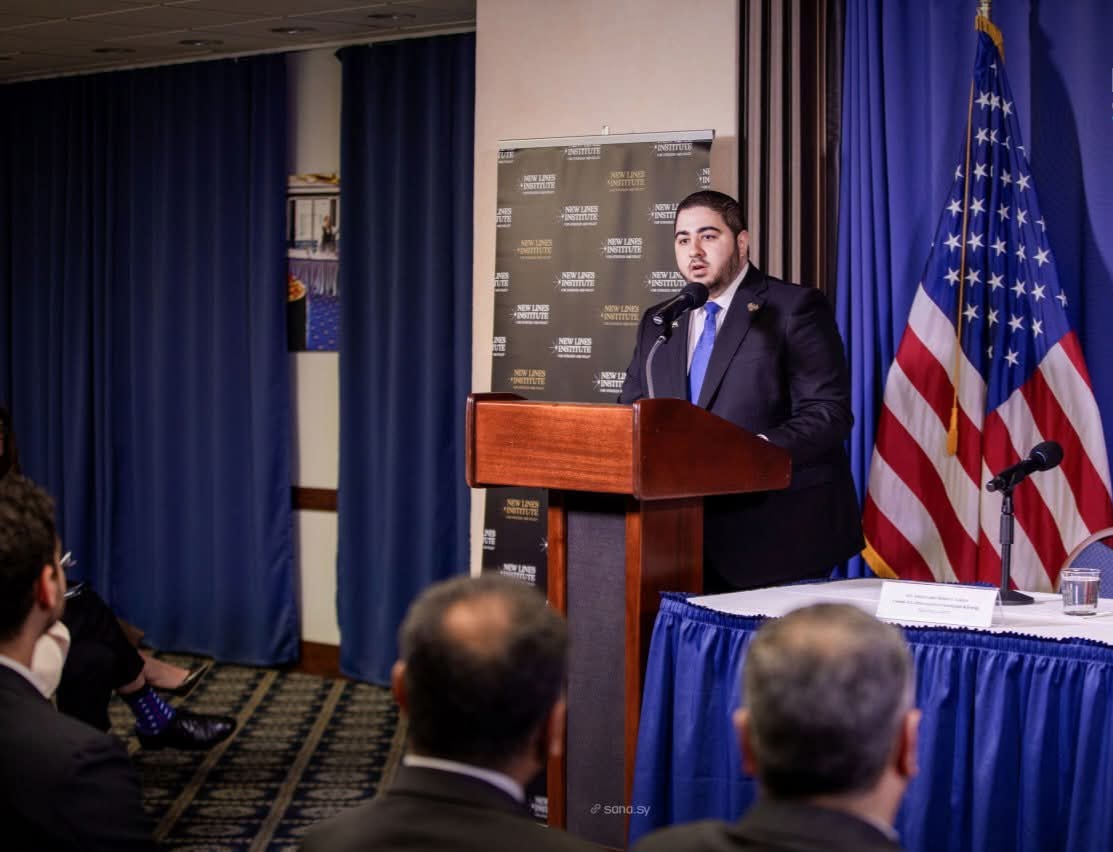
Speaking during a discussion on the Four Seas Initiative hosted by the New Lines Institute for Strategy and Policy in Washington, Muhammad Qanatari, chargé d’affaires of the Syrian Embassy in Washington, described Syria’s geographic location as a permanent strategic advantage.
Qanatari noted Syria sits at the crossroads of four major bodies of water: the Caspian Sea, the Mediterranean Sea, the Arabian Gulf and the Black Sea. He argued decades of conflict, sanctions, regional isolation and strained relations with neighboring countries prevented Syria from fully benefiting from this position.
According to Qanatari, Syria is now pursuing a different approach seeking to transform its geographic location from a source of vulnerability into an opportunity for economic and regional integration. The Four Seas Initiative forms a central part of that strategy.
Expanding Energy Links With Iraq
Qanatari highlighted several signs of growing cooperation between Syria and Iraq, including ongoing oil transportation and joint projects focused on energy and infrastructure connectivity. He stated the Kilis-Aleppo gas pipeline is operational, with natural gas currently flowing through the route while electricity interconnection projects continue to advance.
He also pointed to efforts developing regional oil and energy transportation networks. Among the most significant proposals under discussion is the reactivation of the Kirkuk-Baniyas pipeline, a project that would expand export capacity and strengthen regional energy integration.
According to Qanatari, discussions focus on increasing the pipeline’s capacity from approximately 1 million barrels per day to between 2 million and 2.5 million barrels per day, reflecting broader ambitions for future energy cooperation.
Building a Regional Logistics Platform
Qanatari concluded by emphasizing Syria’s efforts to strengthen its role as a regional link connecting neighboring economies. The initiative supports that objective through plans to develop cross-border infrastructure, energy pipelines, ports, transportation networks, and storage and liquefaction facilities.
Through these projects, Syria aims to establish itself as an integrated logistics platform capable of connecting regional markets and participating more effectively in global supply chains while supporting broader economic development and regional stability.