
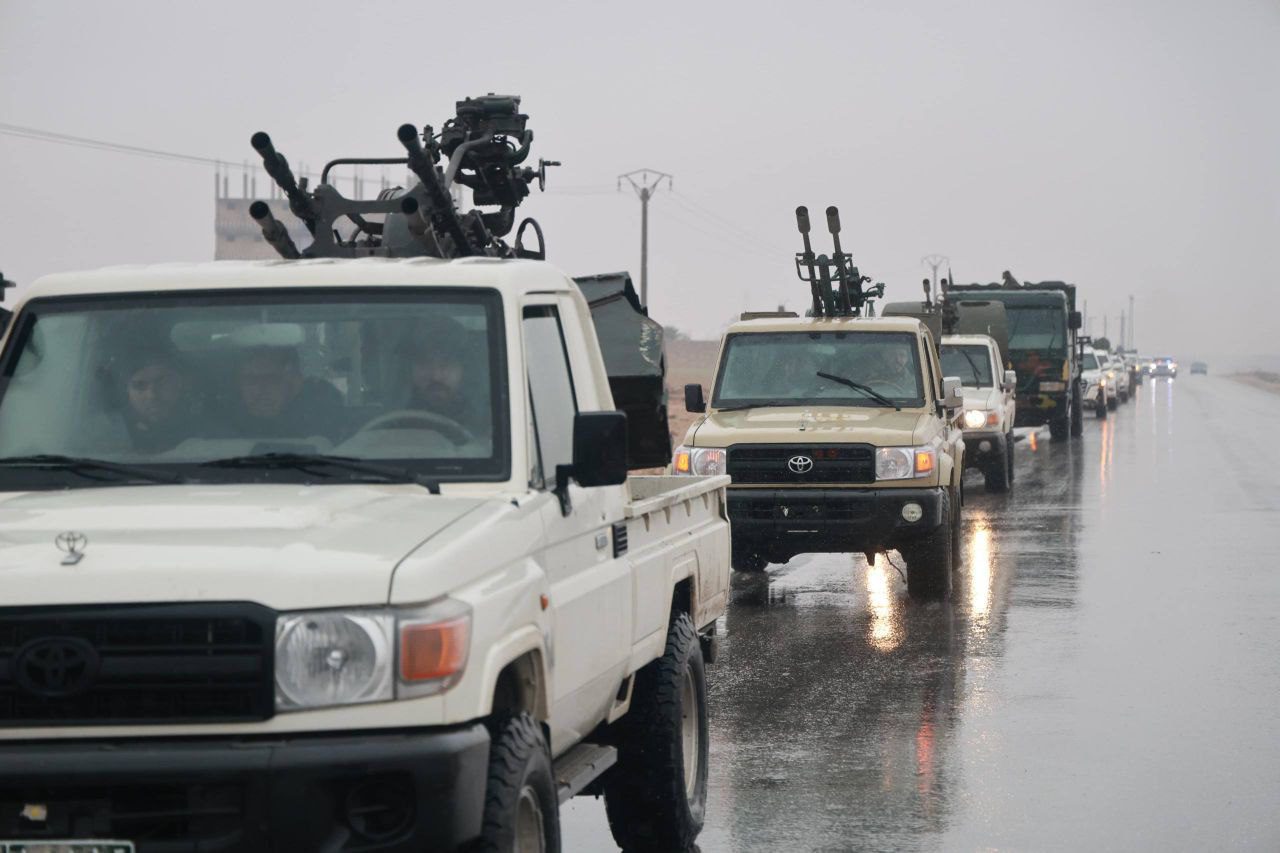
Nearly a week of clashes in Aleppo sharply altered the political and military balance between the Syrian government and the Syrian Democratic Forces (SDF), raising new doubts about the future of negotiations and the stalled March 10 and April 1 agreements. The fighting began with attacks on government military positions and ended with the withdrawal of SDF and PKK-aligned elements from the Sheikh Maqsoud and Ashrafieh neighborhoods, closing one of the most sensitive chapters in the relationship between the two sides.
Military analyst Navvar Shaban of the Harmoon Center told Levant24 that the violence marked “one of the most intense escalations in the area in recent years.” He said the clashes were triggered by “a drone strike that hit a Ministry of Defense checkpoint near Sheikh Maqsoud,” followed by sustained fighting using medium-range weapons. Despite open communication channels aimed at de-escalation, Shaban noted that attacks expanded to include “heavy machine guns, sniper fire, and even missile strikes against civilian areas.”
Narratives Collapse as Talks Continue
According to Shaban, the escalation exposed deep contradictions in the SDF’s public messaging. “Initially, the SDF claimed it was operating there. Later, it said the Assayesh (Kurdish security forces) was responsible,” he said. “By the final day of fighting, they claimed there were no fighters at all, only armed civilians defending their homes.” He described this as a calculated media strategy that unraveled as territory was lost.
The Syrian government, by contrast, pursued what Shaban called a “disciplined military approach.” “Civilian evacuation routes were opened and clearly announced,” he said, adding that targets and strike timings were publicly identified in advance. That approach ultimately forced SDF elements into a shrinking pocket before negotiations resumed and an evacuation agreement was reached.
Drones and Regional Implications
One turning point came with the launch of suicide drones from eastern Aleppo province. Shaban said these were “not FPV drones, but longer-range systems,” marking the first known use of such capabilities by the SDF. He said there was “strong evidence suggesting close coordination between the SDF and pro-Iranian militias,” calling the move a strategic mistake that shifted the balance decisively.
“The apparent goal was to trigger a large-scale battle in Aleppo,” Shaban said. “That scenario did not materialize.” Instead, he said, the attacks hardened government positions and narrowed the space for trust.
Agreements Under New Realities
The clashes have cast a shadow over the March 10, 2025 integration agreement and the April 1 Aleppo-specific deal, both of which remain unimplemented. While SDF commander Mazloum Abdi said on X that international mediation secured a ceasefire and evacuation, Syrian officials argue that Aleppo’s outcome deprived the SDF of leverage.
Shaban said negotiations remain possible but fundamentally changed. “The difference now is that the SDF understands the Syrian government’s military capability,” he said. “At the same time, the government has seen firsthand that the SDF cannot be fully trusted.” With US and regional mediation continuing, talks are expected to resume under stricter terms and a clearer balance of power shaped by the events in Aleppo.




, raising new doubts about the future of negotiations and the stalled March 10 and April 1 agreements.)