
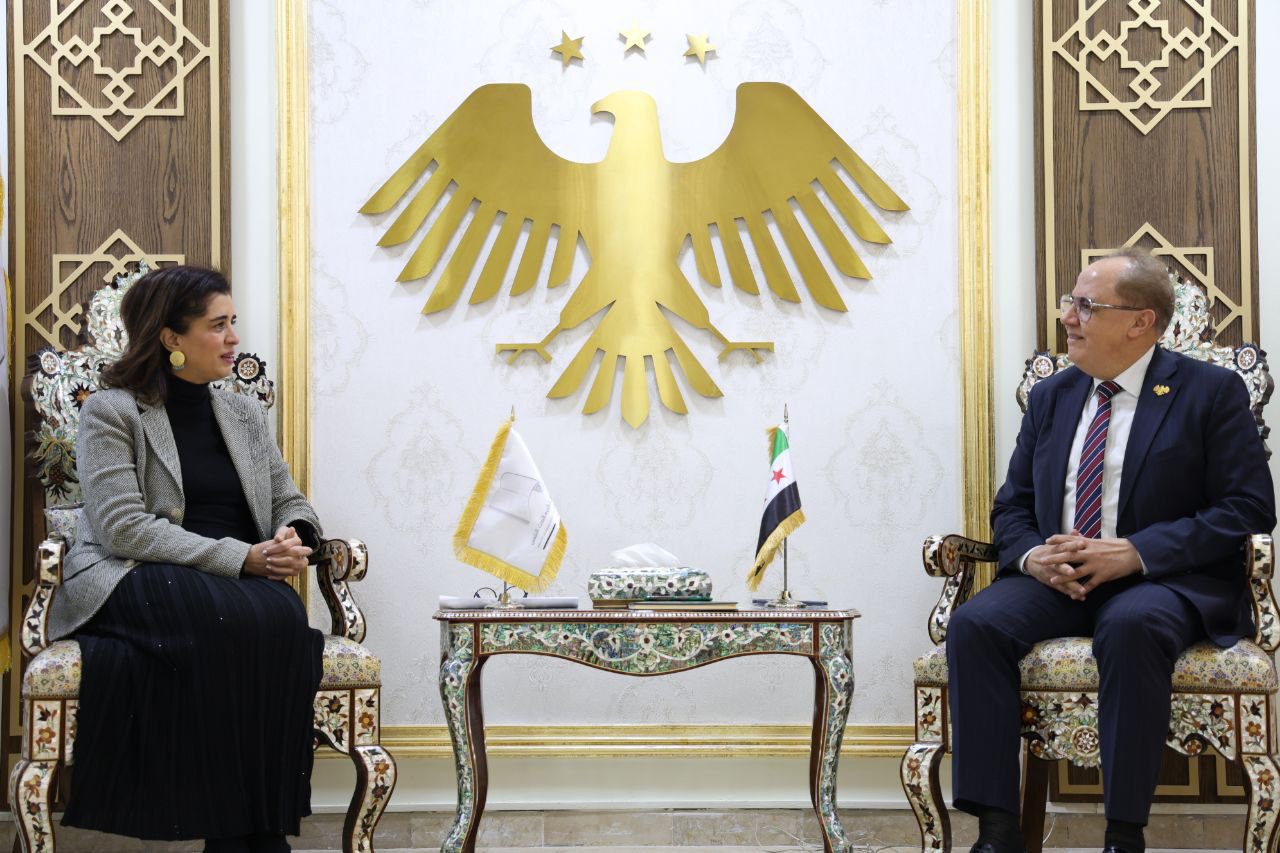
 Syria’s Minister of Higher Education and Scientific Research, Dr. Marwan al-Halbi, met with a delegation from the World Health Organization (WHO) headed by Dr. Hanan Balkhy, WHO Regional Director for the Eastern Mediterranean, to discuss avenues for supporting Syria’s healthcare sector and strengthening institutional cooperation.
The talks focused on Syria’s national health strategy and the areas where WHO support can have the greatest impact, particularly mental health, scientific research, and the establishment of drug addiction prevention and recovery centers.
Assessing Needs and Setting Priorities
The meeting reviewed the current health situation in Syria and emphasized the importance of strengthening cooperation between the Ministry of Higher Education and the WHO. Discussions highlighted the need to identify priority areas for support, raise awareness about the dangers of narcotics, and develop effective prevention and treatment programs.
Dr. Halbi stressed the Ministry’s integrative role alongside the Ministry of Health, noting ongoing efforts in community and student awareness, including workshops addressing the risks of drug use and addiction. He highlighted initiatives providing medical and academic support for individuals struggling with addiction, including psychological counseling. He emphasized the importance of establishing joint protocols between national institutions and international partners ensuring coordinated and effective health interventions.
Research, Education, and Data-Driven Policy
Halbi pointed to the potential of transforming research gaps related to addiction into doctoral theses at Syrian universities, particularly within the Faculty of Education. He emphasized cooperation with statistical bodies to develop accurate studies on the drug situation in Syria.
He also affirmed the Ministry’s readiness to cooperate in educational and psychological support programs and to utilize graduation projects as research databases that can support WHO initiatives and evidence-based policymaking.
WHO Commitment to Targeted Support
For her part, Dr. Balkhy confirmed the WHO’s readiness to provide targeted support to help alleviate the health burden in Syria. She explained that the visit aimed to gain a deeper understanding of the Ministry’s strategies in training, psychiatry, and addiction treatment, as well as to explore the establishment of specialized drug recovery centers.
Dr. Balkhy emphasized the importance of aligning medical curricula with national health needs, strengthening applied scientific research, and linking addiction recovery centers with academic and research activities.
Joint Efforts with UNODC
The delegation accompanying Dr. Balkhy included Cristina Albertin, Regional Director of the United Nations Office on Drugs and Crime (UNODC), along with several WHO officials. They expressed readiness to cooperate in raising awareness among university students about the dangers of drugs, supporting the development of health policies, building capacities in infectious disease control, and strengthening foundational health initiatives.
The WHO has recently reaffirmed its continued support for nationally led efforts in Syria to restore essential health services, strengthen primary healthcare, ensure access to quality care, and contribute to rebuilding the country’s health system.