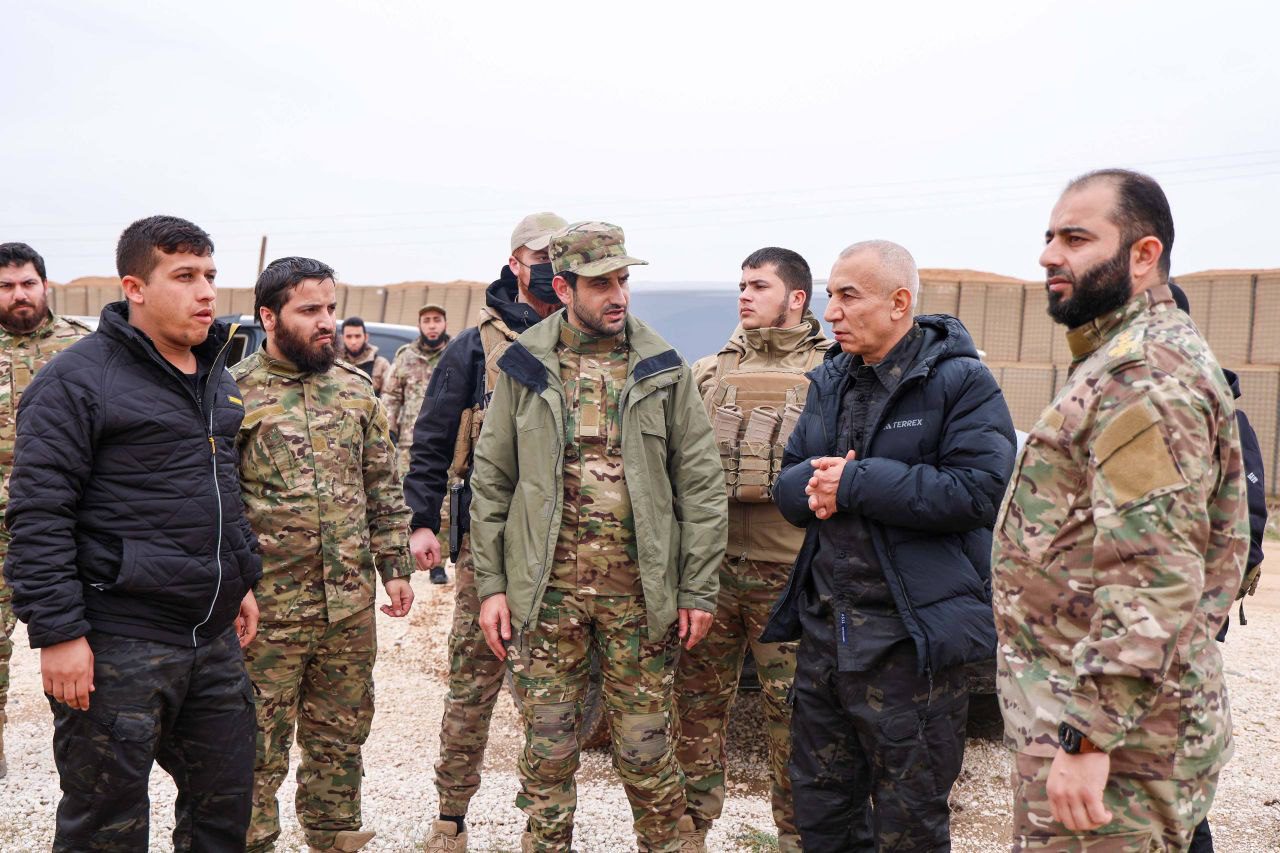
The Syrian government continues to implement its agreement with the Syrian Democratic Forces (SDF), sending a military delegation to Hasakah to discuss integration mechanisms and security arrangements. The visit follows the agreement between Damascus and the SDF outlining a ceasefire and a phased process to integrate military, security and administrative structures in northeastern Syria.
The Syrian Ministry of Defense (MoD) said Friday Feb. 6 that the delegation would focus on implementing the military provisions of the agreement and translating political understandings into field-level coordination. In a statement to SANA the ministry said discussions would address “practical arrangements” linked to the ceasefire and the integration process.
The SDF confirmed receiving the delegation, saying in a statement on X that talks are ongoing “within the framework of completing the implementation of the terms of the January 29 agreement and the integration process.”
Military and Security Details Take Shape
Sources close to the SDF told the New Arab the delegation includes military and security officials only, without political negotiators. According to the sources, the discussions include the handover of maps showing tunnels and heavy weapons storage sites, a step aimed at facilitating the withdrawal of heavy weapons from urban areas.
The same sources said the Syrian delegation requested lists of Internal Security Forces, known as the Asayish, including their places of service. Each Asayish member is expected to be summoned individually to recruitment centers for file reviews. Those not affiliated with the Asayish will be asked to withdraw from cities including Amuda, Darbasiyah and Malikiyah as an initial step under the agreement.
Local outlet Khabour Network reported the delegation includes senior officers such as Brig. Gen. Hassan Abdulghani, the Defense Ministry spokesperson, Brig. Gen. Ali al-Hassan, head of military security, Brig. Gen. Hamza al-Hamidi, head of operations, and Brig. Gen. Awad al-Jassem, commander of the 60th Division. The report said the visit aims to oversee integration into the MoD and the withdrawal of heavy weapons from Hasakah.
Security Forces Enter Key Cities
On the ground, implementation has already begun. Groups from the General Security Service entered Hasakah, Qamishli and Ain al-Arab (Kobani) this week as part of the first phase of the agreement. The Syrian Interior Ministry said internal security units started deploying to city centers to ensure stability and prepare for the integration of local security forces.
In Kobani, Col. Muhammad Abdulghani, commander of internal security in Aleppo province, met with community representatives and SDF leaders to discuss deployment mechanisms. The Interior Ministry said the goal is to enhance security, facilitate the return of displaced residents and ensure sustained coordination.
International Engagement and Kurdish Concerns
SDF commander Mazloum Abdi discussed implementation of the agreement with French Foreign Minister Jean-Noël Barrot during a meeting in Erbil. In a post on X, Abdi said talks covered “the details of implementing the agreement, the continued fight against ISIS, and ways to protect detention facilities and the families of detainees.”
He added discussions also addressed “protecting the autonomy of Kurdish areas, guaranteeing the rights of Kurds in Syria, and mechanisms for integrating military and security forces in all their details, including the Women’s Protection Units.” Abdi said Barrot emphasized “the importance of the full implementation of the agreement” and affirmed France’s support for the transitional phase.
Barrot met earlier in Damascus with Syrian Foreign Minister Asaad al-Shaibani, where the SDF file topped the agenda. According to SANA, Barrot said the agreement “guarantees the fundamental rights of the Kurds and supports efforts to combat ISIS.”
Toward a Unified Military Structure
Under the agreement, a new military division will be formed within the army, comprising three brigades drawn from SDF forces and an additional brigade from Kobani, administratively linked to Aleppo province. The deal also provides for the integration of self-administration institutions into the Syrian state and settles civil and educational rights for the Kurdish community.
As the first field steps unfold, Hasakah has become a test case for whether the agreement can move beyond paper commitments and deliver coordinated security and administrative control across northeastern Syria.