Nowruz, a Persian holiday, marks the start of the Iranian New Year and the arrival of spring. Celebrated for over 3,000 years, the festival coincides with the vernal equinox, typically between March 19 and March 22. Rooted in Zoroastrian traditions, it has expanded to a widely observed cultural holiday across West Asia, Central Asia and beyond. It is a UN recognized international day since 2010, reflecting its global reach. While many observe it as a secular occasion, it remains spiritually significant for some religious communities.
A Long-Suppressed Celebration in Syria
In Syria, Nowruz carries deeper political and cultural meaning, particularly for Kurdish communities. For decades, the Assad regime restricted public celebrations, banning traditional practices such as lighting fires or wearing Kurdish attire. These policies turned the holiday into a symbol of resistance and identity.
That dynamic shifted earlier this year when the Syrian government officially recognized Nowruz as a national holiday under Decree 13, issued in January 2026. The decision marked a notable change in state policy toward cultural inclusion. Public celebrations were planned across Damascus and other cities, with concerts, festivals and community gatherings signaling a new openness. Many Syrians viewed the move as part of broader efforts addressing longstanding Kurdish grievances, including citizenship issues dating back to the 1962 census.
Flag Incident Sparks Unrest During Celebrations
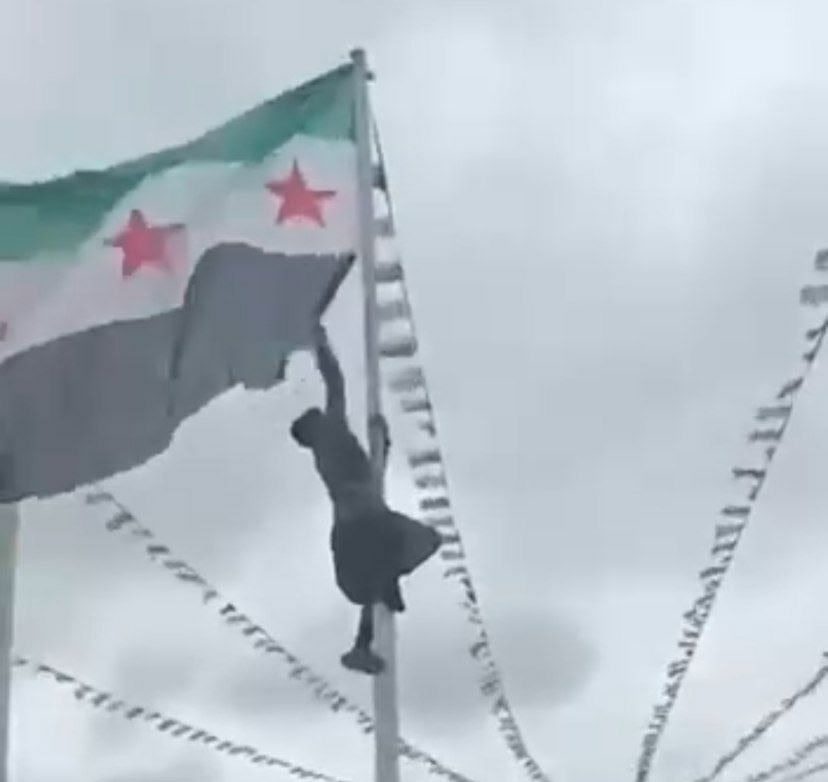
That optimism was tested during this year’s celebrations. A video circulated on social media showed an individual lowering the Syrian flag in the city of Ain al-Arab (Kobani). The act quickly drew widespread anger and triggered unrest in several areas in northern and northeastern Syria.
In Qamishli and Hasakah, tensions escalated as groups stormed security headquarters, damaged vehicles and burned flags. Authorities reported attempts to target government facilities, while security forces increased patrols and imposed restrictions in some areas to contain the situation.
The incident raised concerns of retaliation, with officials intervening to prevent attacks against Kurdish civilians. What began as a localized act quickly expanded into a broader security challenge, indicating how symbolic actions can ignite deeper tensions during this delicate transitional period.
Concerns Over Politicization and Armed Groups
The unrest draws renewed attention to the role of political actors in shaping events around cultural holidays. Analysts and local sources pointed to the involvement of the Revolutionary Youth Movement (RYM), a group ideologically linked to the PKK, as a potential group in escalating tensions.
The group faces past accusations in reports of targeting political opponents and engaging in controversial activities, including recruiting minors. While its exact role in the recent events remains unclear, observers say such organizations often exploit symbolic moments like Nowruz to advance political agendas.
Kurdish political bodies, including the Democratic Union Party and the Syrian Democratic Council (SDC), condemned the flag incident warning against using it to incite division. “What happened does not reflect the will of the region,” one statement said, emphasizing the need to preserve coexistence.
Government Calls for Calm and Legal Accountability
Syrian officials urged restraint and reaffirmed the importance of national unity. Ahmad al-Hilali, a spokesperson for the presidential team overseeing SDF integration, described the flag incident as unacceptable while stressing it would not derail ongoing agreements with regional authorities.
Security officials declared attacks on national symbols would not be tolerated. “The Syrian flag is a red line,” said an internal security commander in Aleppo, adding authorities would pursue those responsible through legal channels.
Other officials, including Deputy Defense Minister Sipan Hamo, called for calm warning against attempts to exploit the situation. He said both the act of lowering the flag and retaliatory attacks shared a common goal of sowing discord. Leaders across political and military institutions emphasized only the government holds authority to enforce the law, signaling an effort to prevent escalation while maintaining control.
A Fragile Calm and Uncertain Path Forward
Following the unrest, calls for deescalation appeared to ease immediate tensions. Authorities announced investigations into the incident and encouraged citizens to report information, while reaffirming a commitment to legal accountability. US envoy Tom Barrack praised calls for restraint and urged all sides to respect national symbols and maintain coexistence. His remarks highlighted the good nature of Syria’s current situation.
For many Syrians, this year’s Nowruz remains a turning point. The recognition of the holiday reflects a shift toward inclusion, yet the events surrounding it reveal how quickly progress can be tested. As celebrations conclude, the country faces a delicate balance between symbolic change and lasting political reform. Whether Nowruz will remain a unifying moment or continue to expose underlying divisions may shape Syria’s path in the months ahead.