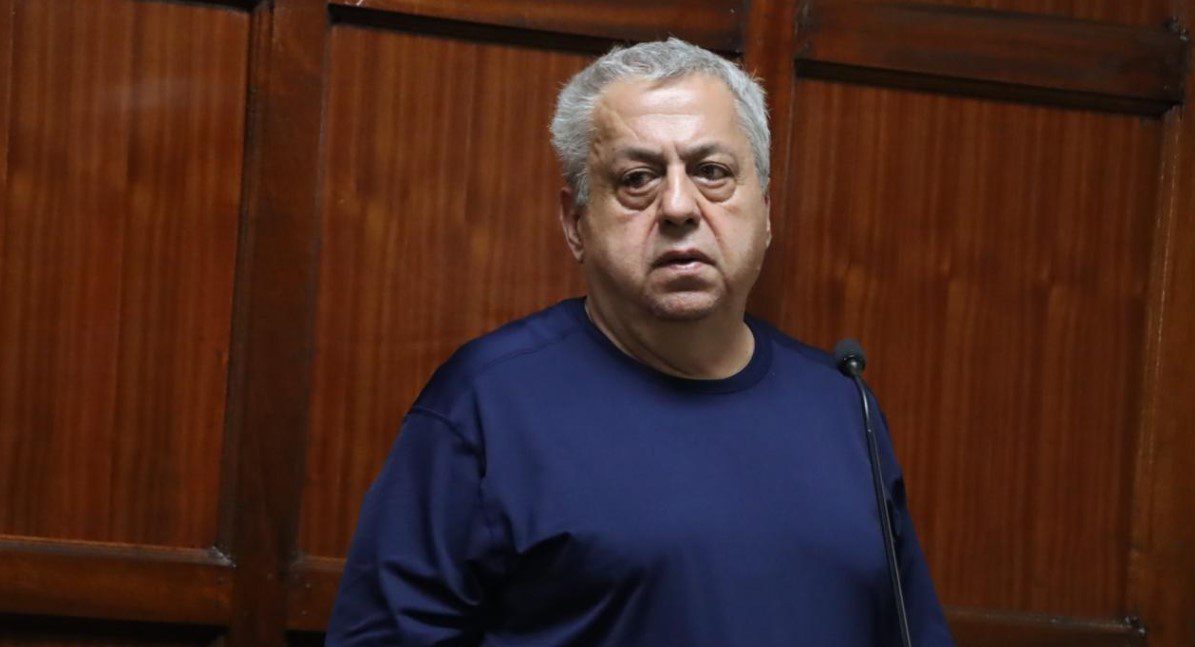
 A federal court case in the Eastern District of Virginia potentially establishes one of the clearest judicial links between figures tied to the former Assad regime and transnational organized crime. Antoine Kassis, a 59-year-old dual Lebanese-Syrian national, was convicted by a federal jury.
Charges included narco-terrorism conspiracy and providing material support to a designated foreign terrorist organization, according to the US Department of Justice. Kassis faces a mandatory minimum sentence of 20 years in prison, with sentencing scheduled for July 2.
Prosecutors allege Kassis used connections to the Assad regime under Bashar al-Assad to coordinate a complex scheme involving cocaine trafficking, weapons transfers and large-scale money laundering operations spanning multiple continents.
Alleged Deal Exchanged Cocaine for Weapons
According to court records and a grand jury indictment, Kassis negotiated an agreement to supply military-grade weapons sourced from Syrian stockpiles to Colombia’s National Liberation Army (ELN), in exchange for hundreds of kilograms of cocaine.
The US Department of Justice stated Kassis and his co-conspirators planned to ship a container from Colombia to Syria’s Port of Latakia, disguised as fruit but intended to carry approximately 500 kilograms of cocaine. In return, weapons would be diverted from Syrian military reserves to the ELN, which the US government designates as a terrorist organization.
Prosecutors said Kassis intended to oversee the distribution of cocaine in the Middle East while associates, including Alirio Rafael Quintero and Wasim Nagib Kherfan, managed payments and laundered proceeds. Evidence presented at trial showed co-conspirators moved nearly $100 million in less than 18 months, according to the Justice Department.
“This plot was made public last week in an unsealed grand jury indictment,” The New York Times reported, describing a network that “sheds light on a complex criminal network of drug cartels, rebel groups and rogue regimes spanning four continents.”
Connections to Assad’s Inner Circle
Central to the case are allegations tying Kassis directly to senior figures in the former Assad regime. Prosecutors said Kassis claimed to be “a cousin of Bashar al-Assad” and stated he worked with Maher al-Assad, Bashar’s brother and commander of the Syrian army’s Fourth Division.
The division has long been accused by analysts and policymakers of involvement in illicit economies, particularly the production and trafficking of the amphetamine-like drug Captagon, widely linked to regional smuggling networks.
According to the Justice Department, Kassis paid the Assad regime up to $10,000 per kilogram of cocaine transiting through Latakia. Prosecutors also alleged the former regime generated revenue through checkpoint taxes on illicit goods and participation in drug manufacturing and distribution. Even after the fall of Assad in late 2024, Kassis maintained access to weapons previously supplied by foreign allies, including Russia and Iran, prosecutors said.
Arrest, Extradition and Broader Implications
Kassis was arrested in Nairobi earlier this year following an Interpol Red Notice and a US arrest warrant. Kenyan authorities detained him at a hotel before approving his extradition to the US, where he made his initial court appearance in Virginia.
The case forms part of a broader international investigation led by the US Drug Enforcement Administration, with cooperation from law enforcement agencies across Africa, Europe and Latin America.
Analysts say the proceedings could have broader implications for ongoing efforts to document and prosecute alleged financial and criminal networks linked to the former Assad regime. Testimony presented during the trial, including expert analysis on Syria’s illicit economies and regional networks, has added to a growing body of evidence connecting state-linked actors to global trafficking operations.
If upheld through sentencing and potential appeals, the case may serve as a significant legal benchmark in establishing how state-associated networks can intersect with organized crime and designated terrorist groups across borders.