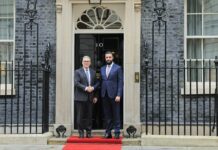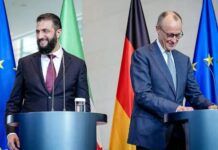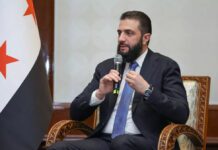
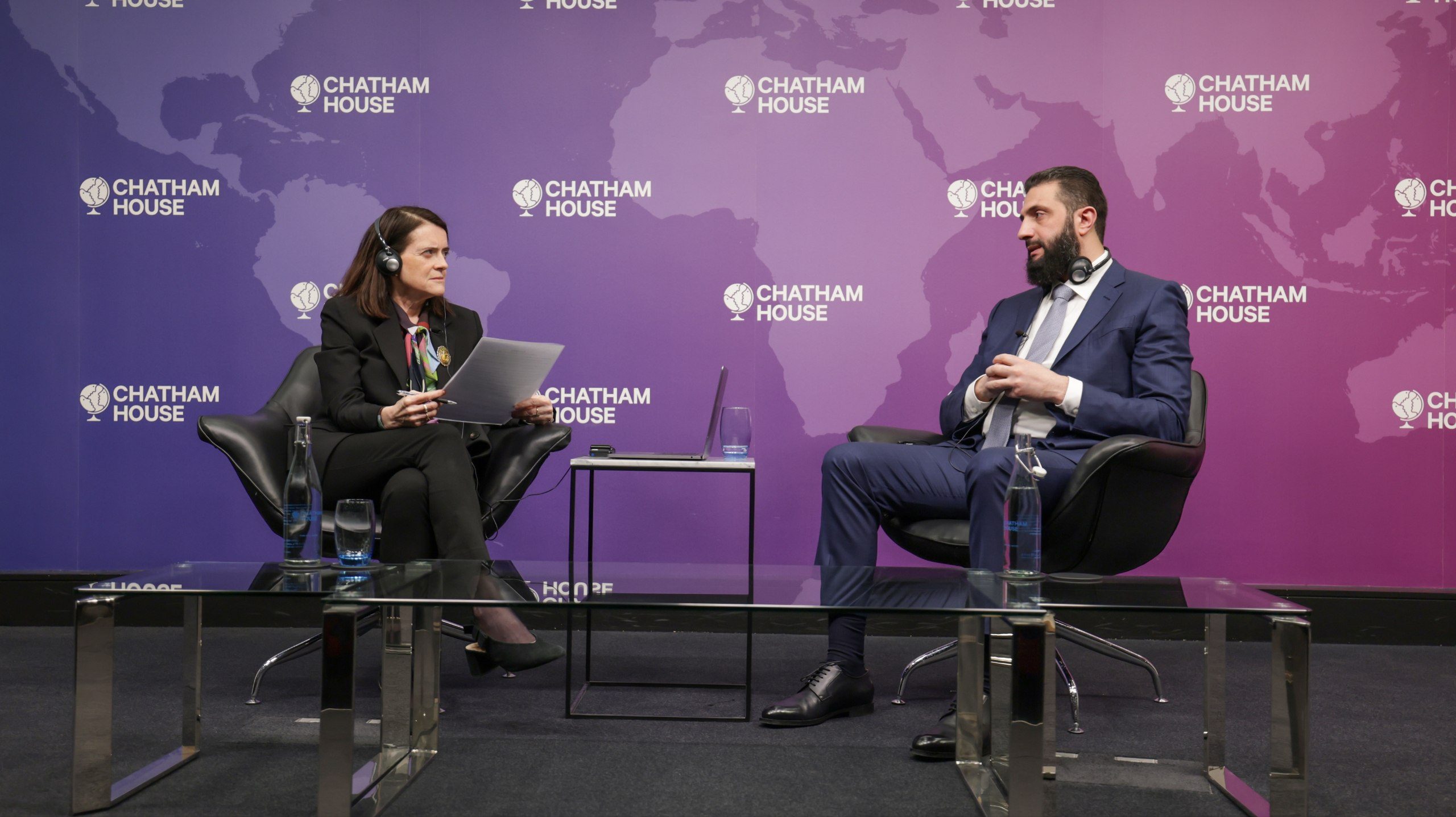
 Syria’s President Ahmad al-Sharaa said the country remains committed to holding elections within five years, outlining a phased political roadmap. Statements came during remarks at Chatham House in London. Sharaa said following the cancellation of the previous constitution, a committee will revise the constitutional framework once the People’s Assembly is established.
He added that party laws will be incorporated into the new constitutional structure, creating the legal basis for broader political participation. Addressing social freedoms, he said the administration is relying on existing laws rather than introducing new restrictions, emphasizing that the role of the presidency is to implement the law rather than impose additional legislation.
Kurdish Integration and State Authority
A central theme of the discussion was national unity and the integration of Kurdish-led Syrian Democratic Forces (SDF) into state institutions. Sharaa pointed to the March 10 agreement that calls for the merger of the SDF into national, military, and security structures. While implementation initially faced delays, he said the process is now moving forward.
Sharaa stressed the state must retain sole authority over weapons, arguing that regional control by independent armed groups is incompatible with long-term national stability. He said the government now holds what he described as revolutionary, social and international legitimacy, which he said strengthens its ability to complete the integration process.
Regional Diplomacy and Strategic Neutrality
On regional relations, Sharaa drew a distinction between future bilateral ties with Iran and Tehran’s past role inside Syria, criticizing what he described as previous military interference in towns and villages. At the same time, he encouraged diplomatic solutions to disputes over Iran’s nuclear program.
Discussing Israel, he said recent months had seen airstrikes and violations of longstanding agreements, even as indirect negotiations had previously reached what he described as promising stages before shifts in Israel’s position.
Sharaa also addressed the future of Russian military facilities, saying current arrangements aim to convert them into training centers for the Syrian army. More broadly, he said Syria intends to remain neutral in regional conflicts unless directly targeted.
Justice and Stability in the Transitional Phase
On transitional justice, the president emphasized institutional accountability over retaliation. He said large-scale crimes require formal legal mechanisms capable of handling complex cases without undermining social stability.
Sharaa said perpetrators of mass killings, indiscriminate bombing, chemical attacks and prison torture should face accountability through established judicial frameworks. He acknowledged obstacles, including Syria’s suspension from Interpol and the presence of suspects abroad, but said these challenges should not derail justice efforts.
Refugee Return Tied to Recovery
The president said refugee return depends on reconstruction, economic recovery and the creation of employment opportunities. He stressed return must remain voluntary and dignified, arguing transportation alone does not constitute sustainable repatriation.
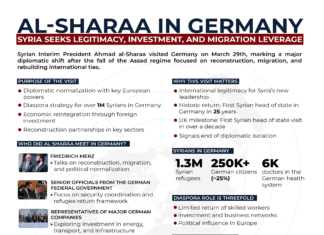
Sharaa said over 1.3 million voluntary returns have taken place since the fall of the Assad regime, while calling for international support to rebuild infrastructure and services necessary for long-term reintegration. He added reconstruction should also be framed as an investment opportunity for major international firms.
Syria Rebuilding Regional Ties
Sharaa stressed Syria paid a heavy price through the 14 year conflict, noting everyone who has experienced war understands the value of peace. Thus, he said, the Syrian people need to focus on supporting the Syrian economy, reconstruction, and welcoming back the refugees who fled. The goal is leveraging Syria’s geographical and geopolitical location to support its regional role, aiming to become a pivotal state and major contributor in the region.
This is only possible through cooperation of regional allies including Turkey, Jordan, the Gulf states, Lebanon, and even Iraq, as well as other leading global powers such as Britain, France, Germany, and the US. “I believe,” said Sharaa, “Syria can be a network of expertise with excellent diplomatic relations.”