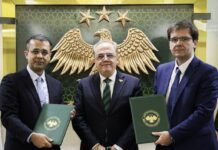
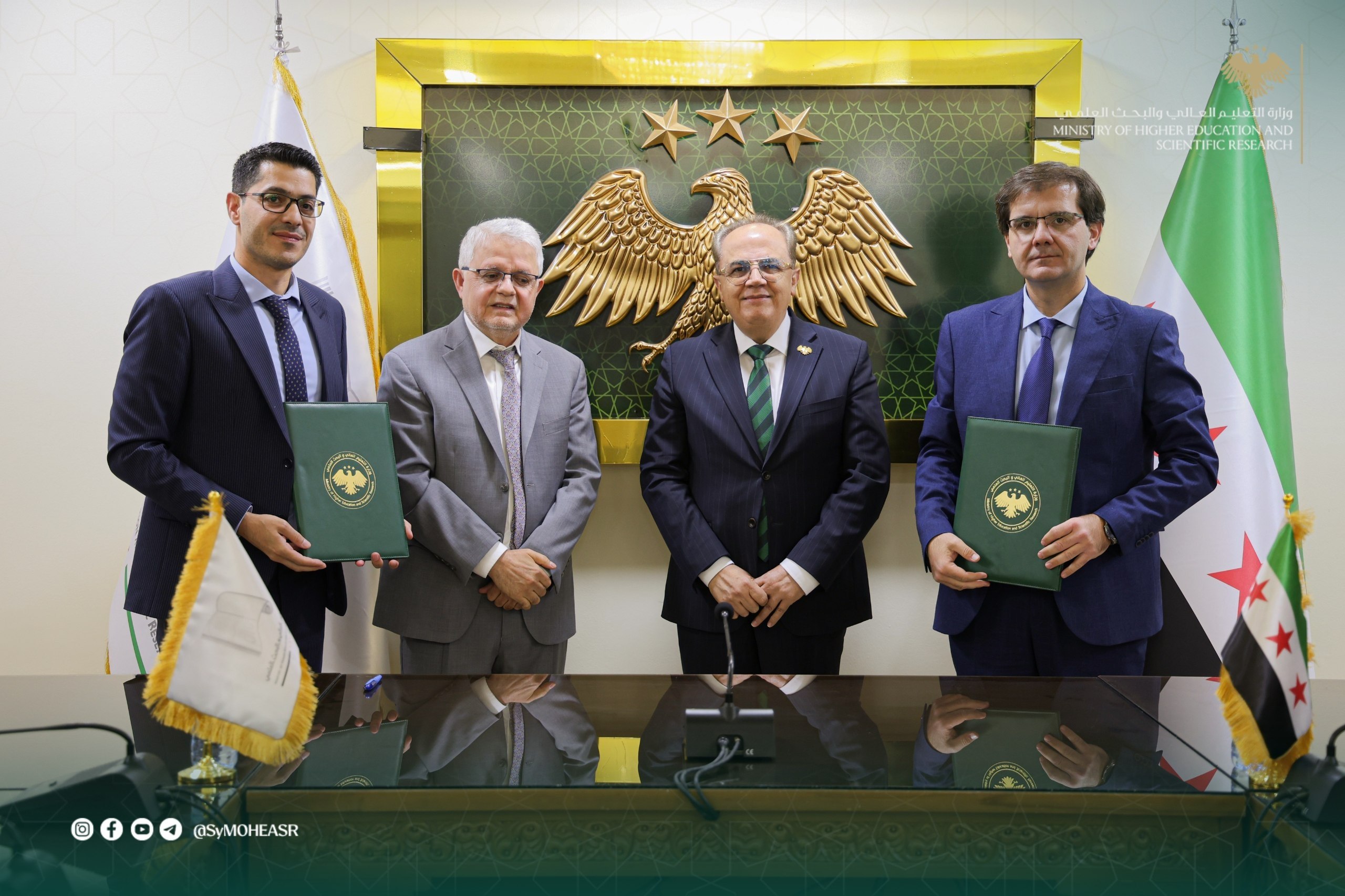
 The Ministry of Higher Education signed a memorandum of understanding with the Syrian American Medical Society (SAMS) to restore and strengthen bone marrow and peripheral blood stem cell transplantation services for children at the Hayat Stem Cell Center within the University Children’s Hospital in Damascus. The agreement also seeks to establish a sustainable national program for pediatric bone marrow transplantation across Syria.
The partnership marks an effort to strengthen specialized medical services while expanding the capabilities of teaching hospitals. It combines advanced medical expertise with the training of Syrian healthcare professionals according to internationally recognized standards.
Minister of Higher Education Dr. Marwan al-Halabi said the ministry places significant importance on health projects which improve the quality of pediatric care. He said initiatives such as this support the development of a more efficient and sustainable medical and educational system that will benefit patients and their families.
The memorandum took effect upon signing and will remain valid for one year. Both parties committed to implementing the agreement while maintaining high standards of quality and institutional cooperation.
Support for Syria’s Only Pediatric Transplant Center
Speaking to Levant24, Dr. Majid Khadir, director of the Hayat Center, said the facility is Syria’s only medical center specializing in pediatric stem cell transplantation. The center treats patients between 1 and 14 years old and performs transplants for children with thalassemia, hemolytic anemia, cancer and congenital immunodeficiency disorders.
Khadir said SAMS will help provide medications, medical supplies and laboratory testing, all of which have become major challenges for the center in recent years. The agreement also includes rehabilitating existing medical equipment to ensure it can support services more effectively.
Expanding Expertise and Long-Term Capacity
Khadir said the partnership extends beyond logistical support by creating opportunities for scientific collaboration. The agreement includes exchanges between the Hayat Center’s medical staff and SAMS specialists, along with joint workshops focused on modern treatment protocols and training physicians and technicians in internationally recognized medical practices.
He added that the center continues to face long waiting lists for children requiring transplants. Khadir said the agreement is expected to improve services and increase the number of procedures performed, helping reduce delays that have prolonged the hardship experienced by young patients and their families.
Looking beyond its initial one-year term, Khadir said the memorandum lays the groundwork for a sustainable national pediatric stem cell transplant program. He said the agreement is expected to be renewed to support continued development of transplant services and strengthen Syria’s long-term capacity to treat children with blood disorders and cancer.