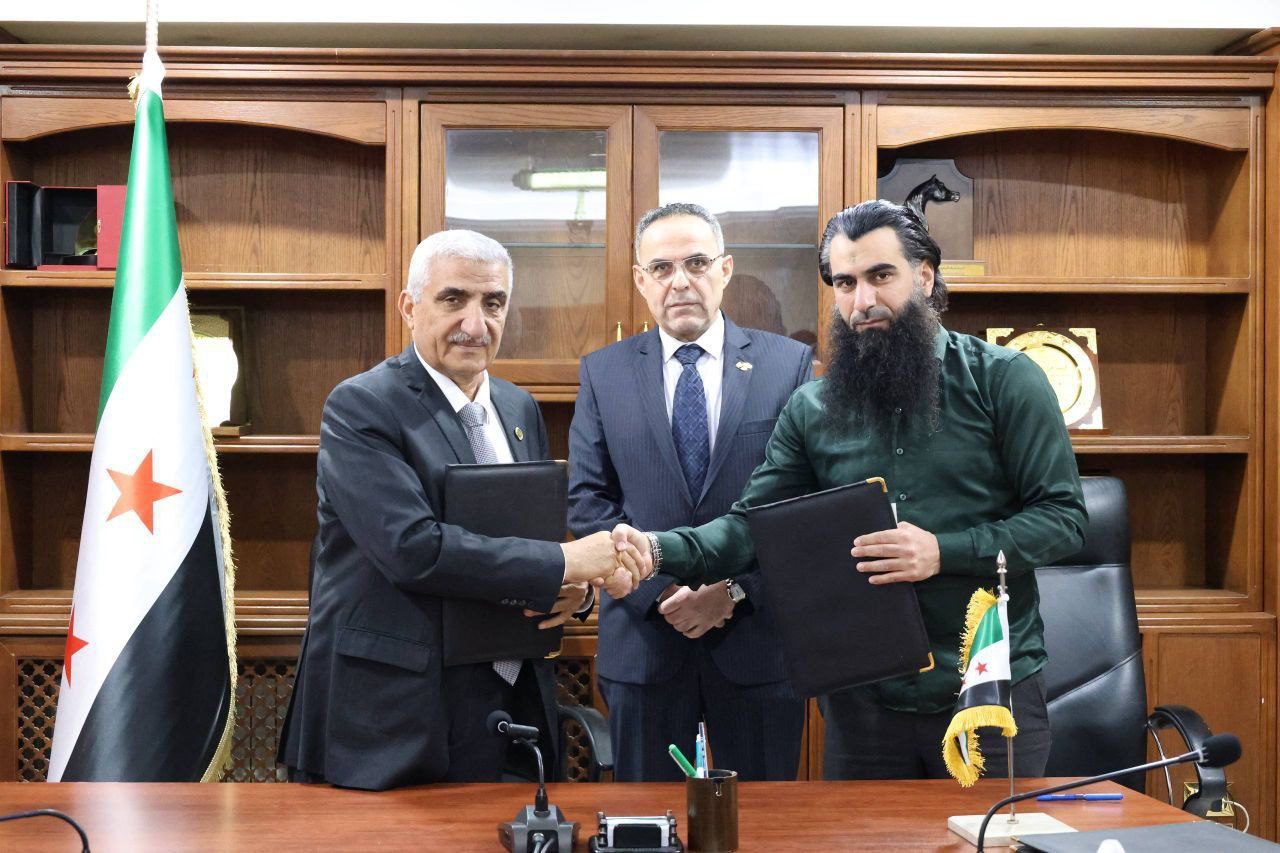
 The General Authority for Fisheries, affiliated with the Ministry of Agriculture, signed a memorandum of understanding with the Arab Center for the Studies of Arid Areas and Dry Zones (ACSAD) to revitalize Syria’s fisheries sector and strengthen production capacity. The agreement was signed at the ministry’s headquarters in Damascus in the presence of Agriculture Minister Amjad Badr.
Rehabilitating Hatcheries in Idlib
The memorandum outlines a joint program focused on technical cooperation and expertise exchange. A central component is the restoration of local fish production lines at the Ain al-Zarqa site near Darkush in Idlib governorate.
The plan includes rehabilitating the existing fish hatchery operated by the General Authority for Fisheries and establishing a new facility at the same location. The partnership will also support specialized scientific research aimed at developing fish resources in Syria and across the wider Arab region.
Expanding Production and Skills
The agreement seeks to increase the output of local fish species while strengthening the scientific and technical capacity of sector employees. Training programs will focus on modern aquaculture technologies and improved fisheries extension methods. Workshops on aquatic biodiversity conservation are also planned, alongside expanded cooperation with Arab countries that share similar freshwater fish ecosystems.
Iyad Khudro, director-general of the General Authority for Fisheries, said the new hatchery is expected to produce approximately five million fingerlings annually. “In its first phase, production will focus on carp and tilapia fingerlings,” Khudro said, noting that future expansion will include additional species and strain improvement programs to enhance productivity.
Dr. Muhammad al-Nasri, director of the Animal Resources Department at ACSAD, said the memorandum establishes a clear implementation timeline for rehabilitating infrastructure, advancing research and promoting freshwater aquaculture as a key source of protein. He added that the initiative supports food security and job creation, particularly in rural areas.
The agreement aligns with the Ministry of Agriculture’s five-year strategy to expand freshwater fish production, modernize hatcheries and promote intensive aquaculture, including floating cage systems in dams, as well as support for new fish farms and feed mills.