 Syria and Italy took steps to expand scientific and technical cooperation, with agreements including training veterinary personnel and sharing advanced laboratory expertise. Syrian Agriculture Minister Amjad Badr concluded an official visit to Italy which included a series of meetings and field visits aimed at strengthening collaboration in animal health and sustainable agriculture.
The visit ended with an agreement establishing a specialized animal health laboratory in Syria. The trip came at Italy’s invitation and formed part of broader efforts to build partnerships with international institutions. Representatives from the Arab Center for the Studies of Arid Zones and Dry Lands (ACSAD) also participated.
Dialogue on Regional Agricultural Cooperation
During the visit, Badr attended a seminar at the IZSUM Institute in Ancona focused on international agricultural cooperation and operational programs involving several countries in the region. In his remarks, Badr reviewed the condition of livestock and animal health in Syria, stressing the need to modernize laboratories and train technical and veterinary staff.
The seminar brought together local officials, regional representatives and international experts to discuss opportunities for collaboration. Speakers highlighted the role of scientific exchange in addressing shared agricultural challenges and improving veterinary systems across participating countries.
Cooperative Farming Model in Practice
On the sidelines of the visit, the Syrian delegation toured TreValli, a company specializing in milk production and dairy products. Officials observed how the company works closely with farmers in surrounding rural areas through a cooperative model.
The approach links producers to processing and distribution, supporting agricultural value chains while improving efficiency and sustainability. The visit provided a practical example of how collaboration between farmers and companies can strengthen production systems.
Academic Links and Local Engagement
The delegation also visited Perugia, where Badr met with local officials to discuss prospects for cooperation in agriculture and veterinary sciences. At the University of Perugia, he toured facilities including a historic library that houses manuscripts dating back centuries.
Discussions with university leadership focused on expanding academic and research collaboration, particularly in areas related to agriculture and food security. Both sides explored ways to support knowledge exchange and joint initiatives.
Agreement on Animal Health Laboratory
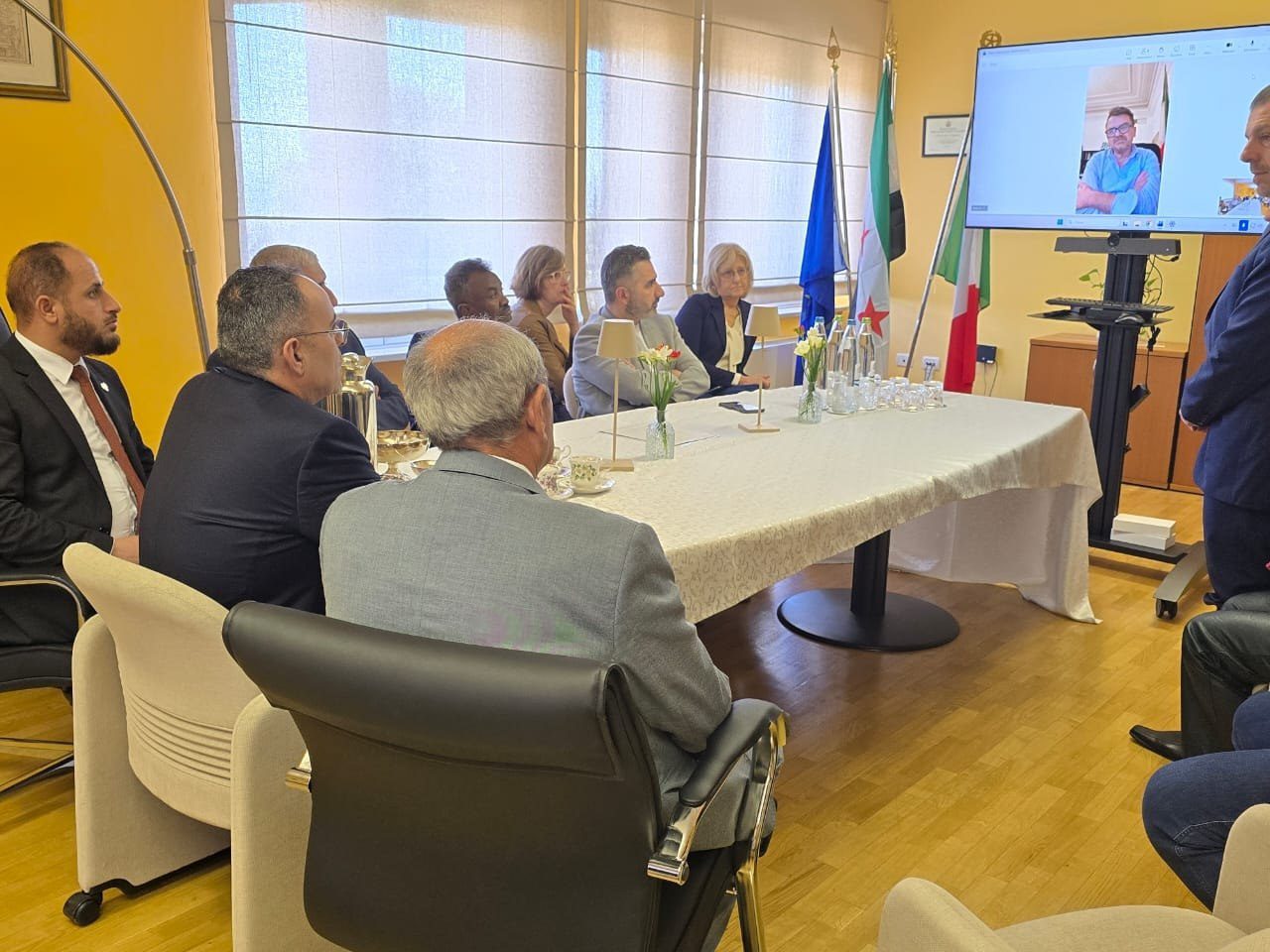
The visit concluded with meetings at the IZSUM Institute, where the Syrian delegation reviewed laboratory operations and recent technologies used in testing and analysis. Italian Ambassador to Syria Stefano Ravagnan joined part of the discussions via videoconference.
Talks resulted in an agreement to establish a specialized animal health laboratory in Syria. The project aims to strengthen disease monitoring and diagnostic capabilities, support livestock protection and improve veterinary services.
Officials said the initiative reflects ongoing efforts to expand cooperation with international partners and to support sustainable agricultural development, as well as food and animal security in Syria.