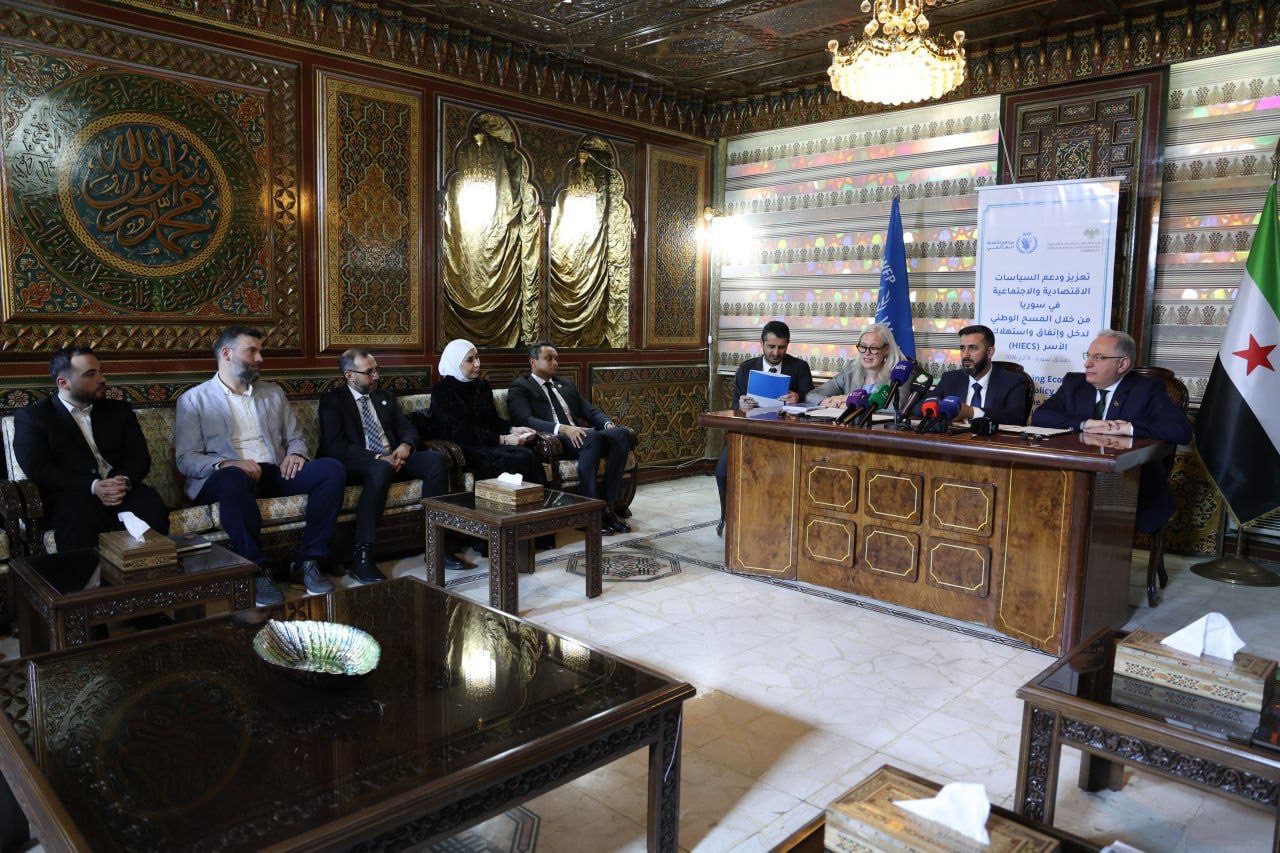
 The Planning and Statistics Commission of Syria and the World Food Program (WFP) signed a memorandum of understanding to implement a nationwide Household Income, Consumption and Expenditure Survey (HIECS), marking a major step toward strengthening data-driven policymaking in Syria. The survey will be the first of its kind conducted in the country since 2009 and aims to update Syria’s socioeconomic data infrastructure.
First Comprehensive Survey in 17 Years
The agreement was signed by Anas Sleem and Marianne Ward. The signing ceremony was attended by Finance Minister Muhammad Barnieh. Officials said the survey will collect updated information representing households across all Syrian governorates. The data will help measure living standards, monitor poverty levels and support more accurate calculations of inflation.
According to the memorandum, the results will play an important role in shaping national planning and social protection strategies. The findings will support the preparation of medium-term social protection programs and contribute to Syria’s Voluntary National Review of the UN Sustainable Development Goals. Survey data will also be shared with relevant ministries to assist in designing annual development plans and government programs.
Modern Data Collection Methods
Fieldwork is expected to begin in the second quarter of the year and will continue for 12 months. The extended timeline will allow researchers to capture seasonal variations in income and spending patterns, ensuring the survey reflects the full annual economic cycle.
Data collection will be conducted using tablets to improve efficiency and accuracy. Hundreds of field researchers from the Planning and Statistics Commission will participate after receiving training in international survey methodologies with support from WFP experts.
Evidence-Based Policymaking
Barnieh said the survey is essential for providing reliable information needed to shape economic and social policies. He noted the data will support the development of a national social protection strategy and a national poverty reduction strategy, while also helping authorities improve the targeting of subsidies and social assistance programs. Sleem said the initiative represents an important step in strengthening Syria’s statistical capacity.
“The survey data will provide key indicators to guide government plans in the areas of social protection, support and development,” he said, adding that the results will also help measure progress toward the Sustainable Development Goals.
Improving Humanitarian Assistance
Ward emphasized that the survey will also help humanitarian agencies improve their assistance programs. “The results of this survey will help WFP and its partners design more precise and targeted interventions, ensuring that aid reaches the most vulnerable groups,” she said.
The new agreement builds on previous cooperation between the two sides. In August last year, the Planning and Statistics Commission and WFP signed another memorandum to conduct the ninth phase of the Family Food Security Survey in Syria, whose results were announced earlier this year.