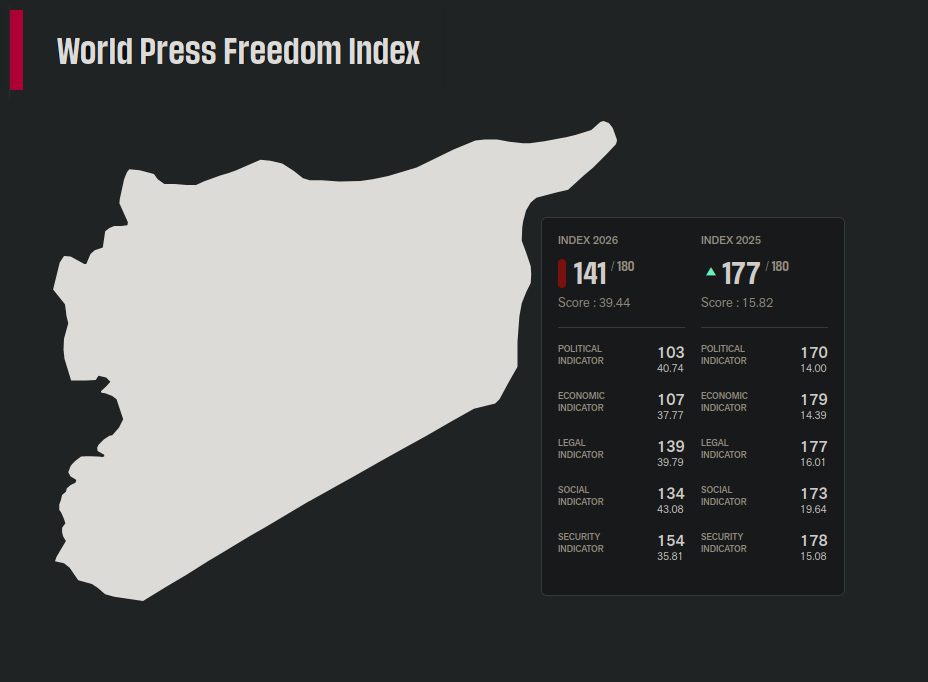
Syria recorded the greatest improvement in media freedom, climbing to 141st place out of 180 countries in the 2026 World Press Freedom Index published by Reporters Without Borders (RSF). The ranking marks a jump from 177th in 2025 and 179th in 2024, when the country stood near the bottom globally.
According to the organization’s latest report, Syria achieved the largest rise in this year’s index, gaining 36 positions in a single year. The shift follows the fall of Bashar al-Assad in December 2024, which ended decades of strict censorship and repression of journalists.
In a post on X, Syrian researcher Omar Abu Layla described the progress as “a remarkable achievement within just a year and a few months after Syria’s liberation.” He added that the improvement reflects growing transparency and respect for pluralism, helping rebuild Syria’s international reputation.
From Repression to Reform
For decades, Syria’s media environment was shaped by tight state control and widespread violations against journalists. The RSF report notes that the Assad regime relied on censorship, arbitrary detention and violence to silence dissent, particularly during the conflict that began in 2011.
The collapse of that system has led to sweeping changes. The current transitional authorities have pledged to establish a legal framework protecting freedom of expression while supporting independent journalism. Existing repressive laws have been dismantled, opening space for new policies aimed at safeguarding press activity.
Syrian human rights activist Mansour al-Omari told Syria TV the rise in rankings represents more than a numerical improvement. He said it signals a restoration of Syria’s cultural identity after years of isolation and repression. He emphasized that the ranking reflects “a tangible and real change on the ground in press freedoms.”
A Changing Media Landscape
The post-liberation period has seen the return of several media outlets that previously operated in exile or liberated-areas. Platforms such as Rozana Radio and Enab Baladi resumed activity inside the country, while international news agencies quickly reestablished a presence in Damascus after the political transition.
At the same time, journalists and media activists who documented abuses during the conflict continue to play a central role. Their reporting, often shared through social media, helped fill gaps left by traditional outlets during years of war.
Despite these gains, challenges remain. RSF noted political instability, economic pressures and occasional violence continue to affect journalists, particularly those working in sensitive regions or belonging to minority communities.
Global Context and Future Outlook
Syria’s progress stands out against a broader global decline in press freedom. The 2026 index found that over half of the world’s countries fall into categories described as “difficult” or “very dangerous” for journalism, the highest level recorded in 25 years.
While Syria’s rise signals meaningful change, observers caution that the transition is still fragile. Omari stressed continued reform, including a new constitution and stronger legal protections, will be essential to sustain progress.