
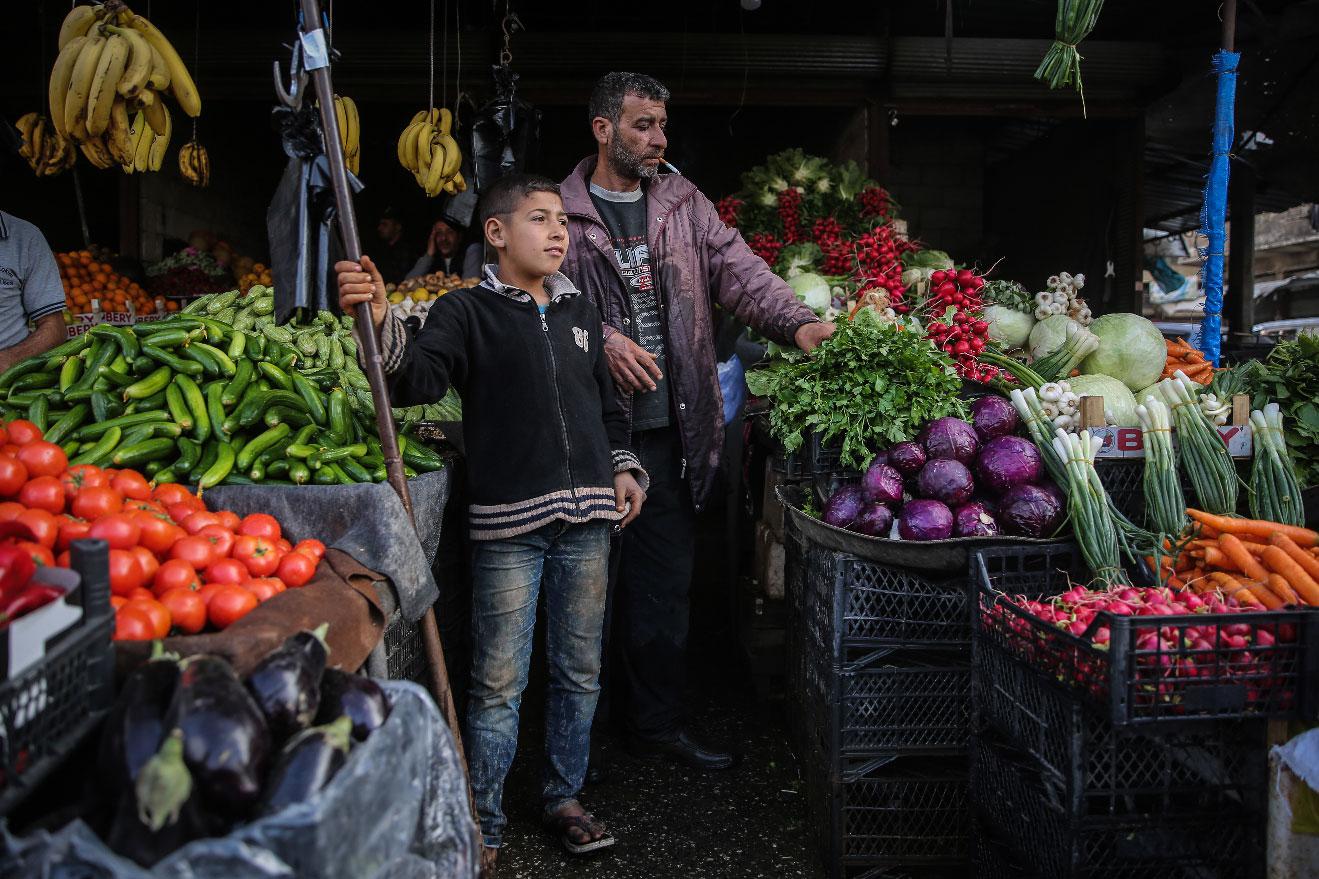
 Syria’s vegetable and fruit markets recorded a noticeable drop in prices following the end of the month of Ramadan, bringing an end to a month-long surge. The decline comes as supply improves and consumption levels ease. At the main wholesale market in Damascus’ Zablatani district, several essential items saw significant price reductions, while others remained elevated due to limited availability.
Broad Decline with Some Exceptions
At the wholesale market, zucchini prices fell to around 50 Syrian pounds (SYP), while tomatoes ranged between 70 and 80 SYP, and cucumbers between 50 and 60 SYP. Green beans saw the sharpest drop, falling from 400 to 170 SYP, reflecting improved supply and the arrival of new seasonal production.
In contrast, some items held steady. Onion prices remained at 330 SYP, potatoes at 55 SYP, and eggplant at around 70 SYP. Cauliflower was priced at approximately 30 SYP. Lemons and bell peppers maintained higher levels, around 170 and 200 SYP respectively, due to continued demand and constrained supply.
Fruit prices also declined in part. Loquats dropped to 400 SYP and strawberries to 120 SYP with the start of the harvest season. However, apples remained high at nearly 200 SYP due to the absence of local production. Good-quality oranges stabilized at around 150 SYP, with supply decreasing as the season draws to a close.
Supply, Demand, and Market Gaps
Traders at the wholesale market say prices are largely dictated by supply and demand, especially given the perishable nature of vegetables, which pushes sellers to move goods quickly to avoid losses. Despite the recent drop, a price gap persists between wholesale and retail markets.
This gap is driven by transportation, handling, and shop rental costs, sometimes reaching up to 50 SYP per kilogram. Differences between provinces can also reach around 30 SYP due to varying logistics and supply conditions.
Reasons Behind the Decline
Traders attribute the post-Ramadan price drop to several factors, including increased production, the influx of summer crops, and lower consumption after the holiday period. Improved transportation and trade flows between provinces have also played a role, along with faster access to price information through digital platforms, which has intensified competition and reduced profit margins.
With supply expected to remain strong and demand seasonally lower, market observers anticipate that prices will continue to face downward pressure in the near term, barring any disruptions in transport or supply chains. While this offers temporary relief for consumers, it places added strain on producers and traders, who must navigate rising input costs, particularly for fertilizers and fuel, in an increasingly volatile market.