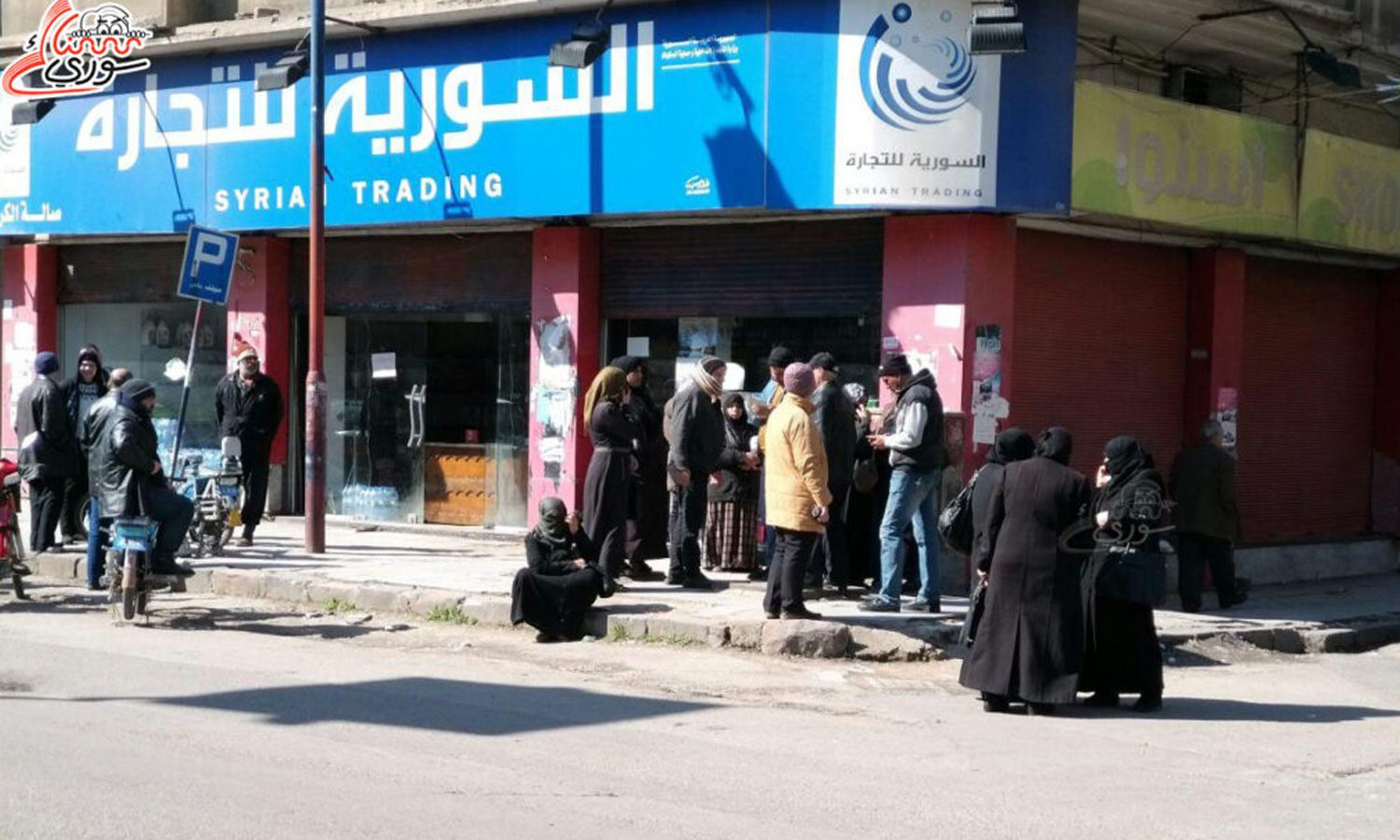
In a move aimed at curbing rising prices and improving food access, the Syrian government is preparing to activate around 100 food outlets under the Syrian Trade Establishment (STE) across multiple governorates. The rollout will begin in Damascus and its countryside before expanding nationwide. The initiative is designed to provide essential goods at prices lower than the market average through a public-private partnership model, with the goal of stabilizing prices and improving food security.
A Strategy for Affordable Essentials
The outlets will offer a wide range of basic commodities, including dairy products, oils, sugar, rice, meat, poultry, fruits, vegetables, and other household staples. Prices will be set close to cost, with only minimal profit margins, ensuring they remain consistently below market rates. According to STE Director Amer Qassoum, the goal is to establish a long-term pricing policy rather than short-term discounts, keeping essential goods affordable throughout the year.
The project was announced two weeks ago, with bids open until April 20. A one-month review and approval period will follow, putting the expected launch within two to two and a half months. The first phase will focus on Damascus and surrounding areas, using all existing STE outlets to maximize reach.
Each outlet will be required to maintain strong inventory levels, with warehouse reserves kept at no less than 80% capacity to prevent shortages. While contracts have not yet been finalized, the project is open to Syrian, Arab, and Turkish investors, with initial interest largely coming from Syrian companies.
Public-Private Partnership Model
The initiative is structured as a full partnership rather than a simple supply arrangement. Selected companies will handle the continuous provision of goods, including food items as well as non-food products such as household appliances and textiles.
To ensure competition and reliability, at least two major suppliers will be selected. These companies are expected to have strong supply chains and production capabilities, while the STE will retain oversight and management responsibilities.
Ensuring Accountability and Market Impact
Oversight will be handled by a dedicated board in coordination with the Consumer Protection Directorate to monitor pricing and supply compliance. Violations will be subject to penalties under Consumer Protection Law No. 8. The STE also plans to publish regular price lists and launch a mobile application that allows consumers to track prices, shop online, and locate nearby outlets.
Economists suggest the initiative could help reduce monopolistic practices by introducing consistent lower pricing into the market. However, its success will depend on stable supply chains, efficient management, and sustained funding. Without broader support for local production, its long-term impact may remain limited. As implementation moves forward, the coming months will determine whether this near-cost pricing model can deliver meaningful relief to Syrian households facing ongoing economic pressure.