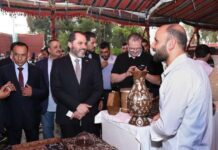
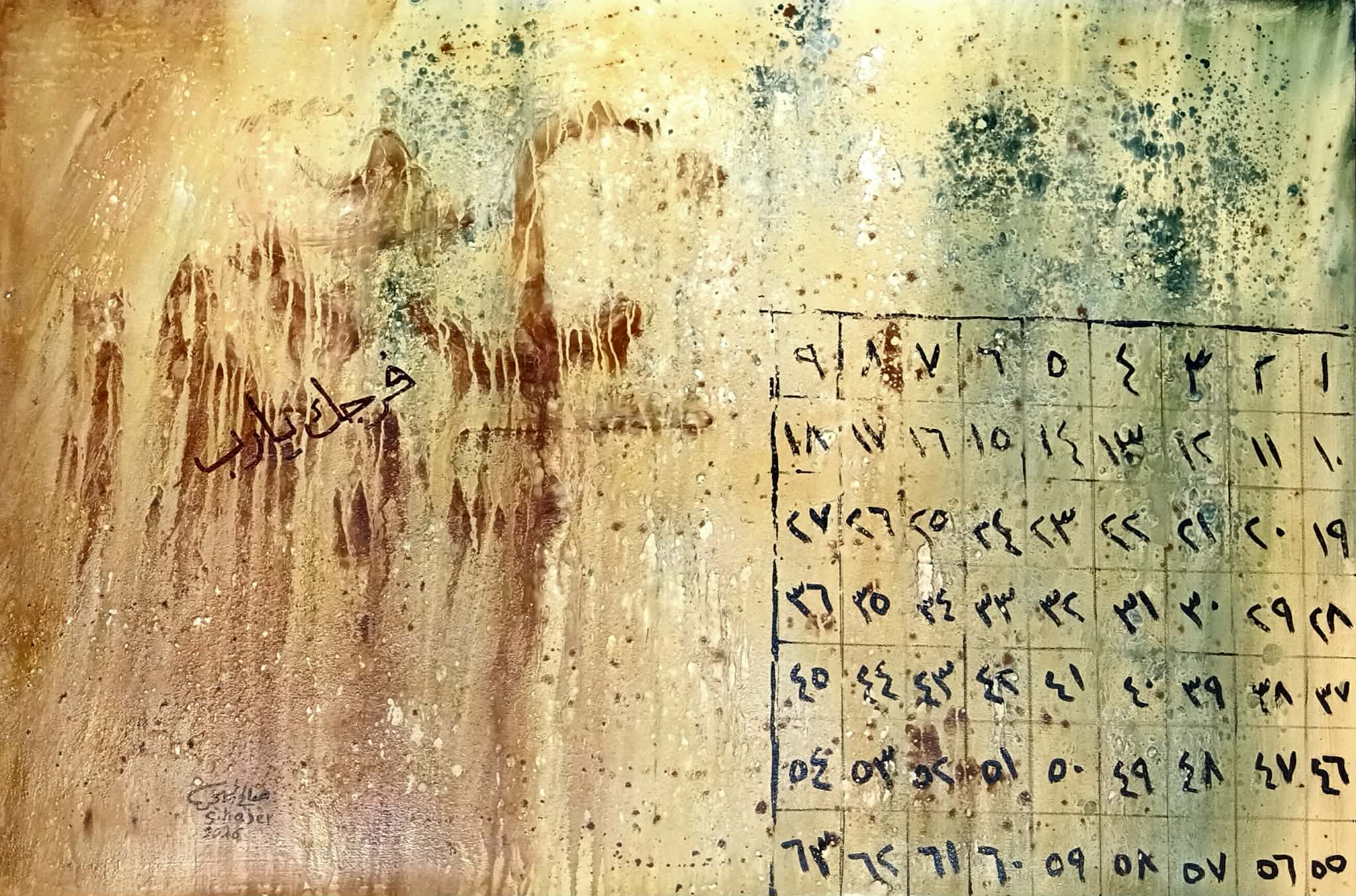
 The National Museum of Damascus hosted an art exhibition titled “Writings from the Walls of the Cell” by Syrian artist Saleh al-Hajr. The exhibition transforms the physical traces of prison walls into a visual narrative that preserves collective memory, offering a powerful humanitarian testimony to the suffering of detainees under the Assad regime.
The exhibition features 20 acrylic-on-canvas works created using techniques replicating the textures and marks left on cell walls. This approach evokes the emotional weight of the original writings, allowing text to move beyond language and become a visual element carrying both memory and meaning. The works blend documentation with symbolism, turning fragments of lived experience into a layered artistic expression.
Art as a Message
At the opening, Minister of Culture Muhammad al-Saleh emphasized the role of art in conveying meaning. “If art is not founded on a humanitarian message, it becomes a form of farce,” he said, underscoring the importance of purpose in artistic work.
He noted the ministry considers “literature born from prison walls” an essential part of Syria’s cultural memory. According to Saleh, the exhibition represents an important contribution to shaping national identity by documenting suffering through multiple forms of expression, including writing, visual arts, and theater.
From Detention to Documentation
The exhibition is rooted in Hajr’s own experience of detention twelve years ago, which became the foundation of the project. Speaking about the work, he recalled the messages left behind by fellow detainees, names, prayers, verses, and fragments of thought that carried both pain and hope.
“The idea began during my detention,” he said. “Some left their names, others left messages, elegies, prayers, and words that held deep meaning. This exhibition is an attempt to turn those traces into an artistic document reflecting the suffering of detainees.”
Hajr explained each piece translates those writings into visual form. “Every sentence was a cry of resistance, and every word a step toward freedom,” he said. “The walls, once a prison, have become a gallery reflecting the strength of human spirit in the face of darkness.”
This marks Hajr’s second exhibition in Syria since the country’s political transition. It builds on his broader artistic journey, which focuses on reinterpreting the Syrian experience, moving from documenting destruction toward exploring identity and memory through visual art.