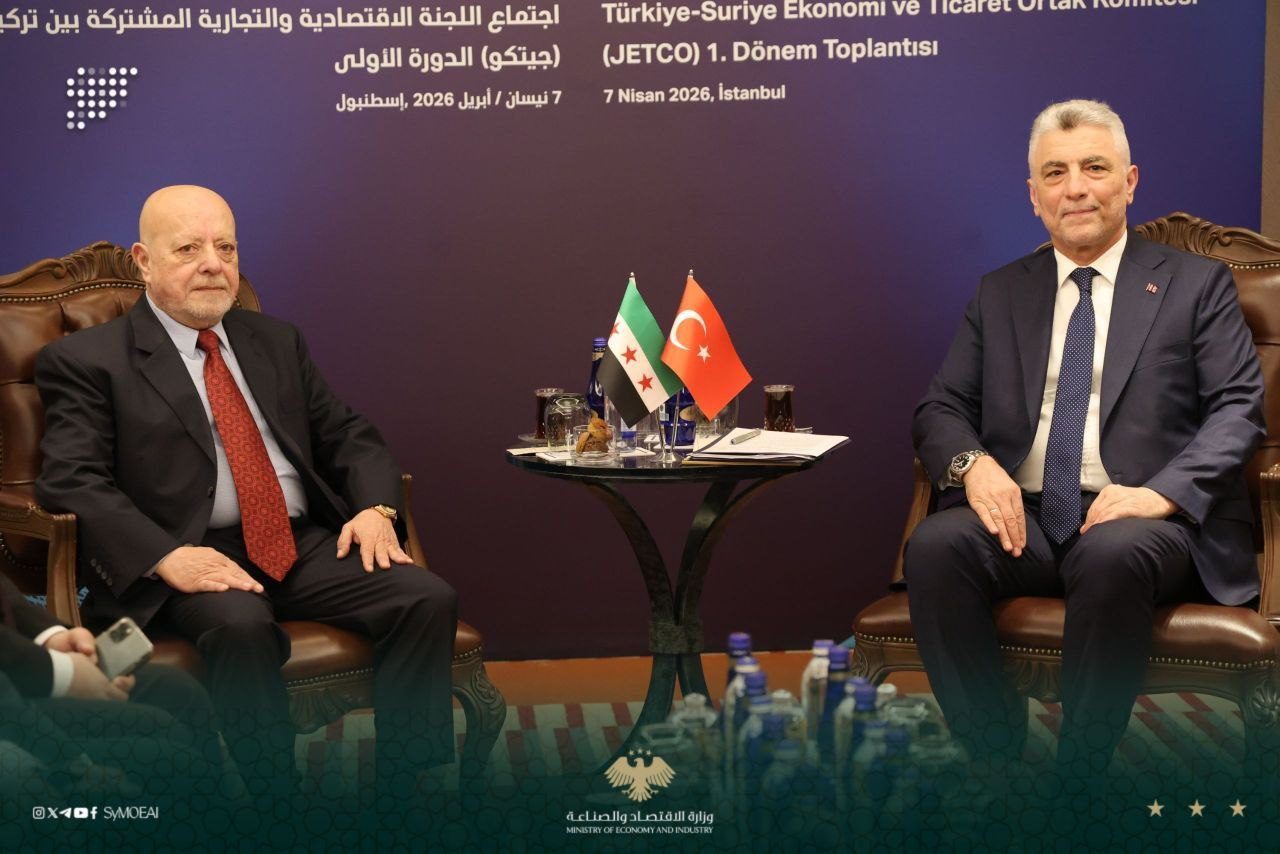
 Istanbul is hosting the first meeting of the Joint Economic and Trade Committee, or JETCO, between Syria and Turkey, marking a new phase in efforts to deepen bilateral economic cooperation. The meeting comes as trade between the two neighbors continues to expand.
Efforts are supported by recovering economic activity, rising demand for goods and longstanding geographic and commercial ties. Recent reports said the first JETCO session, co-chaired by the two countries’ trade and economy ministers, is scheduled for April 7 alongside a broader business and investment forum.
Bilateral Standardization at the Fore
The Syrian delegation, led by Economy and Industry Minister Nidal al-Shaar, is holding talks with Turkish Trade Minister Omer Bolat and senior economic officials. Discussions are expected to focus on bilateral relations, regional developments and a roadmap for stronger economic integration.
A central aim of talks is strengthening institutional frameworks governing trade. The agenda includes agreements related to product safety, standards, accreditation and measurement, all designed to improve the reliability of cross-border commerce.
Officials are also expected to sign a memorandum tied to the inaugural JETCO session, creating a formal mechanism for cooperation in strategic sectors such as textiles, agriculture, food industries and machinery.
Trade Momentum and Infrastructure Priorities
Beyond sector-specific cooperation, talks also highlight practical trade needs. Both sides are expected to prioritize full-capacity operations at border crossings, uninterrupted transport routes and stronger banking channels supporting Syria’s reentry into the global financial system. These measures are intended to give businesses greater confidence as commercial activity grows.
The urgency behind the meeting is reflected in the latest trade figures. Bilateral trade reached $3.7 billion in 2025, while Turkish exports to Syria rose nearly 60% from $2.2 billion in 2024 to $3.5 billion in 2025. In the first two months of 2026, exports exceeded $666.7 million, up 26.7% from the same period a year earlier.
Recent data also points to continued diversification in traded goods. Food products, agricultural inputs, machinery and transport-related sectors remain among the key drivers of growth, while Turkish contractors continue to expand their presence in reconstruction and infrastructure projects inside Syria.
The meeting offers more than a diplomatic platform. It establishes a structured venue for managing trade growth, resolving logistical challenges and encouraging new joint investments. If agreements move forward as expected, talks could help shape a more stable and coordinated economic partnership in the months ahead.