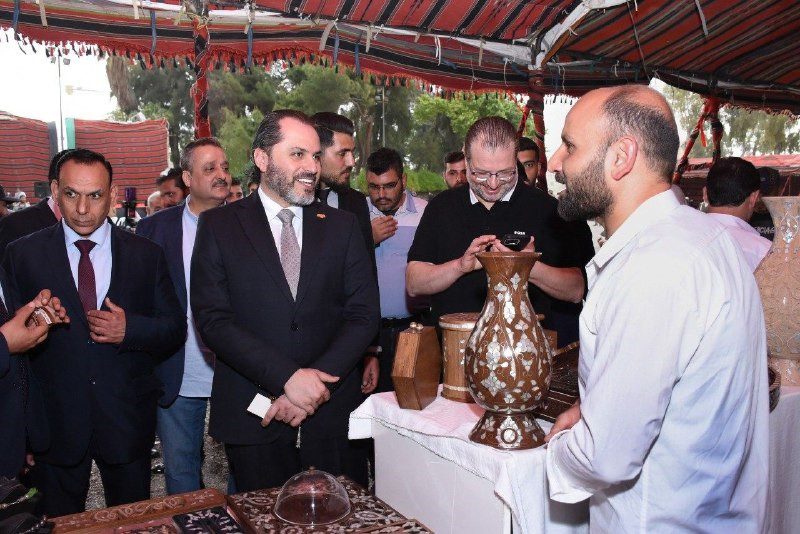
 Minister of Tourism Mazen al-Salhani inaugurated the exhibition “Damascus: Rose and Heritage,” highlighting traditional crafts recognized by UNESCO as part of Syria’s intangible cultural heritage. The exhibition brings together a wide range of craft traditions, including mosaics, brocade, pottery, glassblowing, wood carving and inlay, hand weaving and copperwork.
Artisans displayed handmade items reflecting long-standing techniques passed down through generations. Organizers say the event aimed to reinforce the cultural value of these crafts while introducing them to a broader audience.
A dedicated pavilion focuses on rural heritage products. It features traditional condiments, medicinal items and natural oils, alongside goods derived from the Damask rose. These include rose water, rose oil, rose jam and natural extracts commonly used in cosmetics and skincare.
Historic Citadel as Cultural Setting
The exhibition is being held at the Damascus Citadel, where the historic site has been adapted to host craft displays and cultural activities. The timing coincides with the annual Damask rose harvest, linking the event to a seasonal tradition that holds cultural and economic significance.
Salhani said the exhibition strengthens Damascus’ tourism profile by combining heritage, craftsmanship and seasonal identity in a single setting. He described the featured crafts as part of a “living memory” that continues to shape cultural expression.
Supporting Artisans and Market Access
Majid Izzuddin, director of tourism in Damascus, said the exhibition provides an opportunity to promote traditional crafts while expanding their market reach. He noted such events help connect artisans with potential buyers and raise awareness of the diversity of Syrian handicrafts.
In addition to displays, the program includes training sessions aimed at helping craftspeople improve marketing strategies, including the use of digital tools. Workshops also offer hands-on engagement with the featured crafts, allowing visitors to observe techniques and interact with artisans.
Linking Heritage to Economic Activity
Officials say the exhibition reflects the ministry’s broader effort to position traditional crafts as both a cultural asset and an economic resource. By hosting the event at a prominent historical site, organizers also aim to reinforce the role of archaeological landmarks as venues for cultural initiatives. The exhibition continues throughout the rose harvest season, offering visitors a chance to experience both the material and living aspects of Damascus’ heritage.