Israeli military operations have expanded significantly across Gaza, Lebanon and southern Syria since the Oct. 7, 2023 attacks, deepening concerns over regional instability, civilian displacement and the long-term implications of Israel’s evolving security doctrine.
A report published by Telegraph said Israel has expanded the territory under its military control by roughly 530 square miles since the attacks carried out by Hamas in southern Israel. The report described a strategy centered on establishing “buffer zones” beyond Israel’s internationally recognized borders, which Israeli officials say are necessary to prevent future attacks.
The military expansion now stretches across multiple fronts. In Lebanon, Israeli forces control areas extending from the Mediterranean coast toward the Syrian side of Mount Hermon and near the Jordanian border.
In Gaza, Israeli operations have left large portions of the territory under direct or indirect military control, while southern Syria witnessed a steady increase in incursions, checkpoints and fortification projects.
Southern Syria Faces Escalating Incursions
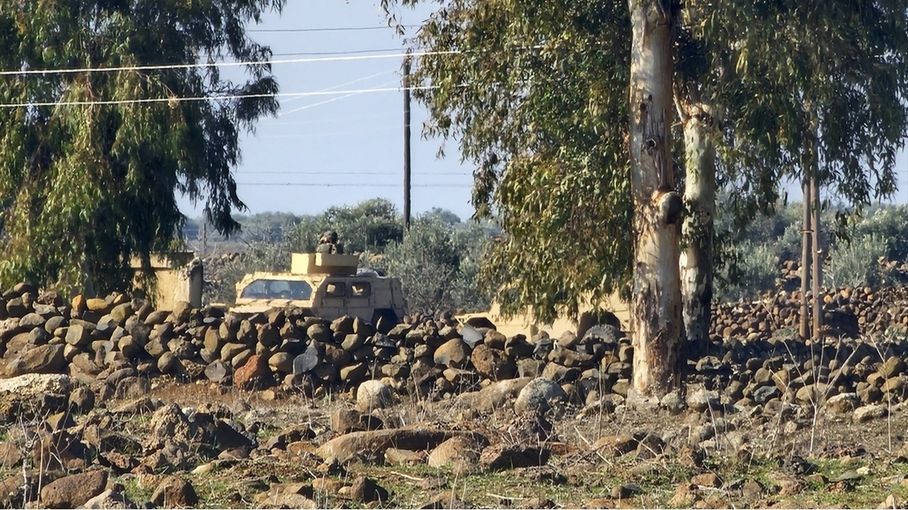
In recent months, residents of southern Syria reported near-daily Israeli military activity in the governorates of Quneitra and Daraa. Local outlets documented repeated incursions involving armored vehicles, temporary checkpoints and arrests of civilians, including shepherds and farmers.
On Friday, May 8, Israeli forces entered the village of Saida al-Hanout in southern Quneitra with several military vehicles and detained a shepherd before withdrawing from the area. Earlier this week, Israeli patrols entered the town of Al-Rafid and the Wadi al-Raqad area in western Daraa, where troops searched civilians and monitored movement in the region.
Human rights monitors reported 254 Israeli violations in southern Syria during April 2026 alone, including ground incursions, aerial overflights and artillery shelling. Quneitra accounted for most of the incidents.
Damascus describes the operations as “violations of Syrian sovereignty.” Israeli officials, meanwhile, argue the activities are aimed at preventing armed groups “backed by Iran” from establishing positions near the border.
‘Sufa 53’ Alters Agricultural Landscape
Alongside military incursions, Israel has expanded infrastructure projects in southern Syria through what officials call the Sufa 53 or “Great Storm” project. The project began in 2022 and includes trenches, military roads, observation posts and fortified positions running parallel to the ceasefire line in the occupied Golan Heights.
The route stretches across several towns in Quneitra Governorate, from Hadar in the north to areas near the Jordanian border. Local officials and farmers say the construction has devastated farmland and grazing areas.
Muhammad al-Saeed, Quneitra’s media director, told Anadolu Agency approximately 12,000 dunams of agricultural land and pasture have been affected by excavation and bulldozing operations. Residents say trenches dug by Israeli forces disrupted water drainage systems, increased soil erosion and damaged roads and orchards.
Security Strategy or Territorial Expansion
Israeli officials insist buffer zones are driven by security concerns rather than territorial ambitions. Kobi Michael of the Institute for National Security Studies described the policy as a strategy designed to keep hostile groups away from Israel’s borders and prevent future attacks similar to those carried out on Oct. 7.
However, critics argue the policy is reshaping the region’s geography through prolonged military occupation and demographic changes. The Telegraph report noted growing debate over rhetoric promoted by some members of the Israeli government, including Finance Minister Bezalel Smotrich, who has previously advocated expanding Israeli control into neighboring territories under the concept of “Greater Israel.”
Analysts cited in the report said Israel’s security establishment remains primarily focused on “deterrence” and “direct military control,” but acknowledged the scale of territorial expansion fuels political and ideological concerns.
The humanitarian consequences continue to mount. The UN estimates roughly 1.3 million people have been displaced in Lebanon, while nearly 2 million Palestinians in Gaza remain concentrated in densely populated western areas of the enclave amid ongoing military operations.
With Israeli officials linking any future withdrawal from “buffer zones” to the disarmament of Hezbollah and Hamas, analysts warn the current military presence across multiple fronts could become increasingly entrenched, further complicating efforts to reduce tensions across the region.