 The Health Directorate in Hasakah announced new measures improving medical care for kidney failure patients while strengthening healthcare access in remote communities across the governorate. The efforts include the installation of dialysis equipment and a water desalination unit, alongside continued assessments of health facilities in underserved areas.
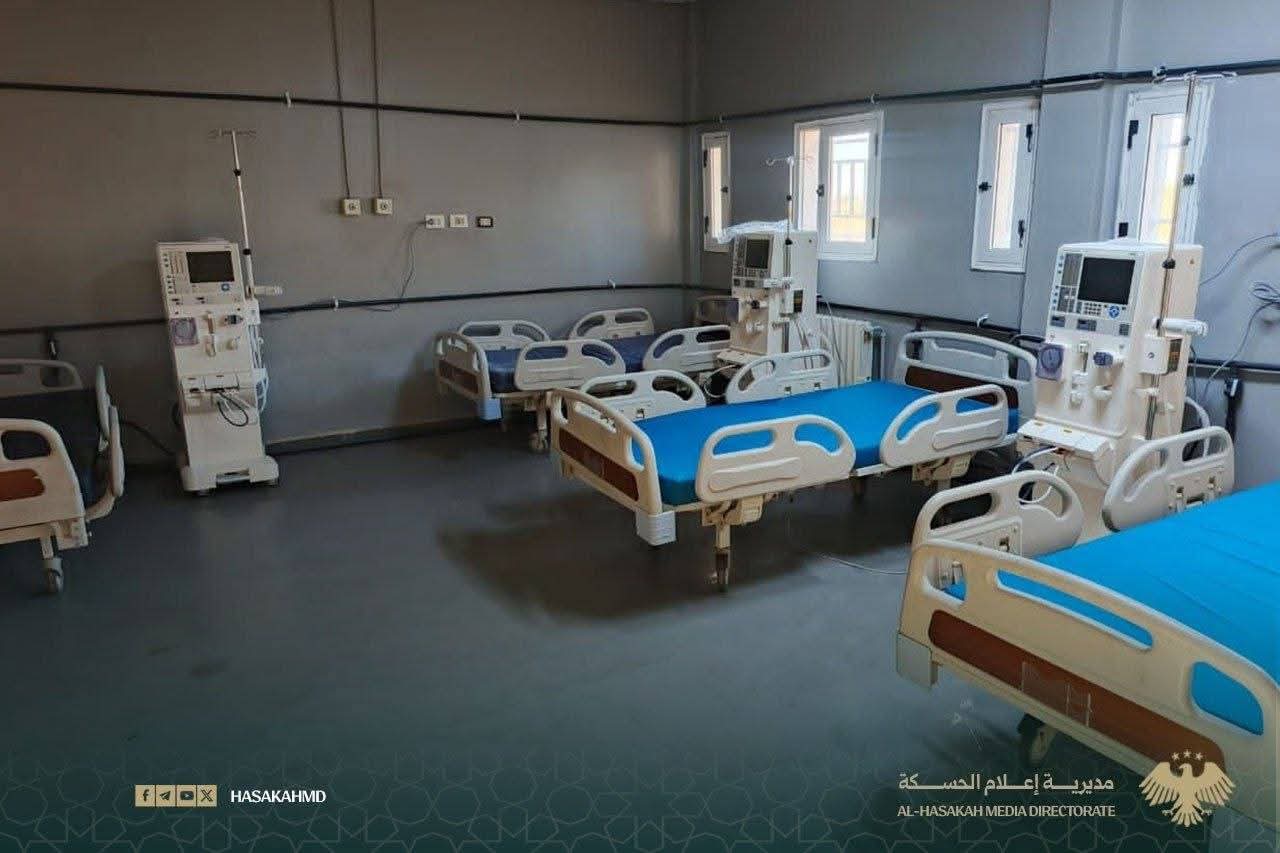
Khalid al-Khalid, director of health in Hasakah, said the directorate recently received a water desalination station from the Mehad Organization. The unit has been installed at Shaddadi Hospital in southern Hasakah countryside to support the kidney dialysis department and improve the hospital’s medical readiness.
New Equipment for Kidney Patients
In remarks to Al-Watan Newspaper, Khalid said the directorate previously received four dialysis machines from the Ministry of Health through the Al-Ameen Organization. The equipment was provided as a grant from the King Salman Humanitarian Aid and Relief Center. Medical teams plan to place the machines into service after completing installation, testing and staff training.
Health officials say the new equipment will improve treatment capacity and the quality of care for kidney failure patients in Shaddadi and nearby rural communities. The additions come as health authorities continue efforts to strengthen services in areas that face shortages in specialized medical care and equipment.
Assessing Needs in Remote Areas
Khalid said the Health Directorate continued field visits across the governorate to evaluate conditions at medical facilities and identify urgent needs. Recent inspection tours included visits to Yarubiyah, a border town near Iraq in northeastern Hasakah. According to Khalid, the healthcare center in Yarubiyah currently provides a range of medical services through qualified doctors and nursing staff.
The center includes specialists in internal medicine, pediatrics and general medicine. It also operates an ambulance service and offers vaccinations, reproductive healthcare and nutrition support. The facility recently received a shipment of chronic disease medications from the International Committee of the Red Cross, aimed at supporting patients requiring long-term treatment.
Plans for Expanded Emergency Services
Despite recent improvements, Khalid said Yarubiyah’s location and circumstances continue to require additional logistical and medical support. He noted the Health Directorate is coordinating with several international organizations, including Doctors Without Borders, to study plans for expanding the center into a fully equipped emergency care facility. The proposal includes establishing an inpatient ward and operating room, while increasing support from specialized physicians in multiple fields.
Health officials also aim to reactivate healthcare centers in villages throughout the region to improve access to treatment for residents in remote communities. The directorate said it will continue working with international partners to expand comprehensive healthcare services and address the needs of local residents.