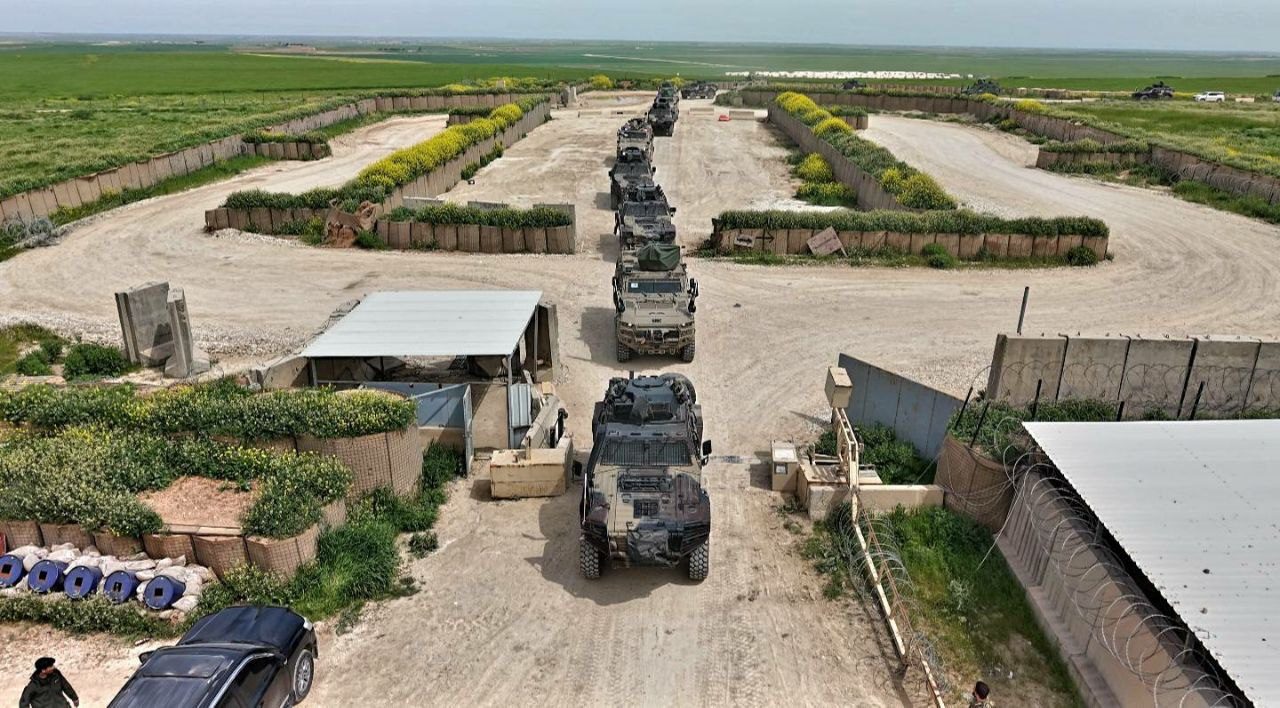
The evacuation of the Qasrak base in Hasakah province marked the end of direct US military deployment inside Syria, closing a chapter that began in 2014 with the US-led campaign against ISIS. Thursday, April 16, the final American convoy departed the site after days of moving armored vehicles, logistics equipment and remaining supplies toward Jordan and Iraq.
Soon after the withdrawal, forces from the Syrian army’s 60th Division entered the base and assumed control, according to statements from Syria’s Ministry of Defense. The handover makes Qasrak the last in a string of coalition sites transferred in recent months, following earlier withdrawals from Rmeilan, Shaddadi and Tanf.
In a statement provided by the Syrian Foreign Ministry, Damascus described the transfer as evidence that “Syrian state authority now extends over northeast and border regions,” tying the development to the integration of the Syrian Democratic Forces (SDF) into national structures and the state’s assumption of full counterterrorism responsibilities.
US Central Command, spokesman Tim Hawkins confirmed, “US forces have completed the handover of all their bases in Syria to Syrian forces.” while ensuring that they would “continue to support our partners’ efforts to combat terrorism.”
Convoys, Equipment and a Managed Withdrawal
The logistical dimension of the withdrawal demonstrates the intricacies of the withdrawal’s planning. Field reporting from Hasakah indicates equipment transfers began as early as February, with heavy vehicles first moved to secondary sites before final convoys crossed toward Jordanian territory.
Local sources reported some equipment was destroyed or burned before the last troops left, a common military practice intended to prevent sensitive material from changing hands. The phased nature of redeployment also reflects broader coalition planning. According to material attributed to Reuters and The Associated Press, roughly 1,000 remaining US troops were slated for a gradual drawdown over several months after a security reassessment of the mission.
A parallel effort focused on detainees linked to ISIS. Earlier coalition operations reportedly transferred prisoners from SDF-run facilities in Hasakah into Iraq, first by Chinook helicopter and later by land convoy, reducing one of Washington’s long-standing operational burdens in northeastern Syria.
Political Fallout After the American Departure
Politically, the withdrawal strengthens Damascus’ assertions it has established sovereign control over the country’s northeast while reducing the need for foreign military partners on Syrian soil. Syrian officials framed the move as a shared conclusion that the battlefield conditions originally justifying the US presence had fundamentally changed.
The transfer also carries regional implications. US bases in Syria long served overlapping roles: containing ISIS remnants, supporting SDF operations, monitoring border corridors and limiting Iranian-backed transit routes. Their closure shifts those responsibilities to Syrian state institutions while placing full responsibility on Damascus for managing border security and extremist cells without direct coalition support.
While the American military mission on Syrian territory appears over, the consequences are only beginning to unfold. The end of the ground presence removes a major geopolitical actor from the map, yet leaves the enduring challenge of preventing an ISIS resurgence unresolved in a still-fragmented security landscape.