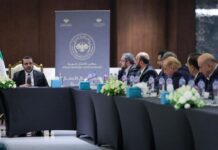
 A high-level delegation representing 23 major donor countries supporting the UN Office for the Coordination of Humanitarian Affairs (OCHA) arrived in Syria this week to assess humanitarian needs and discuss recovery priorities with Syrian officials in Damascus.
The meetings focused on coordinating relief efforts while aligning humanitarian assistance with early recovery and long-term development plans. Discussions took place at the Ministry of Foreign Affairs and Expatriates headquarters, where officials emphasized the need for stronger cooperation between Syria and international partners during the next phase of recovery.
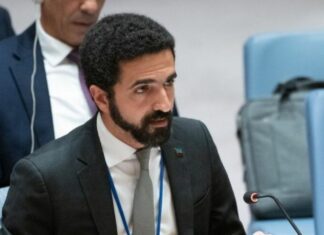
Muhammad Batheesh, head of the UN Cooperation Department at the Foreign Ministry, said Syria is seeking constructive engagement with the international community to support national recovery efforts. He noted that the government is working to establish practical partnerships aligning with the country’s priorities.
Batheesh said Syria views recovery as a process remaining under full national ownership. He pointed to the recently issued “Recovery Priorities for International Cooperation” document as a framework designed to organize cooperation with international partners and outline priorities for the coming stage.
While humanitarian assistance remains necessary, Batheesh said the country’s focus has shifted toward recovery, reconstruction and support for displaced people returning to their communities. He added that Syria aims to reduce long-term dependence on aid by restoring livelihoods and improving self-sufficiency.
‘Syria Without Camps’ Initiative Targets Returns
Batheesh also highlighted the Syria Without Camps initiative launched by President Ahmad al-Sharaa, describing it as a major shift in humanitarian policy. The initiative focuses on supporting voluntary returns by rehabilitating infrastructure and restoring basic services in areas where displaced residents are returning.
According to Batheesh, several areas, including Maarat al-Numan, are witnessing returns at a pace that exceeds current service capacity. He said the situation requires urgent work to restore hospitals, schools, water systems and electricity networks. He added officials are prioritizing high-impact recovery projects in regions experiencing rapid population growth after years of displacement.
International Organizations Expand Presence
As part of broader coordination efforts, Batheesh said the International Cooperation Department is working to create a more supportive environment for organizations operating in Syria. Over 90 international NGOs received approval to register in the country so far. The measure aims to improve coordination among aid groups, reduce duplication and ensure more efficient use of resources.
On financial reform, Batheesh said the Central Bank of Syria made anti-money laundering and counterterrorism financing measures central to efforts rehabilitating the financial sector and reconnecting it with the international system. He said reforms are taking place in cooperation with the World Bank and other international partners.
Ina Friedrich, head of the delegation and director of humanitarian assistance at the German Federal Foreign Office, said she welcomes the opportunity to visit Damascus and hold discussions with Syrian officials.
Friedrich said humanitarian aid remains unconditional and described recent developments in Syria as encouraging. She added the country appears to be moving steadily toward greater stability and could eventually reach a stage where humanitarian assistance is no longer needed.