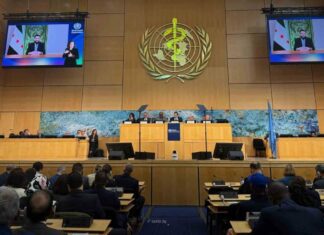
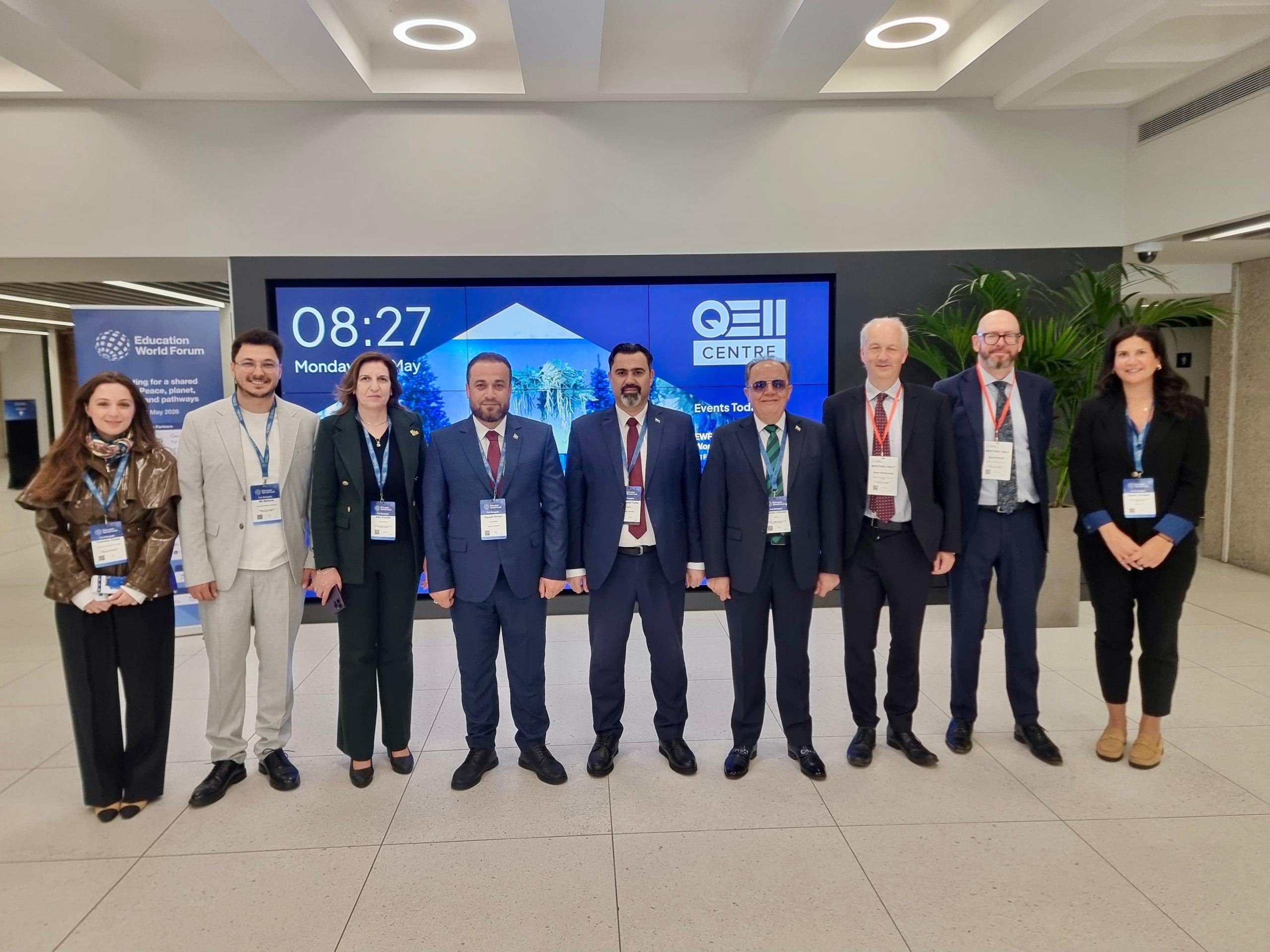
 Syria participated in the World Education Forum 2026 in London as part of ongoing efforts to modernize the country’s education system, strengthen digital learning, and explore the use of artificial intelligence in education.
On the sidelines of the forum, the Syrian delegation held a series of meetings with international officials discussing educational recovery, human capacity building, and future cooperation projects. The delegation included Higher Education Minister Marwan al-Halabi and Education Minister Muhammad Turko.
Talks Focus on Educational Recovery
Halabi and Turko met with a delegation from the British Foreign Office including Peter McDermott, development director, and David Hunt, political director for Syria, Yemen, and Iraq. According to the discussions, Britain expressed interest in supporting Syria’s stability and contributing to the rebuilding of the education sector.
The talks also touched on possible developments regarding Britain’s diplomatic presence in Syria. Britain said support efforts would coordinate with UNICEF focusing on school rehabilitation projects, particularly in Idlib, as well as child protection programs, language education, and extracurricular activity clubs.
Officials also discussed cooperation with the World Bank to expand funding for education, research, infrastructure, grants, and academic development programs. Hunt said Britain views Syria’s stability and the development of an educated workforce as an important priority. He also emphasized the importance of strengthening bilateral relations and supporting reconstruction efforts in infrastructure, the economy, and education.
Digital Learning and Technical Education
During the meetings, Halabi called for renewed cultural cooperation between Syria and Britain, including reopening a British cultural center in Damascus and resuming the Chevening scholarship program. He also requested technical support for rehabilitating educational infrastructure and expanding vocational and technical education.
Halabi said Syria aims to raise technical education enrollment to 40% while addressing the challenges facing students displaced by years of conflict. With an estimated 1.4 million children still out of school, he stressed the importance of strengthening e-learning systems, remedial education programs, and digital infrastructure to improve access to education across the country.
Cooperation Plans With the World Bank
The Syrian ministers also met with World Bank Education Director Cristian Aedo to discuss a proposed cooperation initiative centered on three areas: addressing educational loss, expanding blended and digital learning, and improving teacher training programs.
Officials said the project aims to support Syria’s educational recovery while improving long-term academic outcomes. Syria’s participation in the forum reflects broader efforts to strengthen international partnerships in both higher and general education and to explore new opportunities for cooperation with global educational institutions.
Evolving Ties Between Damascus and London
Syrian-British relations have shifted significantly over the past year. In July 2025, President Ahmad al-Sharaa met British Foreign Secretary David Lammy in Damascus. By November, the Syrian Embassy in London had reopened, and in March 2026, Sharaa visited Britain, becoming the first Syrian president to visit the country in more than 20 years.