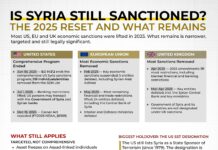
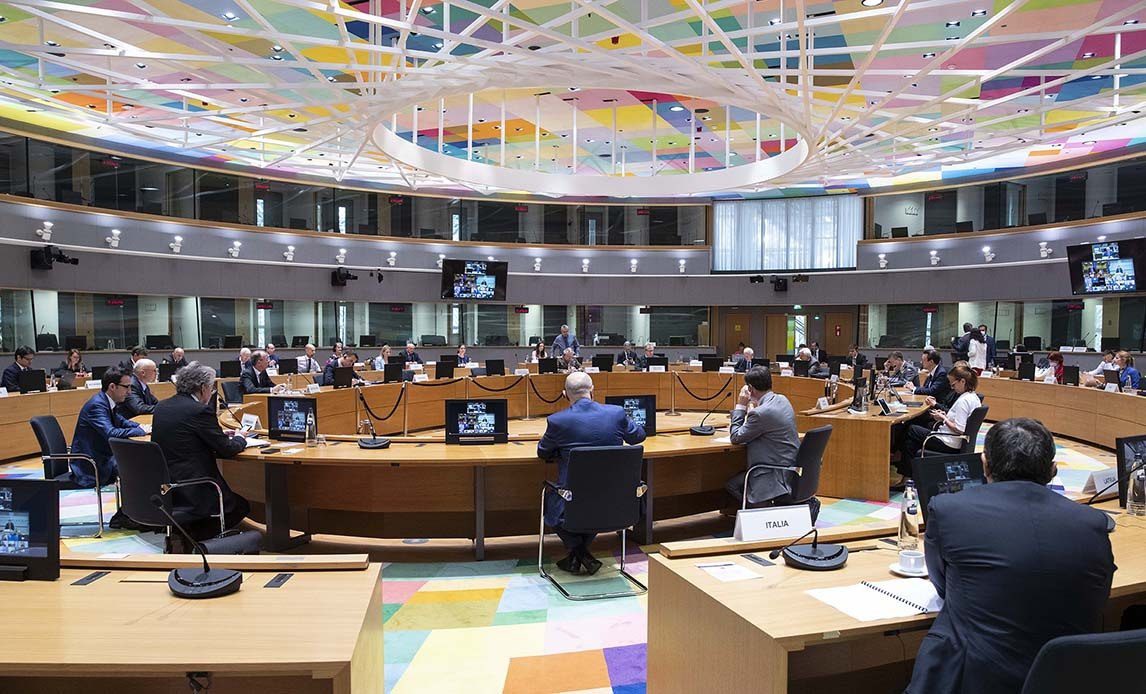
 In a May 18 announcement, the Council of the EU revealed it removed Syria’s Ministries of Defense and Interior from the European sanctions list, marking a significant shift in the bloc’s approach toward Damascus during the country’s transitional period following the fall of the Assad regime. In an official statement, the council said the decision formed part of its annual sanctions review and included the removal of seven Syrian entities from EU sanctions lists.
The move aligns with a broader European policy aimed at supporting what the EU described as a peaceful and inclusive transition while helping create conditions for economic recovery and reconstruction in Syria. The announcement comes as the Syrian government expands its administrative control over additional areas.
Gradual Changes in EU Policy
The decision follows a series of policy shifts by the EU over the past year. In February 2025, the council eased several restrictive measures facilitating communication with Syrian institutions and authorities. That process continued in May 2025, when the EU lifted most economic sanctions on Syria while maintaining restrictions tied to security concerns.
On May 11, 2026, the bloc restored the EU-Syria Cooperation Agreement, which had remained partially suspended since 2011 after the Assad government’s crackdown on anti-government protests. European officials said the latest measures aim to encourage stability and support institutional recovery while maintaining safeguards related to accountability and security.
Restrictions Remain on Assad-Era Figures
Despite the easing of measures on Syrian institutions, the EU extended sanctions targeting individuals and entities linked to the former Assad government until June 1, 2027. According to the council, restrictive measures including travel bans and asset freezes remain in place against members of the former regime and affiliated networks.
European Union officials said those networks continue to hold influence which could undermine reconciliation efforts, accountability measures, and the rebuilding of state institutions. The distinction reflects the EU’s attempt to balance engagement with Syria’s current authorities while maintaining pressure on figures associated with Assad’s regime.
Damascus Welcomes the Move
The Syrian Ministry of Foreign Affairs and Expatriates welcomed the decision, describing it as a step that could support recovery efforts and strengthen the ability of state institutions to provide services and maintain stability.
In a statement, the ministry said the decision would help support the development of “a new Syria based on law and institutions” while reaffirming Damascus’ commitment to cooperation based on mutual respect and national sovereignty.
Syrian Foreign Minister Asaad Hassan al-Shaibani also commented on the decision in a post on X, where he expressed support for expanding cooperation with the EU during the reconstruction process. Shaibani additionally welcomed the EU’s decision to renew sanctions against figures associated with violations committed during the rule of the former government.